
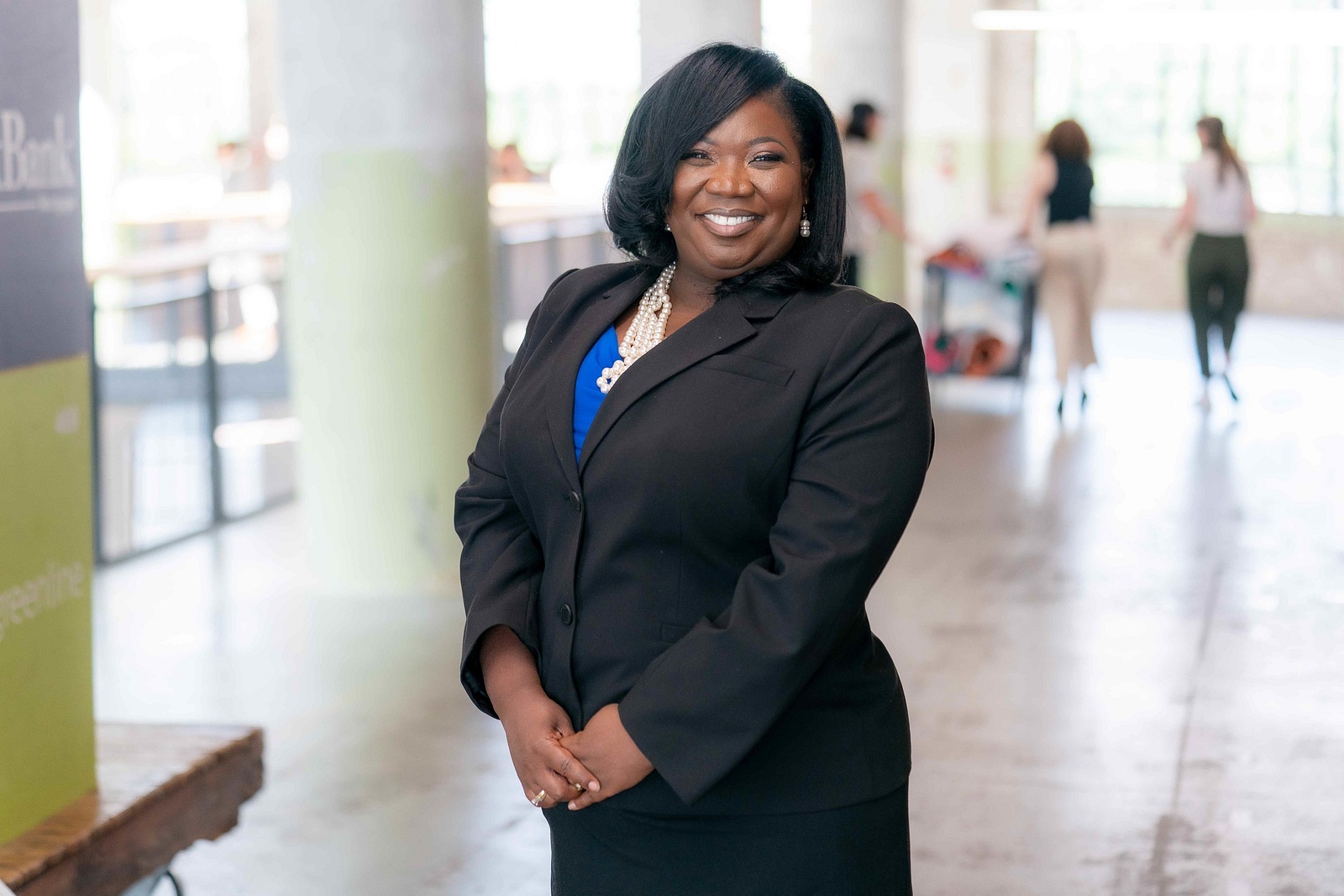
Meah King
Founder & Head of School, Tennessee Career Acadmey
Degree: B.A. in English, ('02)
M.A.T. Instruction & Curriculum Leadership, ('05)
Graduate Certificate in Urban Education, ('14)
Ed.D. Instruction & Curriculum Leadership, ('25)
Current Title: Founder & Head of School, Tennessee Career Acadmey
Why did you choose the University of Memphis for your studies?
I chose the University of Memphis because it stood, and still stands, as a premier institution for teacher preparation, a program that I knew was second to none. As a young scholar with an unwavering commitment to education and to the city that raised me, I felt strongly about remaining in Memphis, where I could serve and grow without disconnecting from the very community I aspired to impact. The University of Memphis gave me that rare balance: an institution deeply embedded in the life of the city yet offering the kind of rigorous, forward-thinking training that would prepare me to excel as both an educator and a leader. It was the perfect place to learn how to honor my roots while also equipping myself with the skills and vision necessary to contribute to meaningful educational change.
When I first visited campus as a high school student, the decision felt almost immediate. The tour revealed an environment full of purpose, a faculty deeply committed to students, and a culture of intellectual curiosity that was both welcoming and challenging. I saw classrooms and programs that invited critical thought while also affirming the value of relationships, diversity, and community engagement. It was clear to me that the University of Memphis was not simply an academic institution, it was a training ground for innovators, leaders, and advocates ready to shape the future. For anyone seeking a university where academic rigor meets genuine community connection, the University of Memphis is the perfect place to be.
What's a favorite or meaningful memory from your time here?
One of the most meaningful memories I carry from my time at the University of Memphis was helping to lead programming that intentionally bridged the university with K–12 schools across the city. Through the River City Partnership Program, I worked alongside aspiring educators and success coaches as we prepared them to enter classrooms shaped by both promise and profound challenges. The work demanded more than lesson plans, it required us to design culturally responsive learning experiences that affirmed the identities, history, and aspirations of students who often felt overlooked by traditional systems. I can still recall the power of watching Memphis students and future teachers learn together in authentic, equity-focused environments where culture, resilience, and possibility were centered rather than erased. That memory was transformative because it reaffirmed my belief that education is not only about transmitting knowledge, but also about building spaces where every child; especially those too often marginalized, feels seen, heard, and positioned for success.
Second Memory
Another defining moment was the day I successfully defended my dissertation, Beyond the Barriers of Silent Walls and Systemic Chains: How Do Black Boys in a Southern Urban Context Develop Both Racial/Ethnic and Scholarly Identities and How Do They Navigate the Systemic Barriers That Shape Their Identity Development? That day was not only the culmination of years of rigorous research, but also a profound affirmation of my calling as an educator and advocate. As I spoke, I carried the voices of Black boys who, despite systemic barriers, exemplify resilience and perseverance in their daily pursuit of identity, scholarship, and belonging. The defense was both an academic exercise and a moral imperative: society must learn to see these young boys not through deficit-based lenses but through the richness of their lived experiences and the strength they display in navigating inequity. That moment reminded me that my work is bigger than a degree; it is a charge to continue dismantling barriers and building spaces where Black boys can flourish as scholars, leaders, and human beings whose potential deserves to be fully recognized and celebrated.
How did your experience at UofM prepare or shape you for the work you do now?
My time at the University of Memphis instilled in me a model of leadership that was firmly grounded in instruction. Through both my graduate study and doctoral research, I learned how to align curriculum, assessment, and professional learning into a unified vision for student success. The university emphasized the importance of data as a tool for growth, not punishment, and that lesson has stayed with me throughout my career. I came to understand that true leadership is measured by how well we develop those who serve alongside us. Today, that foundation allows me to coach teachers and leaders with both clarity and compassion.
Another defining component of my preparation was the University’s focus on urban education. The training I received emphasized access, literacy, and culturally responsive teaching practices that meet learners where they are and lift them to where they can be. I gained the ability to design instructional supports that reflect the lived realities of students, particularly young Black boys and others who have historically been overlooked by traditional systems. I learned that teaching is not just about delivering lessons, but about affirming students’ identities and cultivating their resilience and perseverance. That understanding shaped me into an educator committed to creating opportunities for all students to thrive.
Equally important was the systems-level preparation I received at UofM. I was trained to think beyond the four walls of the classroom and to see schools as living ecosystems connected to families, neighborhoods, and larger communities. Coursework and practice in compliance, budgeting, and organizational leadership taught me how to turn ambitious goals into workable operational plans. I also learned the value of partnerships and how they can strengthen a school’s ability to fulfill its mission. These lessons prepared me to cultivate teams, build trust with community partners, and lead with vision and accountability.
Taken together, these three through-lines, leadership grounded in instruction, preparation to serve diverse learners, and systems thinking with strong partnerships, continue to shape my daily work as Head of School and Cofounder at Tennessee Career Academy. They give me the tools to steward talent and resources while keeping students at the center of every decision. The University of Memphis provided me with far more than credentials; it ushered me to my calling and the courage to live it out. Each day, I rely on the lessons I gained there to ensure that our academy is not only a place of learning, but also a place of growth, belonging, and opportunity. In this way, my UofM experience continues to influence how I lead with both conviction and care.