
Graduate Students: The Hidden Engine of Innovation at R1 Universities
The president of Arizona State University, Michael M. Crow, recently made a striking observation: the iPhone—the device that has transformed modern life—was not the result of a lone inventor tinkering in a garage, but of dozens of research papers produced in academic labs. This reminder points to a fundamental truth: breakthrough technologies are rooted in sustained, collective academic inquiry.
Yet the deeper story often goes untold. Behind every paper, every prototype, and every data set are graduate students. At an R1 university, research doesn’t happen without them.
The Many Hats of Graduate Students
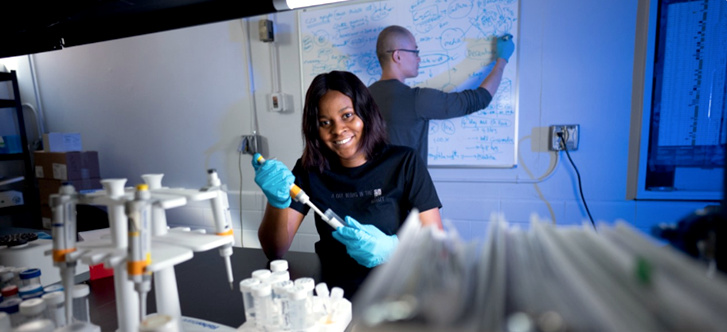
Graduate students perform a constellation of tasks that keep the research engine running:
- They design and run experiments, collect data, clean and validate it, and perform statistical analyses.
- They prepare tables, figures, and proof manuscripts, coordinate revisions, and submit to journals.
- They dig into literature reviews, help frame hypotheses, and support grant-writing efforts—often crafting large sections of proposals.
- They teach courses, lead labs, and grade assignments, allowing faculty to devote time to grant writing, mentoring, and strategic direction.
- They coordinate conference presentations, poster sessions, and data dissemination across collaborators.
- They often serve as project managers, orchestrating timelines, resource allocations, and compliance with institutional and funding regulations.
In short: without graduate students, a modern R1’s research output would slow to a crawl.
Apprentices, Guilds, and the Economy of Innovation
Graduate students not only support the research of others on campus, but also pursue their own—developing new ideas, identifying novel problems, and creating innovative solutions, technologies, and methods.
One useful analogy is to the medieval guild system. In that system, apprentices worked alongside masters—learning the trade, contributing labor, and gradually advancing to mastery themselves. The guild structure enabled the accumulation and transfer of craft knowledge, supported specialization, and nurtured continuous innovation.
Graduate students today are the modern-day apprentices of discovery. They contribute essential labor and are mentored by faculty “masters.” Over time, they accumulate expertise, launch independent research paths, and become inventive contributors to science, technology, and society. Just as guilds were engines of economic and technical development in the Middle Ages, graduate training underpins the innovation ecosystem today. The distribution of labor—with apprentices handling many of the supporting tasks—allows lead researchers to push novel frontiers without being mired in every routine detail.
Innovation in Action at the University of Memphis
At the University of Memphis, our graduate students are not waiting for the future—they’re shaping it now. They contribute to projects that resonate locally, regionally, and nationally. Examples include:
- CAESER (Center for Applied Earth Science and Engineering Research) is a multidisciplinary research center that works with public, private and government partners in both natural and populated environments. Graduate Student, Ivan Zamora-Plaza, is engaged in research that is helping us better understand ground water management and conservation.
- CERI (Center for Earthquake Research and Information): one of five Centers of Excellence at the University of Memphis where faculty, researchers, students and staff dedicate their time and energy to understanding the causes and physical consequences of earthquakes, and their impact on society. Graduate students like Sadia Rinky help deploy and maintain seismic sensors, analyze tremor data, and develop forecasting models that inform infrastructure design and safety planning.
- ACRE (Institute for agricultural and conservation research and education) is a hub of a vibrant ecosystem of scientists, engineers, farmers, and students inspired to work collaboratively to pursue groundbreaking solutions to critical challenges in food, agriculture, conservation, and sustainability. Graduate student Angela Flynn is studying the impact of bio stimulants on soy productivity and soy health.
In these and many other labs and centers, our graduate students are co-creators of knowledge—not merely trainees.
If we truly want to understand how research drives progress, we must recognize the role of graduate students: they are collaborators, apprentices, and innovators. At the University of Memphis, they are already building the foundations of the discoveries and technologies that will define tomorrow.
By: Dr. Deborah Tollefsen, Vice Provost & Dean of the UofM Graduate School - OCT 2025