
Welcome Ashland Johnson and New Clinical Opportunities
By: Lacey Halley
 The School of Communication Sciences and Disorders is pleased to welcome Ashland Johnson, a new clinical associate professor whose diverse clinical background and passion
for teaching make her an exciting addition to our community. Johnson brings six years
of experience across outpatient pediatrics, school-based services, skilled nursing,
and acute care settings, including work at LeBonheur and Methodist South. “Each clinical
environment shaped me in different ways, but the constant through it all has been
my passion for connection, teaching, and service,” she shared.
The School of Communication Sciences and Disorders is pleased to welcome Ashland Johnson, a new clinical associate professor whose diverse clinical background and passion
for teaching make her an exciting addition to our community. Johnson brings six years
of experience across outpatient pediatrics, school-based services, skilled nursing,
and acute care settings, including work at LeBonheur and Methodist South. “Each clinical
environment shaped me in different ways, but the constant through it all has been
my passion for connection, teaching, and service,” she shared.
Johnson is working on her SLPD which has led to a growing interest in mentorship,
family support, and systems-level solutions, such as improving access to care. Pursuing
her SLPD has strengthened her skills in research, supervision, and leadership which
led her toward academic clinical education. “Joining the University of Memphis feels
like the perfect next step because it allows me to pour into future SLPs while continuing
to engage directly with children and families through clinical programming.”
Johnson’s broad experience—from pediatric feeding therapy to adult post-stroke rehabilitation—gives
her a truly comprehensive clinical lens. These perspectives inform her supervision
and teaching, allowing her to help students connect evidence-based practice with ethical,
culturally responsive care. “Together, these experiences have shaped me into a flexible
and compassionate clinician who understands that communication and recovery look different
for every individual,” Johnson said.
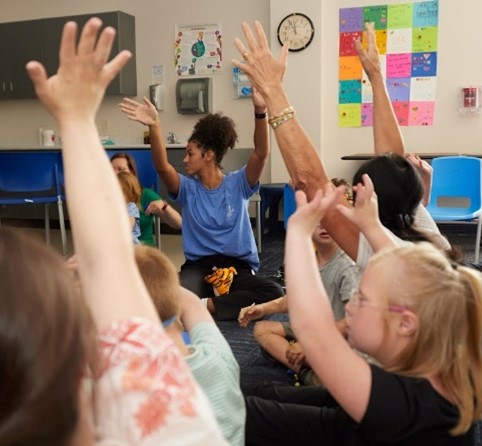 In Spring ‘26, Johnson will be launching a new social communication program for autistic children. The program will be a small-group, strengths-based intervention focused on embedded
play experiences, predictable routines, literacy, and caregiver involvement. “Families
often struggle to access timely services, so this program also helps reduce waitlists
by supporting multiple children at once,” she explained. “I hope this program becomes
a model for how clinics can combine evidence-based interventions with caregiver empowerment.”
Graduate clinicians will also gain valuable experience in neurodiversity-affirming
practice through this initiative.
In Spring ‘26, Johnson will be launching a new social communication program for autistic children. The program will be a small-group, strengths-based intervention focused on embedded
play experiences, predictable routines, literacy, and caregiver involvement. “Families
often struggle to access timely services, so this program also helps reduce waitlists
by supporting multiple children at once,” she explained. “I hope this program becomes
a model for how clinics can combine evidence-based interventions with caregiver empowerment.”
Graduate clinicians will also gain valuable experience in neurodiversity-affirming
practice through this initiative.
When asked what excites her most about joining the UofM CSD community, Johnson highlighted the School’s culture of innovation and collaboration. “The University of Memphis fosters a collaborative environment where faculty, students, and clinicians work together to solve real challenges and expand access to care,” she said. “Being part of a community that values growth, inclusivity, and creativity feels like the ideal place to continue my journey as both a clinician and educator.”
