
Master of Public Health - Epidemiology
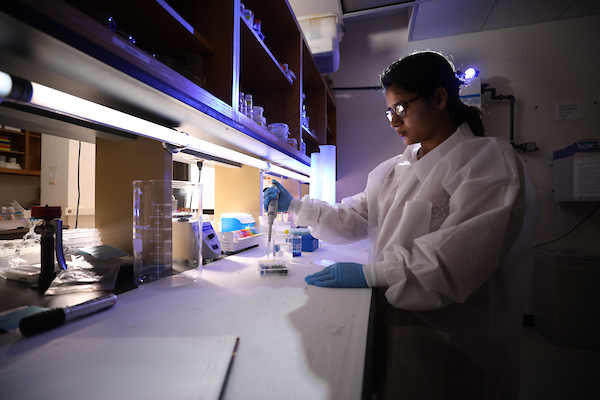
The University of Memphis offers a CEPH-accredited, 42-credit-hour MPH in Epidemiology that can be completed entirely online. Students develop skills in epidemiologic methods, research, data analysis, and public health intervention evaluation. Graduates are prepared for careers in public health agencies, health systems, and government organizations.
This program is suitable for students who have a science background with basic quantitative training. This program also strengthens public health professionals for advancing their careers, policy makers for creating, implementing, and evaluating health policies, and healthcare professionals for understanding the epidemiological and biostatistical aspects of health and diseases.
Credit Hours: 42
Core courses – 15 credit hours
- PUBH 7180 | Foundations of Public Health (0 credit hours)
- HADM 7105 | Health Policy and Organization of Health Services
- PUBH 7120 | Environmental Health
- PUBH 7150 | Introduction to Biostatistics
- PUBH 7160 | Social and Behavioral Sciences Principles
- PUBH 7170 | Principles of Epidemiology
Concentration courses - 15 credit hours
- PUBH 7141 | Epidemiologic Survey Method
- PUBH 7152 | Biostatistical Modelling and Applications
- PUBH 7172 | Epidemiological Methods and Applications
- PUBH 7311 | Applied Categorical Data Analysis
- PUBH 7401 | Applied Epidemiology
Elective courses - 9 credit hours
- In consultation with faculty and/or academic advisors
Applied practice experience - 1 credit hour
- PUBH 7985 | Fieldwork
- Culminating experience- 2 credit hours
- PUBH 7998 | Captone Project
Careers in Public Health
Public health careers increasingly intersect with data analysis, epidemiology, health analytics, occupational health, and evidence-based decision-making. Quantitative skills and practical field experience can help graduates prepare for roles that address complex population health challenges.

Employment Outlook
The employment outlook for epidemiology and biostatistics professionals is particularly strong as healthcare organizations, government agencies, and research institutions increasingly rely on data to understand disease patterns, evaluate health risks, and improve population health. Employment of epidemiologists is projected to grow 19% from 2025 to 2035, while data scientists are projected to see 35% growth and mathematicians and statisticians 10%, compared with 3.5% across all occupations. An MPH in Epidemiology and Biostatistics can prepare graduates for careers in disease surveillance, clinical research, statistical analysis, infection prevention, and public health data science.
Earning Potential
Professionals in epidemiology, biostatistics, and health data analysis have strong earning potential, particularly in research, healthcare, biotechnology, and data-driven industries. National median annual salaries include $87,220 for epidemiologists, $105,650 for statisticians, and $120,230 for data scientists, with experienced professionals and those working in specialized industries potentially earning more. An MPH in Epidemiology and Biostatistics can support career advancement into specialized research, statistical analysis, disease surveillance, and public health leadership roles.


Roles Related To This Degree
- Epidemiologist
- Research Analyst
- Infection Control Practitioner
- Project Manager (public health)
- Biostatistician
- Data Analyst/ Data Scientist
- Clinical Research Coordinator
- Research Associate
- Public Health Consultant
Request Information
Connect With Us
Requirements for the MPH in Epidemiology includes
-
Completed SOPHAS application
-
Undergraduate degree with minimum GPA of 3.0
-
Statement of Purpose (400-500 words)
-
Curriculum Vitae/Resume
-
Two (2) letters of recommendation
-
Credentials evaluation for foreign transcripts
-
Language proficiency test if language of instruction was not English