
Student Spotlight - Fen Yang
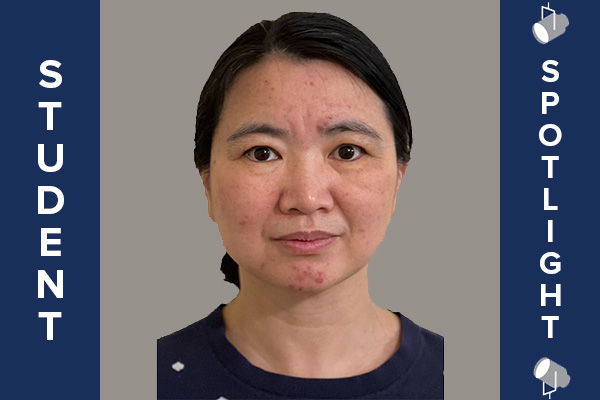
Fen Yang
Student, PhD
1. The “Spark”
My interest in this research area was sparked by my early training in biomedical sciences, where I studied the molecular mechanisms of cancer and neurodegenerative diseases. As I worked with genomics, transcriptomics, and proteomics data, I realized that many critical biological questions could not be fully answered without rigorous statistical modeling. I am most passionate about solving the challenge of extracting meaningful biological insight from large, complex biomedical datasets to better understand disease mechanisms and guide effective treatments.
2. The “Journey”
A key turning point in my research journey occurred when I began analyzing high-dimensional omics data and encountered the limitations of traditional analytical approaches. This challenge motivated me to pursue formal training in biostatistics. An “aha” moment came as I learned how statistical models—such as linear mixed models and bioinformatics-driven methods—could uncover hidden genetic and epigenetic relationships. By strengthening my quantitative skills, I was able to move from descriptive analysis to systematic, reproducible inference.
3. The “Big Picture”
In the next few years, I see my research contributing to the integration of biostatistics and biomedical science to improve disease understanding. By developing and applying statistical models to large-scale genomic and epigenomic data, my work can help identify disease-associated biomarkers and regulatory mechanisms. Ultimately, this research has the potential to support precision medicine and improve prevention and treatment strategies for complex human diseases.
4. The “Inspiration”
I have been deeply influenced by my mentors in both biomedical science and biostatistics, who demonstrated the importance of asking rigorous scientific questions and supporting them with strong quantitative evidence. From them, I learned that impactful research requires not only biological insight but also methodological precision and persistence. Their guidance has shaped my interdisciplinary approach to research and reinforced my commitment to lifelong learning.
5. The “Personal Touch”
One unique skill that supports my research is my ability to bridge biology and statistics. My long-term experience in health science allows me to translate biological questions into statistical frameworks and interpret results in a biologically meaningful way. This interdisciplinary perspective keeps me motivated and enables me to approach complex research problems with both scientific curiosity and analytical rigor.