Herff welcomes We Work the Waterways for Maritime Interaction Day
April 10, 2026
The West TN STEM Hub and the Southeast Transportation Workforce Center, led by the University of Memphis Herff College of Engineering, hosted "We Work the Waterways" on Friday, April 10, allowing STEM students from across the Mid-South to explore maritime careers and the significance of those positions.
We Work the Waterways is a national maritime education outreach program that demonstrates to students how vital the maritime industry is to communities like Memphis and provides information about well-paying career opportunities in the industry.
"Events like We Work the Waterways are incredibly important for helping students understand the wide range of career pathways available to them - especially in the transportation industry where students often have limited awareness," said Dr. Stephanie Ivey, Director of the Southeast Transportation Workforce Center
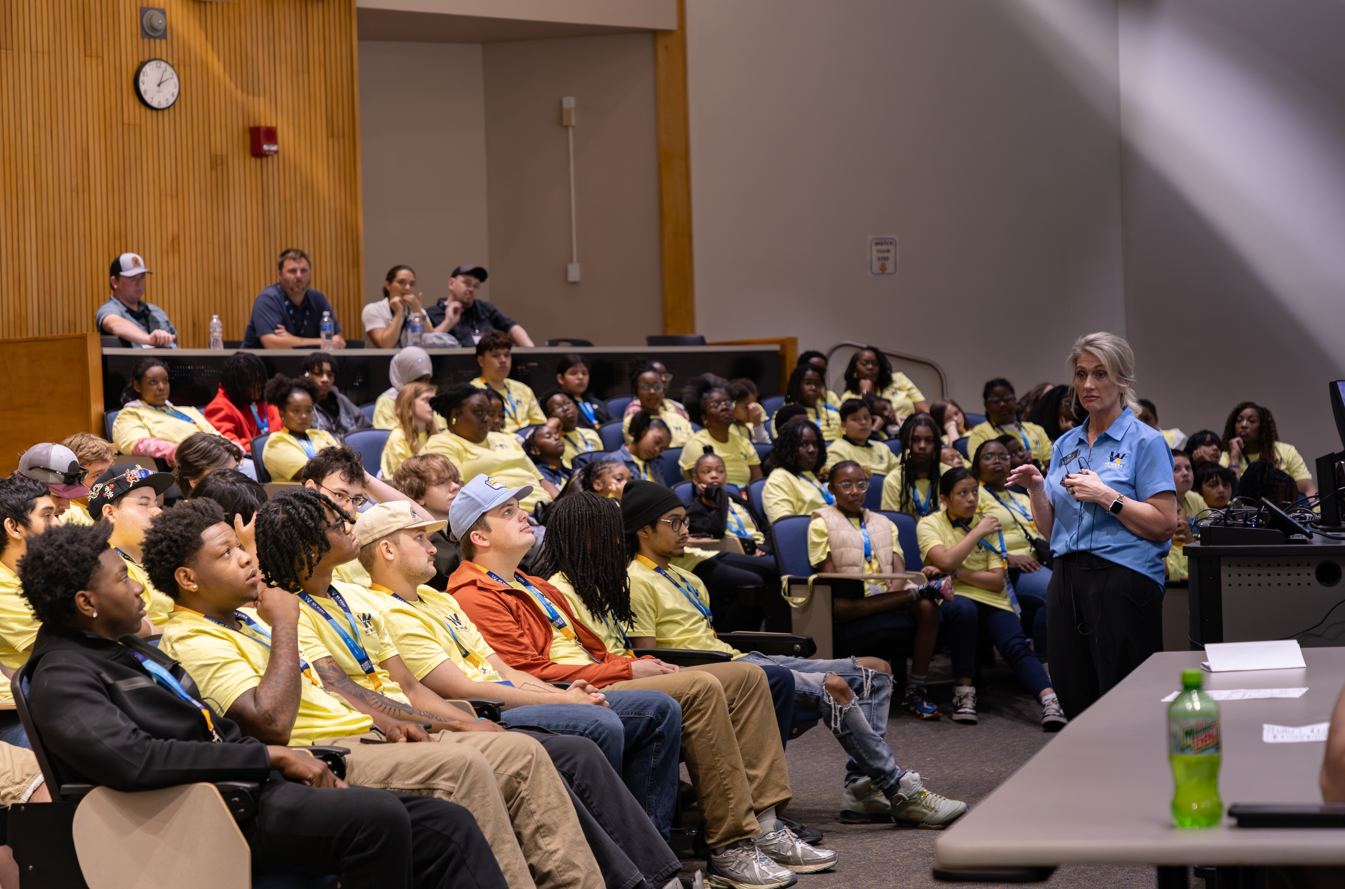
STEM students gathered in the Herff College of Engineering auditorium for a presentation about maritime careers and a panel discussion with industry leaders. Students learned that 91 percent, or 10.7 billion tons, of U.S. goods are imported yearly and shipped across oceans. In perspective, that's the same weight as 43,000 Statues of Liberty, 68 million houses, 6.4 billion cars and trucks, or 71.3 trillion cellphones. Most of the people involved in that process are eligible for retirement. We Work the Waterways told students that 71 percent of maritime workers are of retirement age, meaning that new workers are desperately needed in a field with proven longevity.
"We hope that students learned about careers that might be of interest to them, and that they have never considered (or might not even have heard of until this event). The maritime industry offers so many opportunities that provide great earning potential in a wide range of STEM areas, including engineering," Dr. Ivey said.
Industry leaders expanded on those careers during a panel. Among the panel members were Randy Chamness, Vice President of the Northern Vessel Operations at American Commercial Barge Line; members of the Port of Memphis, including University of Memphis alum and Office Manager of the Shelby County Port Commission, Amber Shepheard; and Joey Chabay, Chief of Trades Unit for the Memphis District U.S. Army Corps of Engineers.
"It's work that I do that I feel good about," Shepheard said. "I get up in the morning and I know that I'm contributing to my city. I'm contributing to my county. I'm contributing to my state. We're contributing to the world. The work that we do helps feed the world. It helps shelter the world. It makes me really proud to know that I am a part of that."
The panelist shared with students how they became involved in the maritime industry, described their career paths, and highlighted the advantages of positions in the industry, including some jobs that pay up to $200,000 a year and provide six months off, working four-weeks-on and four-weeks-off schedules.
"This can be a lifelong career, and we have a lot of people who this is all they've ever done in their lives," Chamness told the students. "We recently had a captain retire with 50 years of service with our company. He started fresh out of high school and stayed with us all the way up until he retired. Those jobs are right here in your community and they're very good, rewarding jobs that can last you your whole career."
After the opening presentation, students went from station to station in the Herff courtyard, meeting those industry professionals personally and participating in exercises related to each company.
The Army Corps of Engineers brought a survey boat to show students. Among its functions, the boat is used to survey the Mississippi River from Memphis to New Orleans and helps the Army Corps of Engineers know where to dredge and how shallow or deep the river is in any given spot.
"The river's navigability is dependent on how we engineer and how we maintain it," said Brandon Almeida, engineering technician with the Army Corps of Engineers. "A big unit (in the Army Corps of Engineers) maintains the river, dredging it, making sure a vessel can get up and down the river. It seems like it's a big river and you'd always be able to get up and down it. That's not the case. We play a big part in keeping the river open 24/7. It's a critical part. Even during government shutdowns, we're still working regardless."
The Port of Memphis focused on preparing students to enter the workforce by acting out interviews and elevator pitches with students. Shepheard encouraged those students to draw from all of their experiences when preparing for the next chapter of their professional lives and to not overlook any opportunity.
"All your experiences matter," Shepheard said. "Everything that you do will add up to your career and it's not always the places that you think it'd come from. I worked for Macy's. When I applied for my job at the Port Commission, I thought they'd ask me about the state and my experience working for the state. But my interviewer asked me, 'So, you worked at Macy's. Do you have any cash handling experience?' I never imagined that experience would evolve into this opportunity that I have now. You never know what skills you will pick up from the things that you do. Value all of them and they will all translate into your greater career."
Among the other companies that came out to Herff to educate students about the maritime industry were Ergon Marine and the Metal Museum of Memphis. Students at Ergon Marine's station got to practice throwing a life ring to a dummy, simulating the experience of saving someone from a body of water and the Metal Museum showed students pewter casting, introducing them to the world of foundry work and demonstrating how the casting of specialized metal components relates to the maritime industry.
“We bring the industry to the students,” said Errin Howard, executive director of We Work the Waterways. “Our goal is to help young people understand how vital the maritime industry is to communities like Memphis and show them that there are meaningful, well-paying career opportunities available right here at home.”
Herff and We Work the Waterways greatly appreciate the Maritime Industry Partners who helped make the event possible, including the International Port of Memphis, Wepfer Marine, American Commercial Barge Line, Ergon Marine Industrial Supply, U.S. Army Corps of Engineers, PTL Marine, The Metal Museum, Lucy Woodstock, Port of Rosedale, Enstructure, Magnolia Marine and the University of Memphis.