
Meet the man leading the Polytechnic@UofM's Applied AI program
June 26, 2026
When the Polytechnic@UofM begins offering students a Bachelor of Applied Science degree in applied AI in the Fall 2026 semester, it’ll do so with a new director leading its charge into the digital revolution.
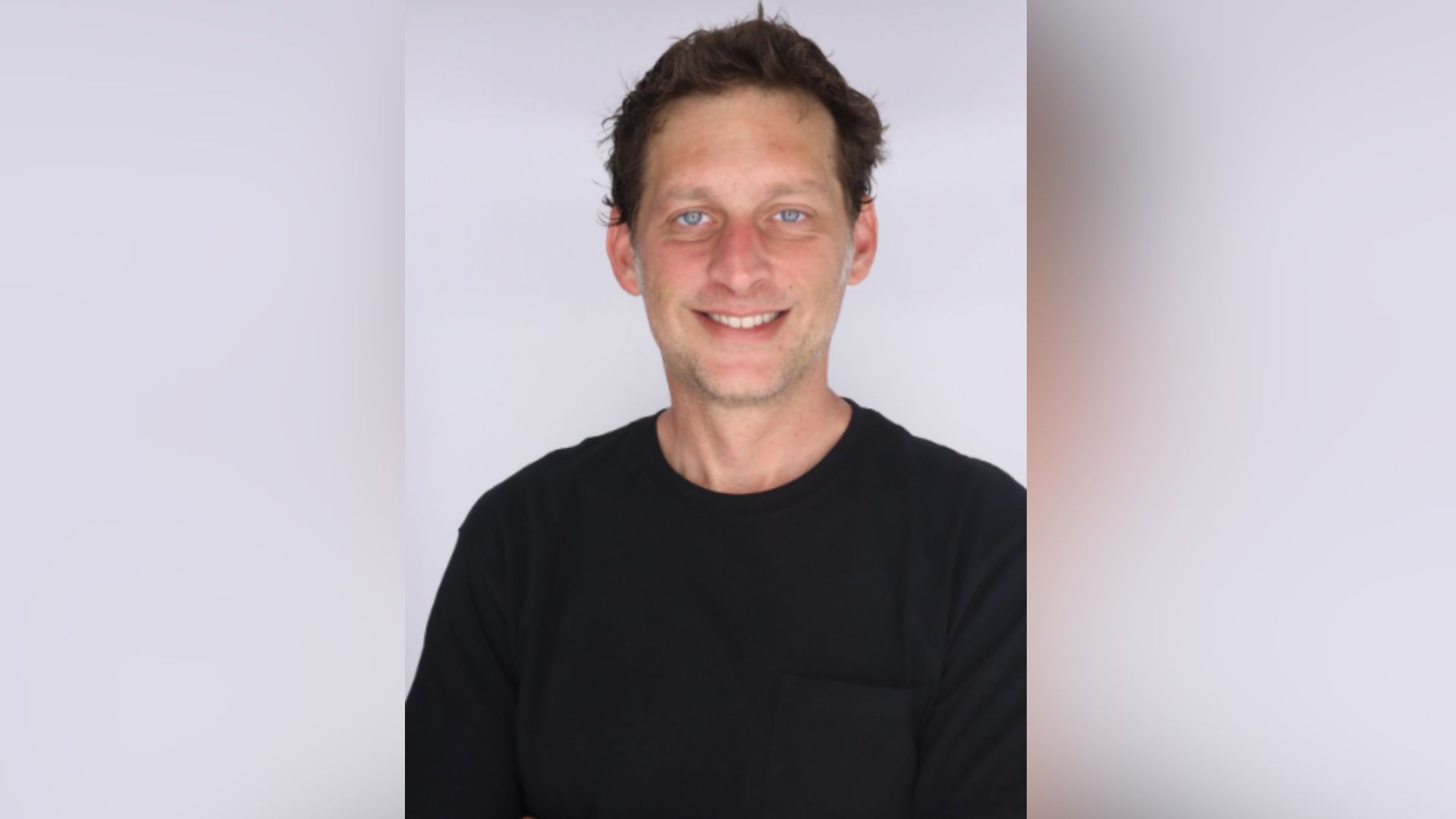
Dr. William Duffy joined the Polytechnic@UofM in June as director of Applied AI.
“I was just saying yes to any invitation to help and this was one of those things that I just immediately jumped at. I was like, “This is going to be really exciting,' and so far it has,” Duffy said.
Duffy comes to the Polytechnic@UofM from the English department at the University of Memphis, where he served as an assistant professor and then a full professor since 2013. With a PhD in rhetoric, Duffy said the jump from English to applied AI isn’t as broad as people may think.
“When AI first blasted into everyone’s fields of vision, I recognized that two things were happening. This new technology was here and some people were experimenting with it, some people weren't. There were a lot of questions around it, but all this technology, especially AI, is all moderated through the use of everyday language, just how we speak… You have to be able to know what you’re asking for, which requires you to be able to articulate what you want, which requires some felicity and capability with natural language.
“Sometimes now you’ll hear that natural language is the new coding language, being able to craft prompts that make sense rhetorically to the person crafting but are also designed to align with computational capabilities of a language model,” Duffy said.
Duffy immediately began playing around with the new technology, seeing how a prompt could generate different responses based on which words and how many words he used. He immersed himself in AI. In Fall 2023, he taught a course called “Teaching Writing with AI.”
“I thought, ‘Well, if there are going to be people leading these initiatives, I’d rather be the one doing that than handing it off to someone from computer science. That user perspective, that’s something I felt like I was bringing to this space as I was approaching AI through a user-experience lens,” Duffy said.
Duffy will now build out the program that students will take to learn how to maximize AI in their careers in daily life. The Bachelor of Applied Science degree in Applied AI won’t necessarily teach students how to create their own AI programs. Instead, it’ll focus on how using these tools can help people excel in things they’re already doing.
“You start with identifying a set of problems related to your domain of expertise and experience, ones where you alone have the knowledge to assess, revise, critique and reject any kind of output… I hope that students will be able to walk into their places of employment or their Thanksgiving dinner or whatever and immediately be able to share some wisdom on how to use these tools, what these tools are and what they are not. Being an AI specialist is being able to go in and say here is how AI can be useful, here’s where it’s not going to be and here’s where it probably shouldn’t be,” Duffy said.
That’s a philosophy Duffy has taught since AI came onto the scene and the University of Memphis began offering an “AI for All” minor, a course that now also falls under the Polytechnic@UofM.
After serving on a University of Memphis AI task force responsible for polling students, faculty, and staff about concerns, questions, and interests regarding AI, Duffy proposed a core course for the minor. That course, “Skills and Techniques for Applied AI,” became a fundamental part of the minor and general education requirement for several degree programs at the University of Memphis.
“I told my colleagues, I’m just teaching applied rhetoric. I’m teaching them how to identify situations and figure out what’s going on. So, I consider myself a program co-founder in the sense that I developed one of the core courses that’s now pretty standard,” Duffy said.
One of the exciting components that led Duffy to transition from English to Applied AI is the unknown. He admits that, as technology develops, he’ll often be learning right along with his students and he’s excited to see how the digital landscape transforms as the technological tools evolve.
“I’m interested in seeing to what extent AI literacy and the Gen Ed landscape over the next five to 10 years starts to develop. As, again, higher education starts to ask itself, ‘What do we really value?’ What kind of experiences do we want our students to have and what kind of knowledge do we want them to acquire?” Duffy said.
And while it may not be clear, even to the director of Applied AI at the Polytechnic@UofM, where AI will be in 10 years, the Rock Hill, South Carolina, native said that the chances are good he’ll still be here in Memphis.
“I think Memphis is good. I think we’re good here. I don’t think that we need to plan on moving,” Duffy said. “I loved the city that much just two weeks in and it hasn’t changed. I loved how it’s an underdog city. When I got here, I just loved the history. I also really liked how, like, technically it’s Memphis, Tennessee, but Memphis is its own thing, right? Memphis is Memphis. I feel like if you’re an outsider and you move to Memphis and you decide to stay, that says something about your character. I could never in 1,000 years live in Nashville.”