
Medtronic supported Herff students at the 2026 Senior Design Expo
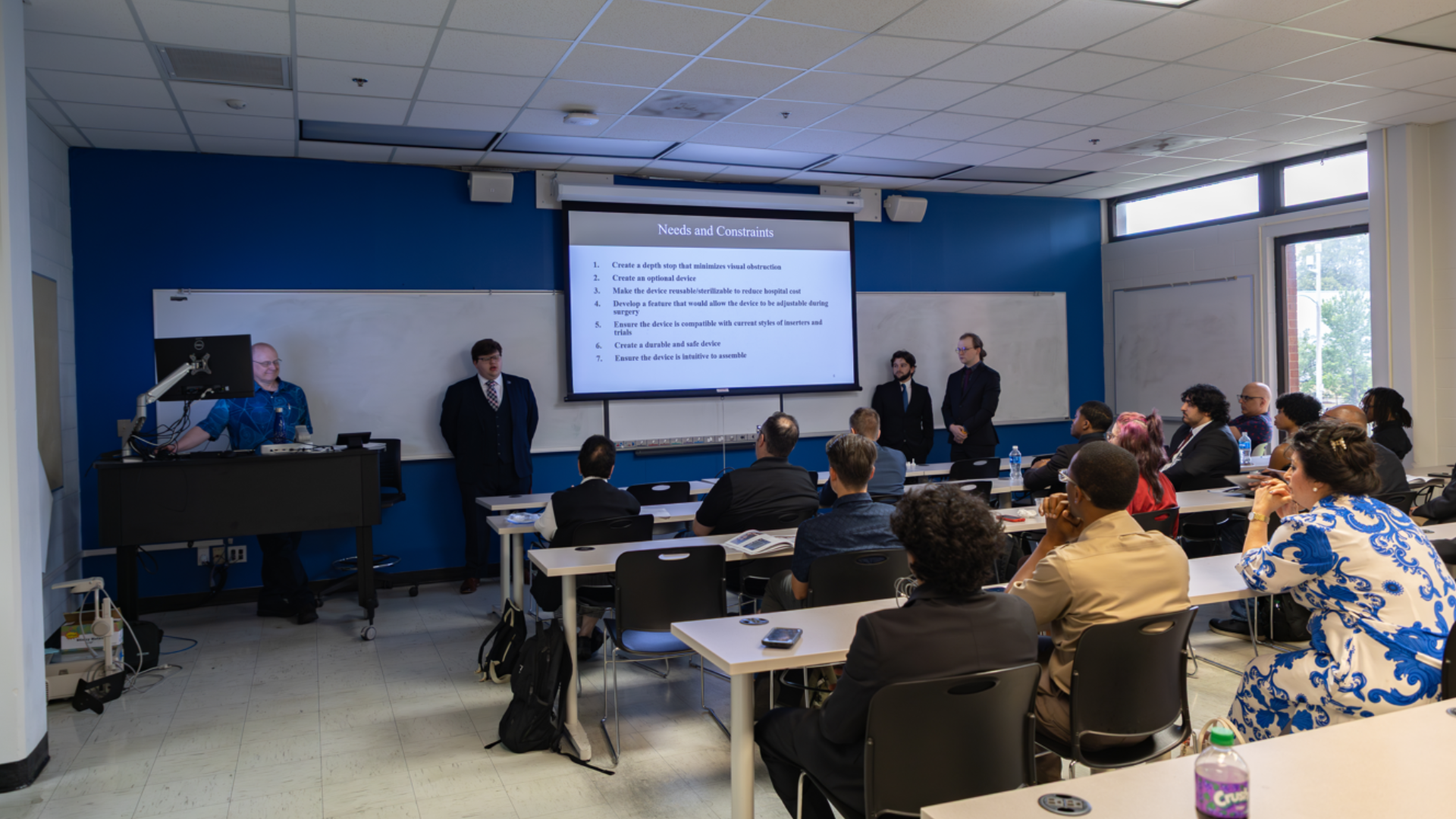
(Pictured: Team Lords of Lumbar and the device they designed for Medtronic.)
The Herff College of Engineering is extremely grateful to all of the industry partners who sponsored students' 2026 Senior Design projects. The two-semester-long assignments serve as the capstone projects for Herff's engineering students and allow students to work hand-in-hand with industries.
Medtronic sponsored four teams during Herff's 2026 Senior Design Expo: The Lords of Lumbar, Team CerviStop, Team Rongeur and Team Shear Genius. Product Development Engineer Brian Butler and Senior R&D Engineer Jacob Loschinskey sponsored the first two teams, while Ahmad Alsaffar sponsored Team Rongeur and Jerald Redmond and Shane Riding sponsored Team Shear Genius. The Lords of Lumbar and Team CerviStop both focused on designs that aimed to assist with Anterior Cervical Discectomy and Fusion (ACDF) surgery. Cervical radiculopathy and myelopathy are conditions that occur in the spine that are usually caused by a herniated disc. The condition can cause immense pain and weakness in the patient. The Anterior Cervical Discectomy and Fusion (ACDF) surgery was implemented to solve this problem. The surgery involves making an incision near the throat and removing the damaged intervertebral disc and replacing it with a cage. This cage acts as a bridge between the two vertebrae and promotes fusion. Success of the surgery depends heavily upon expert level surgical techniques due to the proximity of the spinal cord. This also means that the tools and devices the surgeons would be using need to be reliable. During the surgery, the surgeons use devices called Trials and Inserters that measure cage size as well as implant the desired cage size. Maintaining precision of the inserter depth is critical, as any slight misstep could result in serious neurological injury. The increasing number of ACDF surgeries highlights the need for innovation in instruments in the surgical field. Even small ideas or tweaks towards existing devices can have a profound impact on someone having a successful surgery.
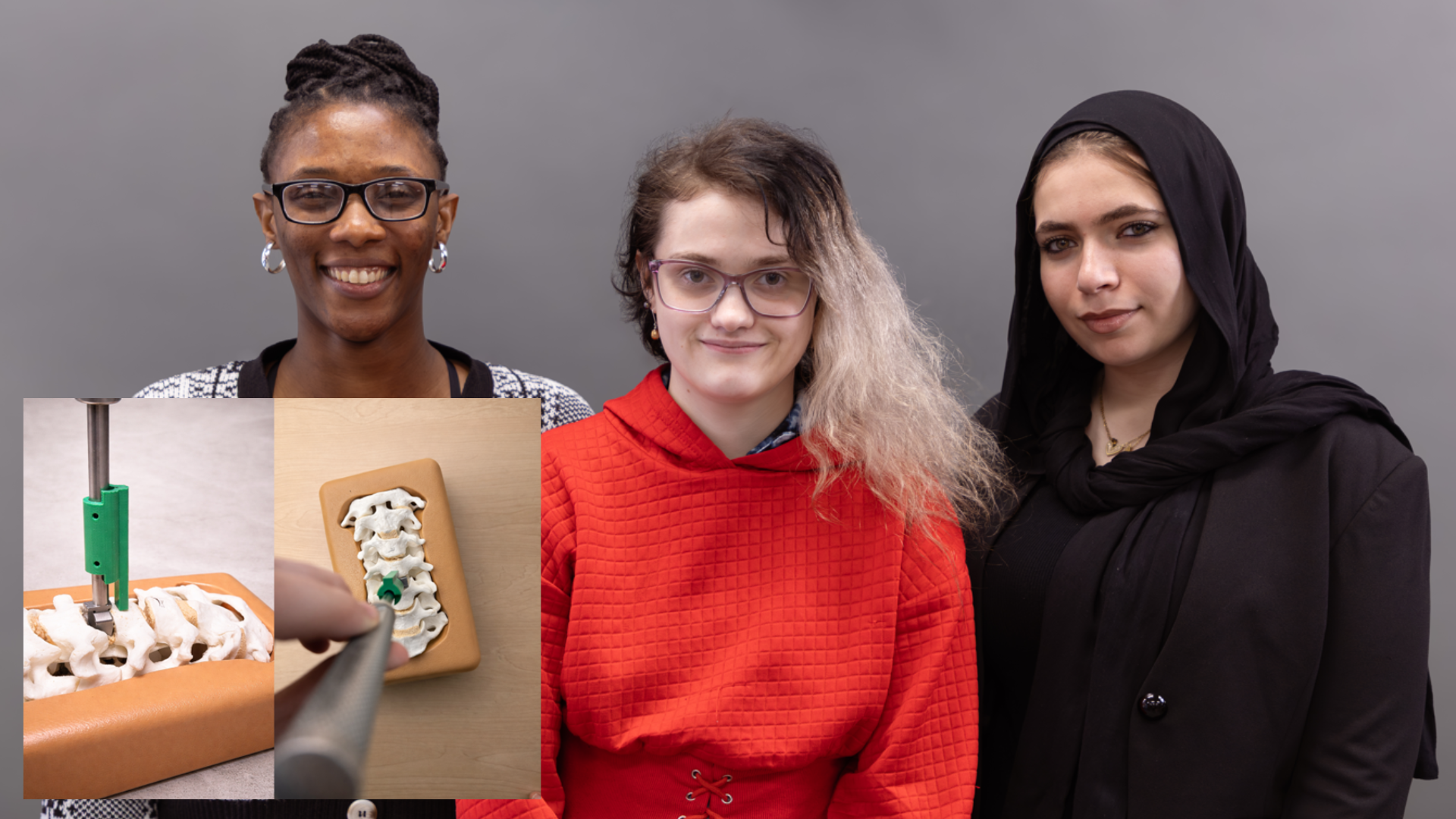
(Pictured: Team CerviStop and the device they designed for Medtronic.)
Team Rongeur designed a device to help clean rongeurs, surgical instruments used to cut bone and tissue during surgical procedures. A rongeur is a surgical instrument used to cut bone and tissue during surgical procedures. They require removal from the surgical site after each use for cleaning. This removal poses risks, including misplacement of the surgical site upon reentry, infection from improperly sterilized cleaning materials, and harm to surgeons and/or patients. This has led to a need for a self-cleaning rongeur or a better cleaning method. The self-cleaning rongeur in this design is a surgical instrument designed to enable a safe and effective procedure without the constant removal of the rongeur at the surgical site, or to at least provide a better means of cleaning. Team Shear Genius developed a wireless device that pairs with Medtronic screw-driving equipment and gives feedback via Bluetooth to determine the appropriate amount of force needed. During surgeries on the cervical spine and pelvis region, rods are used to aid in realignment of the spine to help correct scoliosis, a condition involving curvature in the spine, or to perform interbody cage expansion to repair issues with disc height during herniation. Placing pedicle screws to secure these rods involves creating a pilot hole through the bone at the fixation point and inserting these screws to anchor the spinal rods. Currently, tactile feedback is used to determine the appropriate amount of force which has implications for instability at the screw site from excessive force. This instability can affect bone alignment along the spinal column. Additional data is needed on how much force can be safely applied to a patient during screw driving based upon their relative bone density.
"The devices these students created not only serve their engineering education, but they also have the possibility to soon impact the lives of people in our community," said Dr. Gary Bowlin, who served as the faculty mentor for Team Rongeur. "When these graduating seniors walk into their first post-graduation job, they'll do so with experience that sets them apart from their peers and allows them to start building a better quality of life for the community and world, right away."
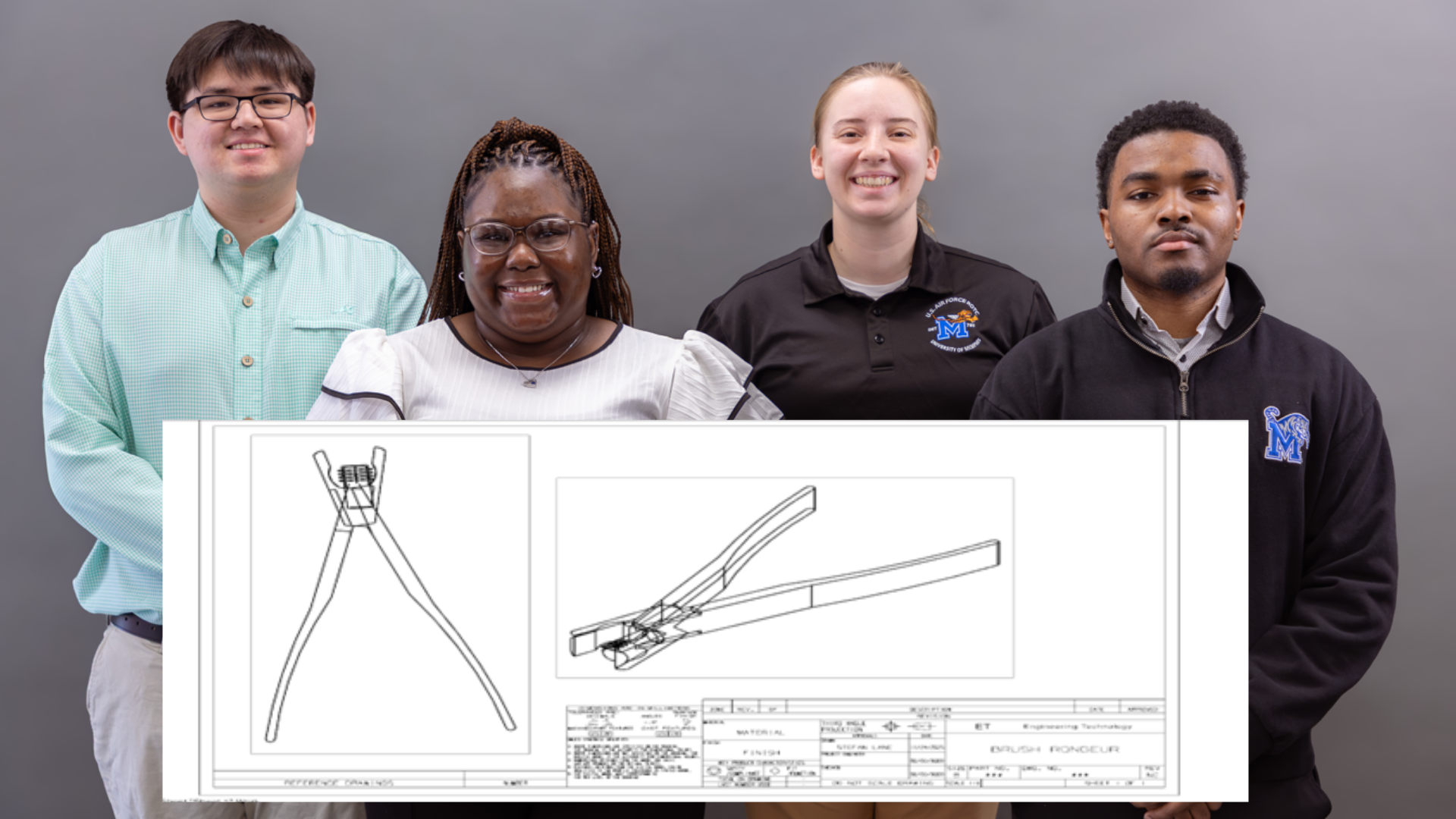
(Pictured: Team Rongeur and a diagram of their self-cleaning rongeur.)
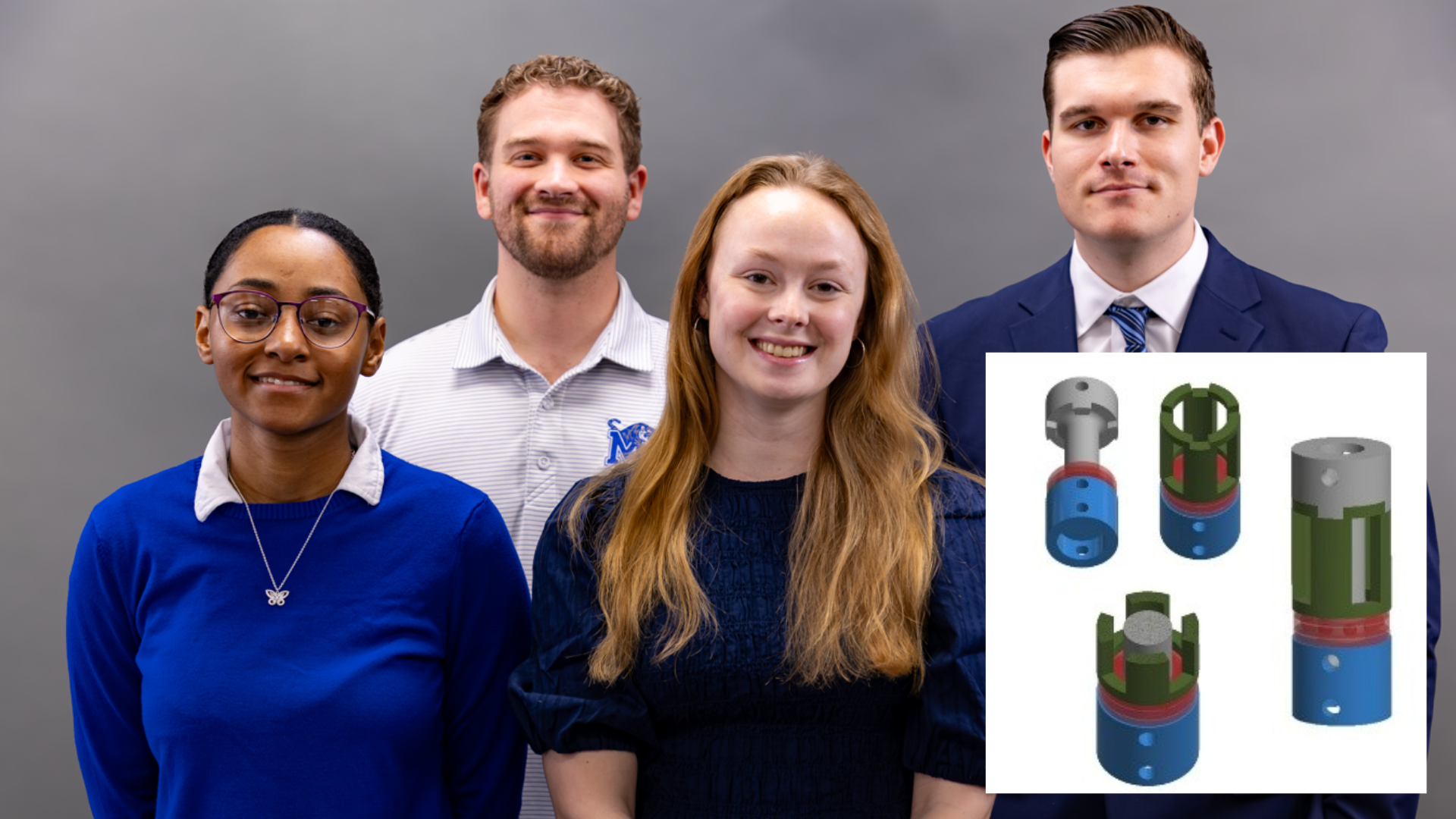
(Pictured: Team Genius and a graphic showing their smart adapter.)
Thank you, Medtronic, for supporting Herff students!