
Bachelor of Science in Public Health (BSPH)

Bachelor of Science in Public Health
The program provides a comprehensive education in population health, health policy, public health practice, epidemiology, environmental health, and social and behavioral health concepts. It is coupled with practical fieldwork experience in local and regional health organizations and undergraduate Research opportunities. Students have a dedicated academic advisor to guide you through the coursework, professional development and networking opportunities, and an experienced faculty mentor to curve their career pathway in public health and healthcare. The program may be completed full-time or part-time, and is now being offered completely online—the only online BSPH program in the state of Tennessee.
Program Flyer Apply NowTaking LOCAL Impact to GLOBAL Change
The students will be able to address:
- The concepts and applications of basic statistics
- The foundations of biological and life sciences
- The history and philosophy of public health as well as its core values, concepts, and functions across the globe and in society
- The basic concepts, methods, and tools of public health data collection, use, and analysis and why evidence-based approaches are an essential part of public health practice
- The concepts of population health, and the basic processes, approaches and interventions that identify and address the major health-related needs and concerns of populations
- The history and philosophy of public health as well as its core values, concepts, and functions across the globe and in society
- The basic concepts, methods, and tools of public health data collection, use, and analysis and why evidence-based approaches are an essential part of public health practice
- The concepts of population health, and the basic processes, approaches and interventions that identify and address the major health-related needs and concerns of populations
- The underlying science of human health and disease, including opportunities for promoting and protecting health across the life course
- The socioeconomic, behavioral, biological, environmental, and other factors that impact human health and contribute to health disparities
- The fundamental concepts and features of project implementation, including planning, assessment, and evaluation
- The fundamental characteristics and organizational structures of the U.S. health system as well as the differences between systems in other countries
- The basic concepts of legal, ethical, economic, and regulatory dimensions of health care and public health policy and the roles, influences, and responsibilities of the different agencies and branches of government
- The basic concepts of public health-specific communication, including technical and professional writing and the use of mass media and electronic technology
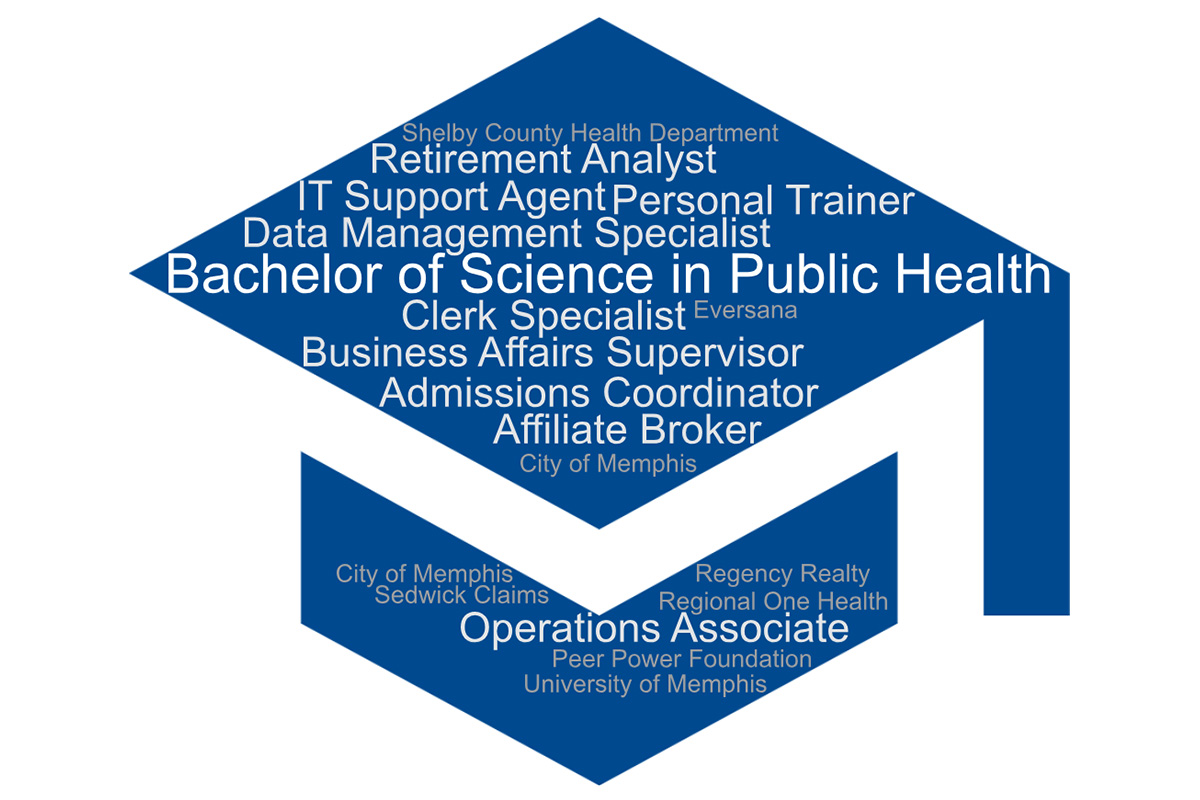
- BSPH graduates are prepared to enter the workforce as health educator, preventive specialist, program coordinator, research assistant/associate, health outreach specialist, population health coordinator, health policy analyst, epidemiologist, and health services manager in federal and state agencies, healthcare sector, non-profit organizations, research and academic, and consulting.
- Students will be able to:
- Communicate public health information, in both oral and written forms and through a variety of media, to diverse audiences
- Locate, use, evaluate and synthesize public health information
- As a Public Health major, you will have a dedicated one-on-one academic advisor and faculty advisor to guide you through your learning experience. The Office of Experiential Learning and Career Readiness will work with you to develop a career plan.
- ABM students will get advanced knowledge and skills in public health, epidemiology, behavioral science and biostatistics. This program is suitable for students who seek to advance their education and career and transition to MPH degree.
Credit Hours: 120
The program requires 120 credit hours with a cumulative GPA of 2.0 as follows:
- General Education (13 courses - 41 credit hours)
- Public Health Core (12 required courses - 36 credit hours)
- PUBH 3104 | Developing Public Health Messages & Strategies
- PUBH 3105 | Health Behavior Theory and Practice
- PUBH 3120 | Climate and Environmental Health
- PUBH 3130 | Social Determinants and Health Disparities
- PUBH 3150 | Health Data Analytics and Informatics
- PUBH 3160 | Public Health in Action
- PUBH 3170 | Health Crises and Milestones in Global Public Health
- PUBH 3180 | Population Health Program Design and Intervention
- PUBH 4011 | Population Health Program Evaluation
- PUBH 4012 | Public Health Management and Policy
- PUBH 4013 | Biological and Behavioral Basis of Disease
- PUBH 4151 | Public Health Research Methods
- Field Experience and Capstone (2 required course - 4 credit hours)
- PUBH 4010: Fieldwork (2) - Required
- PUBH 4985: Capstone Experience (2) - Required
- Guided Electives (13 courses - 39 credit hours)
Students may choose pre-health courses, interdisciplinary courses, or a combination of both with the help of an advisor. A few of our department's public health electives are:
-
- PUBH 3101: Environmental Health in the Media
- PUBH 3102: Epidemics and Pandemics
- PUBH 4014: Ethical Considerations in Emergency Preparedness and Disaster Management
- PUBH 4015: Health Disparities in Chronic Disease
- PUBH 4131: Public Health & Social Justice
- PUBH 4868: Global Refugee Crises as a Public Health Concern
Other departments with guided electives included in the BSPH degree: Anthropology, Communications, Healthcare Leadership, Health Sciences, Social Work, Sociology and many more.
- Program Coordinator/Manager, Non-Profit Organization
- Data Analyst
- Research Analyst
- Health Data Analyst
- Clinical Research Coordinator (CRC)
- Wellness Program Manager
- Health and Safety Manager
- Healthcare Liaison
- Disease Intervention Specialist
- Infection Control Practitioner (ICP)
Salary Range: $44,000 – $75,000
In Numbers
How to apply
Requirements:
- To be eligible for the public health major, you should have a GPA of 2.0 or higher and be in good academic standing.
- There are no prerequisites to declare a major in Public Health. Students are advised to declare their intentions for Public Health major no later than the end of their last semester of sophomore year to ensure completion of the major by their anticipated graduation date.
Connect with us
Lori Ward, PhD, MS
Undergraduate Program Coordinator and Associate Professor
Briana McNeil, MBA, MEd
Recruitment and Admissions Coordinator
Rebecca Kronenberg, MPH
Coordinator, Undergraduate Advising and Student Engagement