
Herff welcomes new and returning graduate students with orientation event featuring keynote speaker Dr. David M. Smith
August 20, 2026
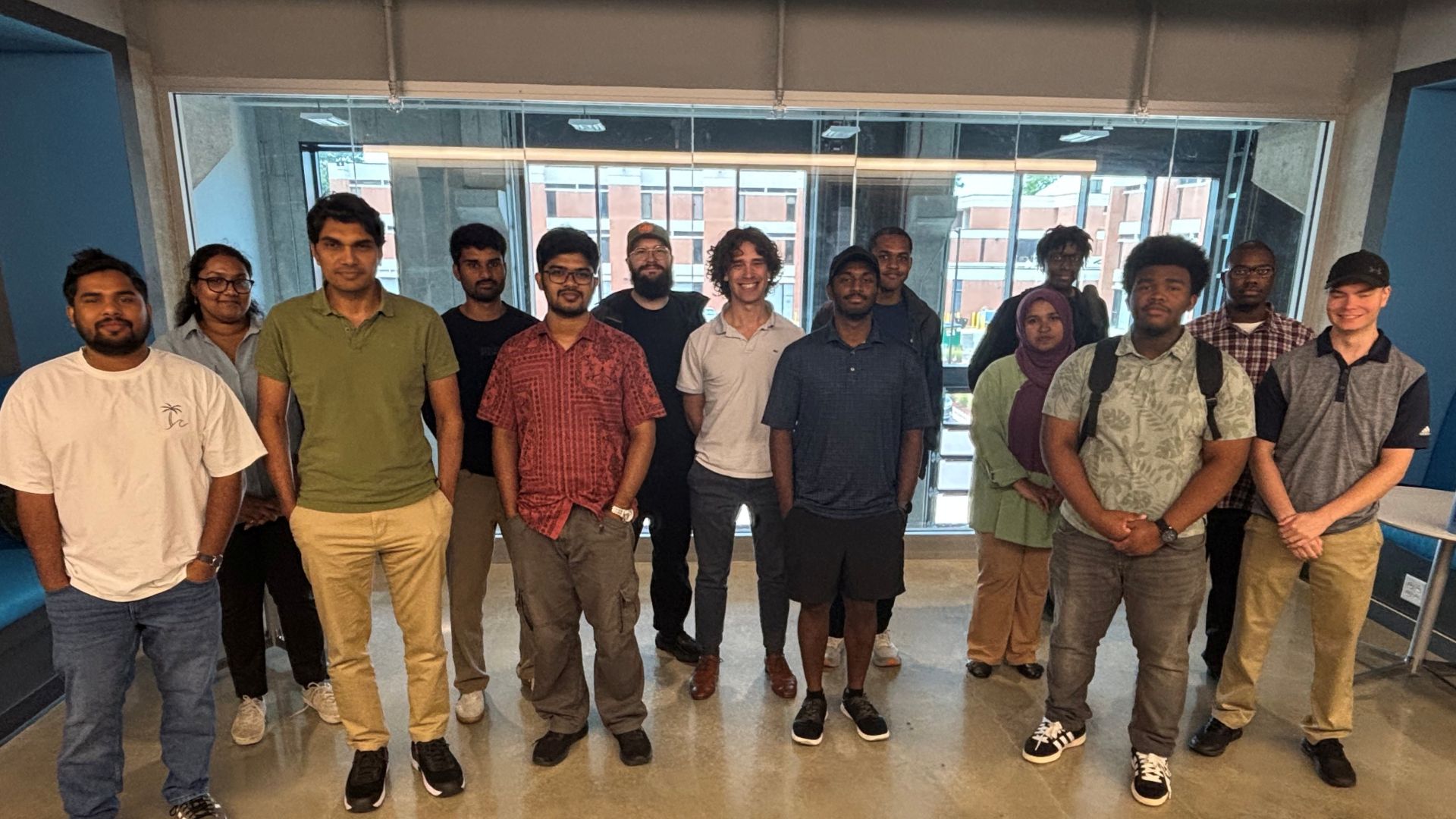
Graduate students returned to the Herff College of Engineering on Thursday, August 20, for a Welcome Back Kickoff event.
Keynote speaker Dr. David M. Smith of A2H-Engineers, Architects, Planners spoke to the students first, emphasizing the importance of their research and the tools they'll need to navigate their new academic landscape.
Smith, who holds a PhD from the University of Memphis, brought nearly 30 years of experience in civil engineering to his keynote address. During his career, Smith has acquired deep expertise in areas ranging from stormwater management to infrastructure design. His decades of professional experience include leadership roles across industries and a strong commitment to community engagement.
As a successful alumnus of the graduate programs at the University of Memphis, Smith's address detailed the journey and opportunities available for Herff's new graduate students, while his insight helped those students see how their degree can translate into meaningful impact in their careers and communities.
LEARN MORE ABOUT HERFF'S GRADUATE PROGRAMS
Following Smith's address, students broke out into departmental orientations sessions, speaking individually to professors in Herff's departments of biomedical engineering, civil, construction and environmental engineering, engineering technology, mechanical engineering and electrical and computer engineering.
After refueling with a pizza lunch, students then heard Herff College of Engineering Dean Okenwa Okoli speak on the importance of graduate research.
Okoli began by speaking to each student individually about their academic goals and why they feel inspired to research their respective fields.
During his 45-minute-long speech, Okoli emphasized the importance of proposal writing and journal publications, discussed opportunities for professional growth and spoke about how the ideas that spawn in a lab lead to revolutionary changes in every area of life.
Speaking to PhD students and future doctoral candidates, Okoli said, "The key thing is that you have to contribute to the knowledge. If you haven't contributed to the knowledge, then your PhD is worthless. You have to move the envelope just a little bit, and once you've done that, you can claim to be the expert in that area."
Okoli encouraged master's students to continue their research at the PhD level, noting that it only takes two more years to acquire your doctorate.
"You can change knowledge," Okoli said. "If you are able and get that, you can change something. You can change knowledge. Some of you said that you don't like industry. Well, now you can change that. You can stat your own industry. You can have a spin-off from your research. That's the goal."
The dean left students with this message: "Going to conferences, presenting, talking to people, listening to people, exchanging ideas, and learning from everybody—those are the key things."