
How a lifetime journey led Dr. Sina Bahrami to the Herff College of Engineering to research transportation
September 18, 2026
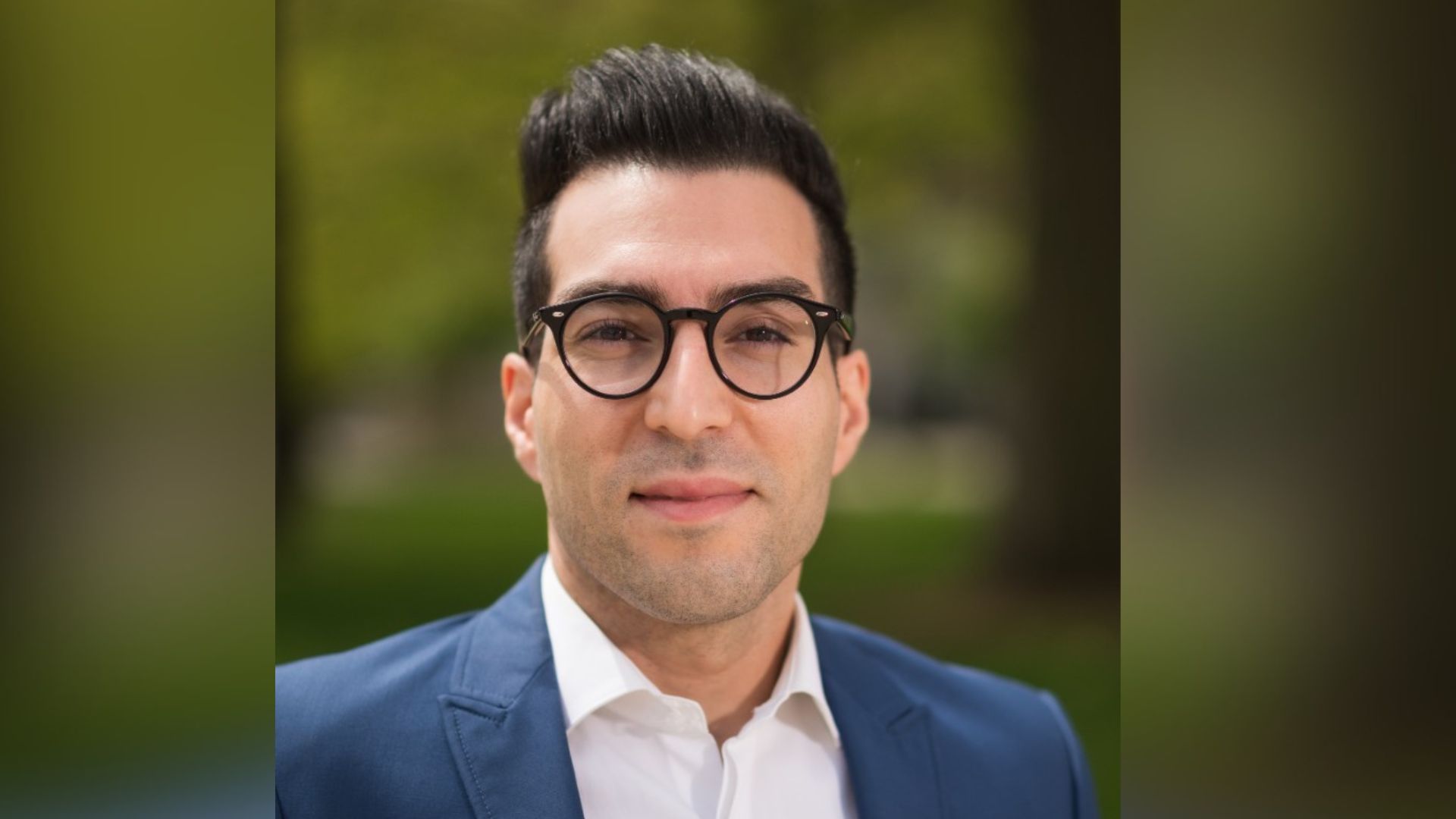
Dr. Sina Bahrami, assistant professor in the Herff College of Engineering’s Department of Civil, Construction and Environmental Engineering, hasn’t taught his first class yet, but he’s already envisioning the impact he’ll have on his students far into the future.
“I would consider myself a good educator, a good teacher if, five or 10 years after graduation, my former students are out in their careers, in academia, or in the public or private sector and they hit a problem and think, 'I heard about this in class. I might not remember every detail, but I know where to start.' If I can have that type of impact on a student, I've been successful," Bahrami said.
Though he is only in his mid-30s, Bahrami has traveled a long road to reach the University of Memphis. It began when he left Iran in 2015, after earning his master's degree in civil engineering.
"Leaving home is always hard. Your family is there, your friends are there, your roots are there, and you know you are going to miss all of it," Bahrami said. "But, at the same time, given the situation in Iran, due to the current regime, a normal life was not possible for me. A normal job, like being a faculty member, was never going to happen for someone with my personal and political views."
Bahrami set out for Canada, nearly 6,200 miles away from his home country, an appropriate journey for a PhD student interested in studying transportation engineering. But before Bahrami began his study, he first had to learn new norms. His first challenge came at Tim Hortons.
“In Iran, at that time, we didn’t have grab-and-go coffee shops," Bahrami said. "You'd walk in, sit down, and a server would come take your order and bring the coffee to you. So, the first time I went to a Tim Hortons, the place was empty. I sat there waiting, thinking, 'Why is no one coming to get my order? What's going on?' I sat there for maybe 30 minutes before someone walked in, went to the counter and got their coffee and I was like, ‘Oh, that’s how it works.’”
After 3.5 years as research faculty at the University of Michigan, Bahrami joined the University of Memphis in the Fall 2026 semester. When he began looking for a new academic home, he said the Herff College of Engineering was an obvious choice because of Memphis’ central location and the research centers that already call Herff home.
"In transportation, Memphis is known for the four Rs," Bahrami said. "Runways, specifically for air cargo that FedEx moves. Roads, major highways run through and around the city to the rest of the US. Rail, we're a major hub for freight and passenger rail. And the River port."
At the Herff College of Engineering, Bahrami will study those modes of transportation alongside other research centers doing related work, either directly or indirectly. His research will add to that of organizations like the Center for Transportation Innovations in Education and Research (C-TIER), the Center for Applied Earth Science and Engineering Research (CAESER), the Resilient Smart Cities Innovation Center (ReSinC), and the Southeast Transportation Workforce Center.
“Every person is traveling on a daily basis,” Bahrami said. Over the past decades or so, a lot of new technologies have come along that are changing how we move and how goods move around us... For instance, now we have self-driving cars like Waymo or Teslas. These services are changing how people travel, and we need to know how people respond to them and what they are doing to congestion in our cities."
Bahrami said these new types of transportation could change how far people are willing to travel and how we use space like parking in dense areas. He also emphasized the need to study how these modes of transportation affect congestion in cities like Memphis, where most people drive daily.
But teaching students new technology poses a unique problem. By the time that student graduates, today’s technology is likely to be obsolete. That’s why Bahrami focuses on the fundamentals.
"If students learn the first principles, the fundamental modeling behind a concept, then it does not matter if, in five or 10 years, there are no human-driven vehicles left, or if we have flying cars. If you understand why people travel from point A to point B and how they weight the options in front of them, the technology can change and you'll still have the foundation to build new models and figure out what the impact of the new technology is," Bahrami said.
But before he inspires his first group of students, Bahrami must first settle into his new hometown. As someone who enjoys cooking barbecue on the weekends, he finds a world-class dinner on nearly every street corner, and now that he understands coffee shops in North America, he looks forward to making his rounds to coffee spots around Memphis and building a new group of friends to grill out for. You may also see Bahrami playing pickleball, swimming at the University of Memphis gym or jogging around Shelby Farms.
But he said his favorite activity is inspiring students.
"I'm excited to teach and I hope I can have a real impact here in the department, in the college and on our students. At the end of the day, we are all here because of the students, and their success is what matters most to me," Bahrami said.
He encouraged any current or future graduate students interested in conducting research on transportation to reach out to him for potential partnerships.