
Spring 2027
PHIL 1101 - Introduction to Philosophy (multiple sections; online sections available)
Course Description
Introduction to critical exploration of such issues as knowledge, reality, consciousness
and the good life; readings from Plato, Descartes, Kant, Nietzsche, or more recent
sources.
PHIL 1102 - Introduction to Ethics (multiple sections; online courses available)
Course Description
Introduction to such social and ethical questions as, “What makes a happy life? What
justifies ideas of good and evil? How should we live with others? What is the role
of gender and race in society?” The subjects of justice, racism, and oppression, especially
as they figure into the American context, are highlighted.
PHIL 1311 - Critical Thinking
CRN 31517
MWF
11:30 AM - 12:25 PM
David Gray
Course Description
PHIL 1611-M50 - Elementary Logic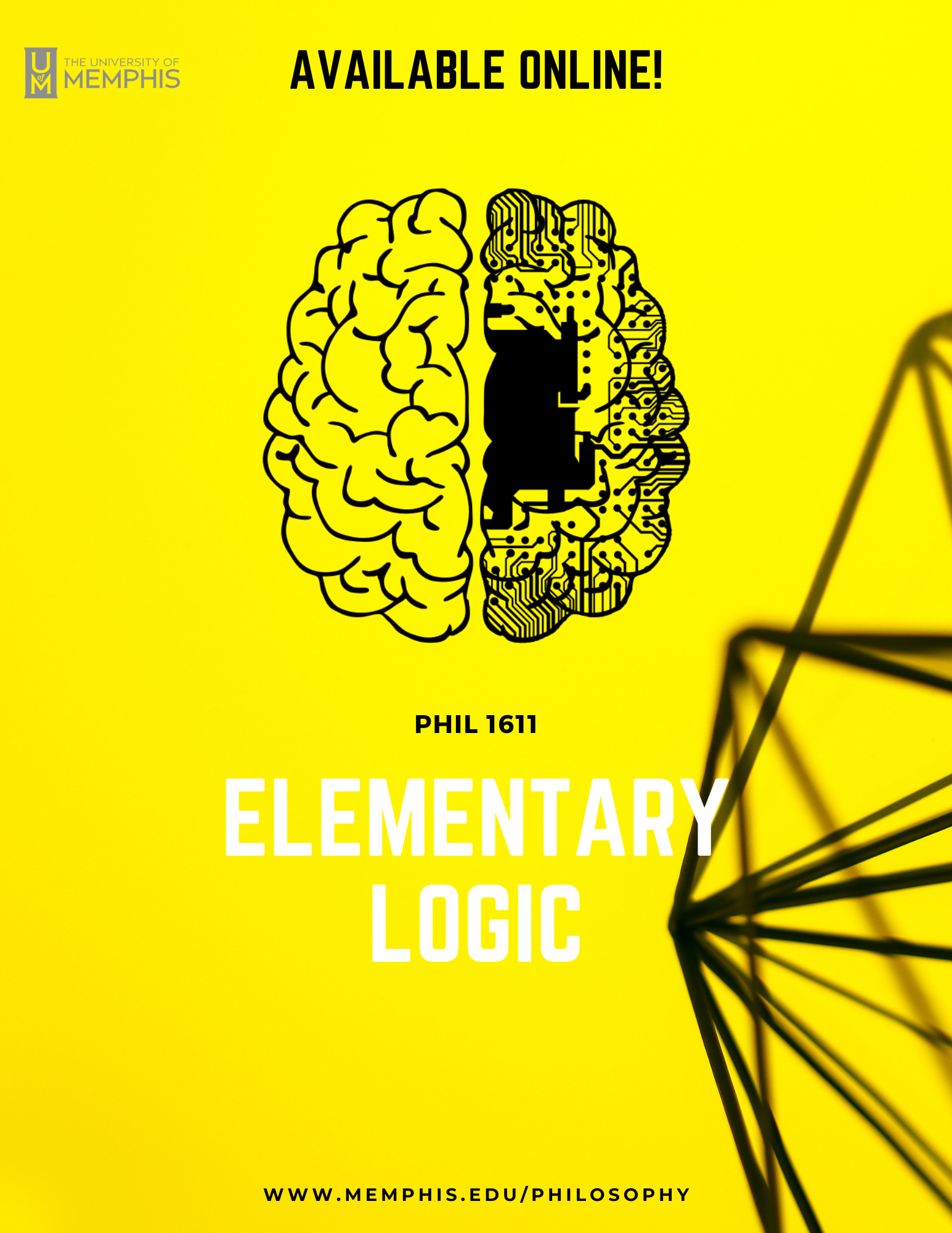
Course Description
Argumentation and debate is an important part of our lives. We might present an argument
for a raise to a boss or argue in the papers we write. We debate in the classroom,
the courthouse, or the halls of congress. While sometimes the goal of arguing is winning,
arguing is best when it helps us get closer to the truth. But arguing well is not easy and many people do not realize that there is a logic to it. This course
is a study of elementary methods of that logic. Through the examination of logical
concepts and the structure of sentences, this course will teach us how to make inferences
and reach conclusions in a way that avoids mistakes. This course will also investigate
common logical fallacies, so we can avoid making them and defend ourselves against
such fallacies. This course will focus on both formal and informal methods of logic.
Required Textbook (M50 online versions; always consult your syllabus or instructor
before purchasing textbooks)
MindTapV2.0 for Hurley/Watson's A Concise Introduction Logic, 1 term Printed Access Card. 2019. ISBN: 9780357419410
PHIL 2000 - AI and its Ethics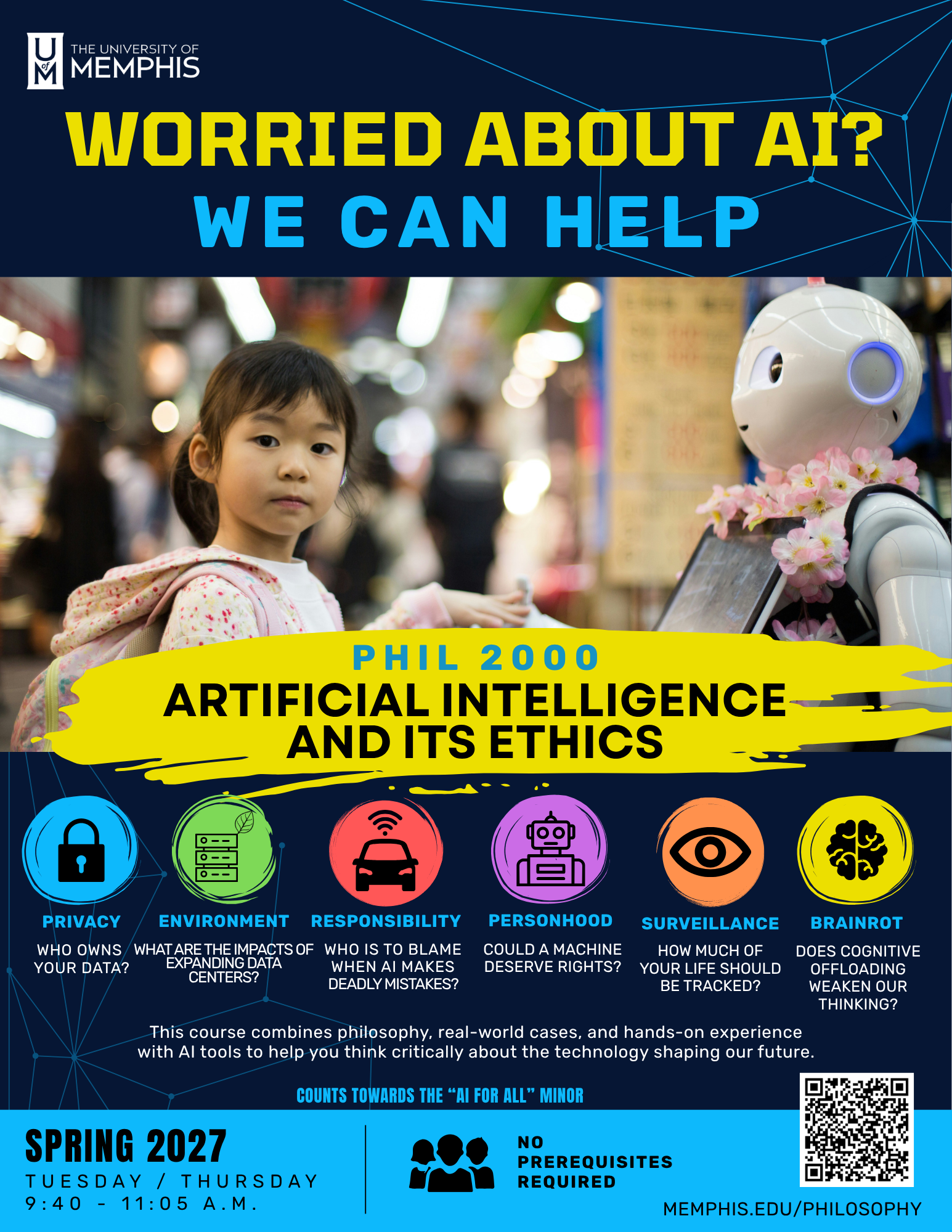
CRN 30896
TR
9:40 AM - 11:05 AM
Course Description
PHIL 3002 - History of Modern Philosophy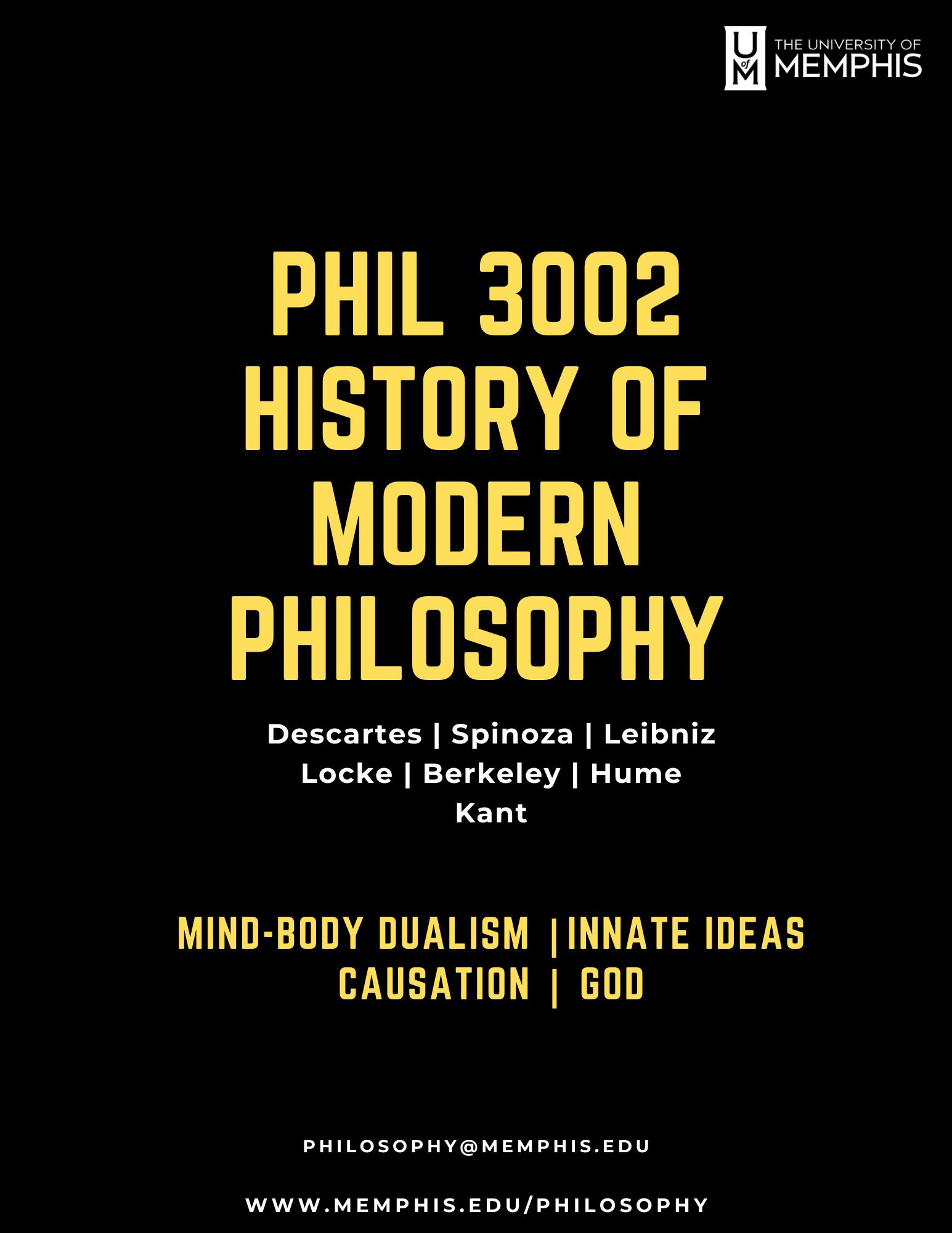
CRN 12088
TR
09:40 AM - 11:05 AM
Daniel Smith
Course Description
PHIL 3411-M50 - Contemporary Moral Problems
CRN 21390
Online/Asynchronous
PHIL 3452 - Feminism(s)
CRN 12091
MW
02:20 PM - 03:45 PM
Jameliah Shorter-Bourhanou
PHIL 3511 - Ethics
CRN 12094
MW
12:40 PM - 02:05 PM
Sean Driscoll
Course Description
PHIL 3514 - Biomedical Ethics (multiple sections; online courses available)
Course Description
Discussion of ethical problems raised by contemporary medical practices and biological
innovations from standpoint of contemporary ethical theories including abortion, euthanasia,
human experimentation and genetic engineering.
Course Description (M50 online versions)
In this course we will begin by learning about moral theory, logic/argumentation,
and concepts related to biomedical ethics such as autonomy, paternalism, informed
consent, and more. We will then explore case studies in the modules that follow. Such
topics include human research, pandemic ethics, abortion, euthanasia, and health care.
You will be expected to apply moral theory to cases studies as well as identify relevant
concepts.
Required Textbooks (M50 online versions; always consult your syllabus or instructor
before purchasing textbooks)
Bioethics: Principles, Issues, and Cases by Lewis Vaughn (multiple editions available)
PHIL 3621 - Formal Logic
CRN 24353
MW
02:20 PM - 03:45 PM
Course Description
PHIL 3705 - Evil
CRN 31521
TR
11:20 AM - 12:45 PM
Daniel Smith
Course Description
PHIL 3723-M50 - Confucianism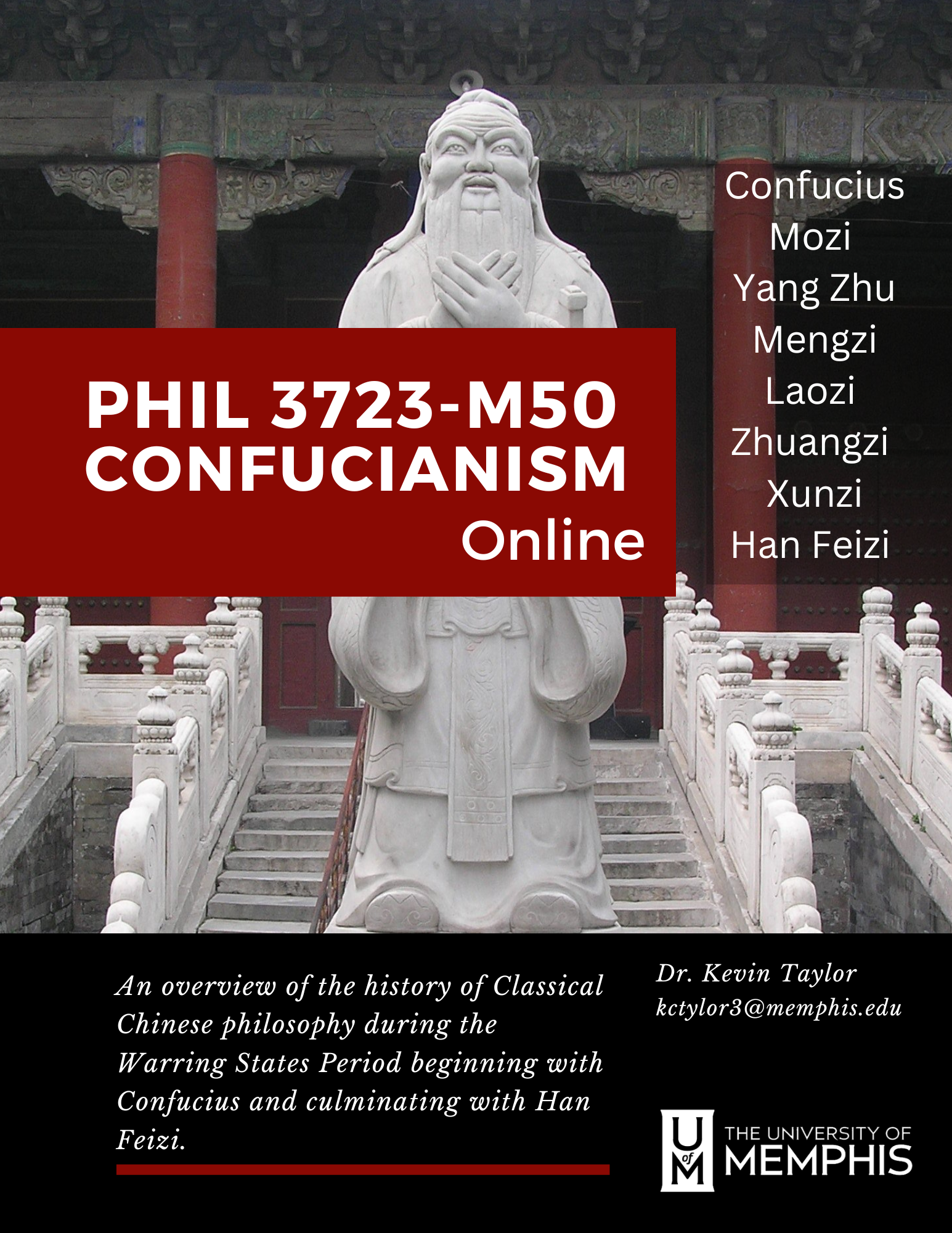
CRN 31522
Online-Asynchronous
Kevin Taylor
Course Description
This course will provide an overview of the history of Chinese philosophy with an emphasis on Confucianism. We will focus primarily on the “classical period” of Chinese philosophy which developed during the seminal Warring States Period in Chinese history. This period begins with Confucius and culminates with Han Feizi at the end of the Warring States Period and the beginning of the Qin Dynasty.
Every week we will explore a specific topic related to Confucianism whether that be methodology and historical context or individual figures such as Kongzi (Confucius), Mengzi (Mencius), or Xunzi (Hsun Tzu), or even figures opposed to Confucian thought such as Laozi (Lao Tzu), Zhuangzi (Chuang Tzu), or Han Feizi (Han Fei Tzu). By the end of the semester, you will be expected to identify the basic traits of Confucian thought, recognize the distinctive traits of competing schools of thought from within the Warring States Period, and understand the relevance of Chinese thought today.
PHIL 4421/6421 - Philosophy of Mind
CRN 21386/21387
TR
02:40 PM - 04:05 PM
Shaun Gallagher
Course Description
PHIL 7030 - Seminar in Continental Philosophy
CRN 12125
Thursday
05:30 PM - 08:30 PM
James Bahoh
PHIL 7301 - Seminar in Modern Philosophy
CRN 18995
Monday
05:30 PM - 08:30 PM
Remy Debes
PHIL 7514 - Cognitive Science Seminar
CRN 30790
PHIL 7541 - Seminar in Social/Political Philosophy
CRN 18167
Wednesday
05:30 PM - 08:30 PM
Jamelia Shorter-Bourhanou & Michael Monahan