
PhD in Epidemiology and Biostatistics with concentration in Epidemiology

PhD in Epidemiology and Biostatistics with concentration in Epidemiology
With its emphasis on translational research and emerging public health issues, the PhD program in Epidemiology and Biostatistics with a concentration in Epidemiology offers a cutting-edge, advanced training to prepare individuals for academic and research careers.
Program Flyer SOPHAS Express AssistantshipsTaking LOCAL Impact to GLOBAL Change
The PhD program with concentration in Epidemiology offers cutting-edge, advanced training in epidemiology, biostatistics and specialized topics, teaching experience and cutting-edge dissertation research in cardiovascular and metabolic disease risk factors, environmental health, sickle cell disease, smoking, cancer, and childhood obesity.
The PhD degree in Epidemiology and Biostatistics is the highest academic degree for individuals planning to pursue scholarly careers under the discipline of epidemiology and biostatistics.
Students can enhance their skills through graduate certificates in one of the following areas, or create their own plan in consultation with an academic advisor:
- Health Analytics
- Population Health Informatics
- Health Systems Leadership
- Population Health
In addition to gaining in-depth epidemiological methods and advanced biostatistical approaches, students in this concentration work closely with faculty mentors on epidemiology studies in areas including cardiovascular disease risk factors, environmental health and health disparities, allergic diseases and underlying genetic/epigenetic mechanisms, sickle cell disease, smoking, cancer, and childhood obesity.
Graduates of the program are prepared to conduct innovative, interdisciplinary, and translational epidemiology and environmental health research in community and scientific settings using advanced biostatistical methods to strengthen epidemiology and environmental health studies.
Credit Hours: 36
EPIDEMIOLOGY METHODS COURSES - 9 CREDIT HOURS
- PUBH 8141 | Epidemiological Survey Methods
- PUBH 8172 | Epidemiology in Public Health II
- PUBH 8174 | Epidemiology in Public Health III
BIOSTATISTICS CORE COURSES - 15 CREDIT HOURS
- PUBH 8152 | BIOSTATISTICAL METHODS II
- PUBH 8302 | SAS IN PUBLIC HEALTH
- PUBH 8309 APPLIED SURVIVAL ANALYSIS
- PUBH 8310 | MIXED MODEL REGRESSION ANALYSIS
- PUBH 8311 | APPLIED CATEGORICAL DATA ANALYSIS
DOCTORAL SEMINAR CORE - 9 CREDIT HOURS
- PUBH 8192 | Introduction to Human Disease
- PUBH 8720 | Grant Writing in Health Sciences
- PUBH 8901 | Doctoral Professional Development Seminar
ELECTIVE COURSES - 15 CREDIT HOURS
- In consultation with faculty and/or academic advisors
DISSERTATION - 6 CREDIT HOURS
- PUBH 9000 | Dissertation
COMPREHENSIVE EXAM
- PhD candidates are required to pass a comprehensive exam covering Epidemiology Methods and Biostatistics Core courses.
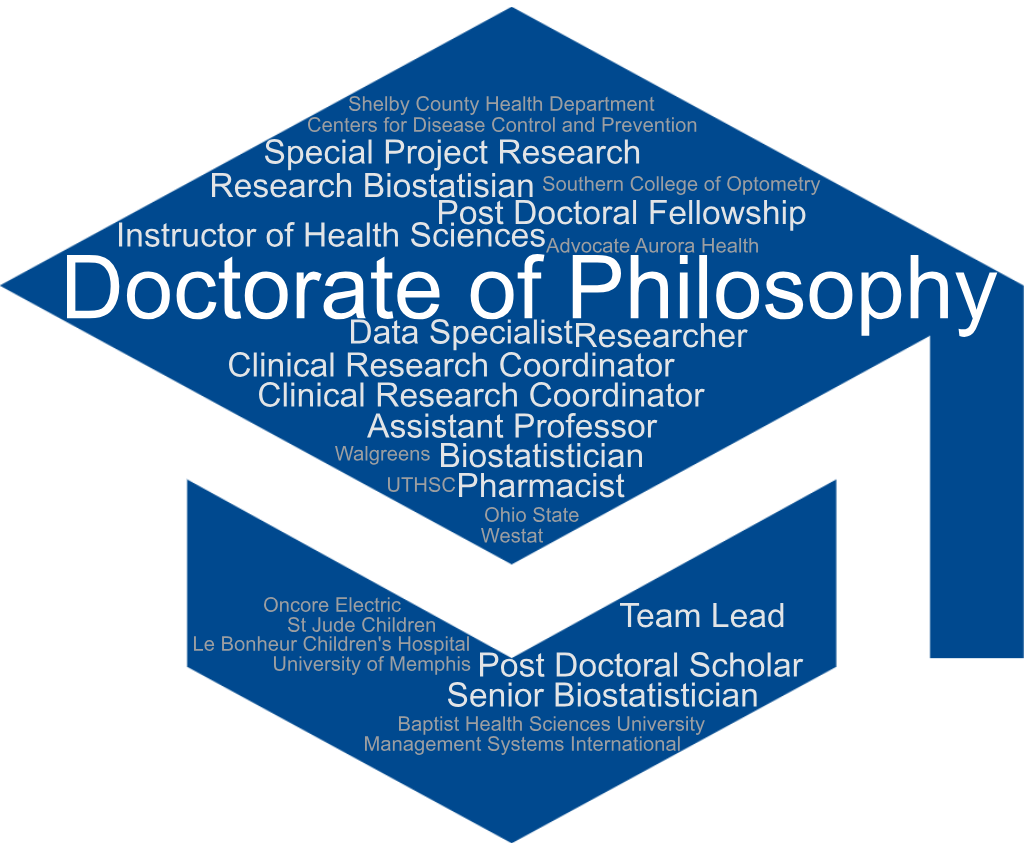
In Numbers
How to apply
Requirements:
- Completed SOPHAS application
- Undergraduate degree with minimum GPA of 3.0 and have completed Calculus I and Calculus II with a grade of B or higher
- Curriculum Vitae/Resume
- Statement of Purpose (400-500 words)
- Two (2) letters of recommendation
- Credentials evaluation for foreign transcripts
- Language proficiency test if language of instruction was not English
Connect with us
Xinhua Yu, MD, PhD, MS
Program Coordinator, Professor
Briana McNeil, MBA, MEd
Recruitment and Admissions Coordinator
Shirl Sharpe, MS
Manager, Academic Services