
School of Public Health
University of Memphis School of Public Health Hosts Global RE-AIM Public Health IDEAS Hackathon
Tuesday, 31 March 2026
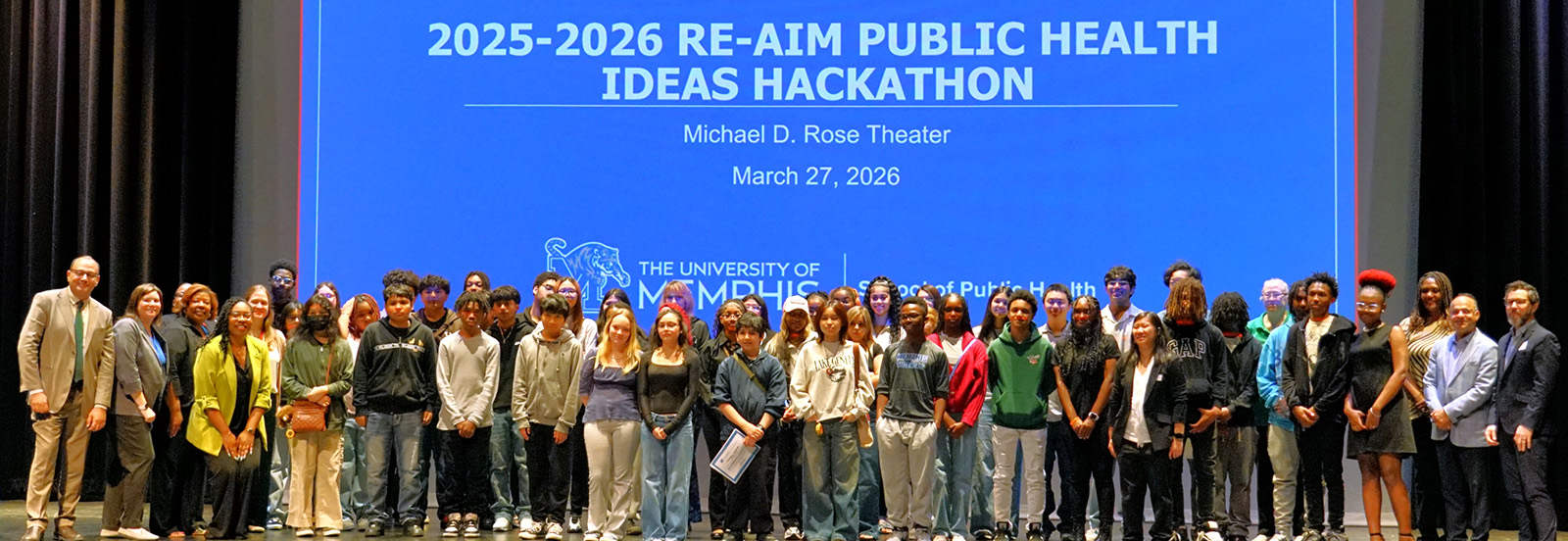
This year’s Hackathon included 85 student participants forming 37 teams across 11 countries including Canada, India, Italy, Kazakhstan, Liberia, Nigeria, Saudi Arabia, Senegal, Taiwan, Tanzania and the United States.
Local participation included students from Central High School, Cordova High School, Kingsbury High School and White Station High School, while university teams joined online from the institutions of National Taiwan University (Taiwan) and Chithram College of Paramedical Science (India).
Over the past six months, students developed projects exploring how technology, communication and community engagement can address public health issues ranging from mental health and chronic disease prevention to misinformation and digital health access.
Teams presented their work through video pitch presentations, explaining the public health challenge they identified, their proposed solution, and the potential impact on communities. Projects demonstrated a wide range of creative approaches from AI-driven health applications and disease surveillance tools to podcasts, education campaigns and youth-led health initiatives.
Student pitches were evaluated by a panel of judges including Ashraf El-Metwally, MD, PhD, Professor of Epidemiology and Public Health at King Saud bin Abdulaziz University for Health Sciences (KSAU-HS); Nathalie Occean, MHA, CPHQ, Chief Operating Officer of MedHaul; Lori Ward, PhD, MS, Undergraduate Program Coordinator and Associate Professor of Teaching at UofM SPH; Lauren Beaupre, Coordinator of College and Career Planning at University High School; and Scott Laster, CEO of MiCare Path.
Following the presentations, the judges encouraged participants to continue refining their ideas through pilot testing, clear evaluation strategies, stakeholder engagement and careful attention to issues such as data privacy and community implementation and emphasized the importance of grounding solutions in local contexts while considering their potential for broader global impact.
The Office of Communications at The University of Memphis School of Public Health