
UofM’s Leung Receives Prestigious NIH Award to Advance AI-ML Solutions for Public Health Inequities
New AI Lab positions UofM at the forefront of responsible public health innovation
and strengthens university’s leadership in AI-driven health solutions
The University of Memphis School of Public Health proudly announces that Dr. Ricky Chi Yeung Leung, professor and director of Social and Behavioral Sciences, has secured a landmark NIH award to expand research aimed at addressing health inequities through artificial intelligence and machine learning. The funding supports the newly established AI for Health Research Lab (AIHR) — an NIH-backed initiative focused on leveraging AI/ML methods to tackle urgent public health challenges, beginning with substance use disorders and expanding into broader areas of community health.

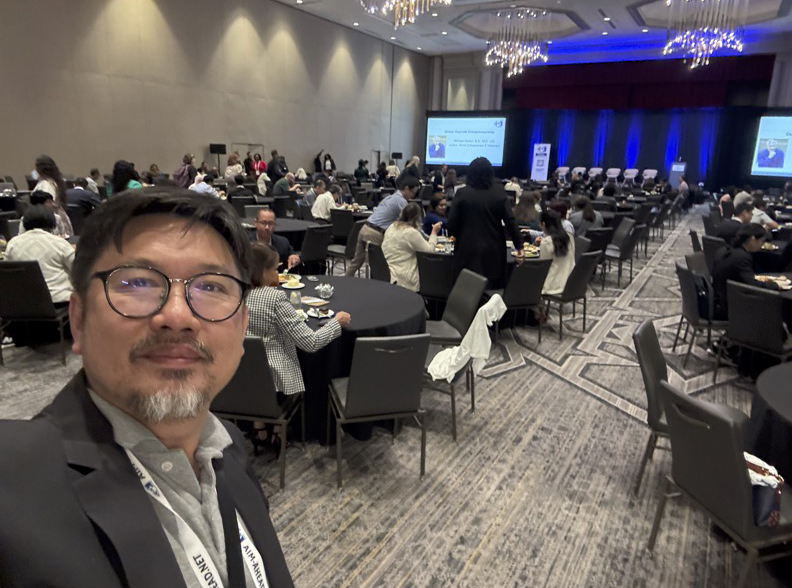
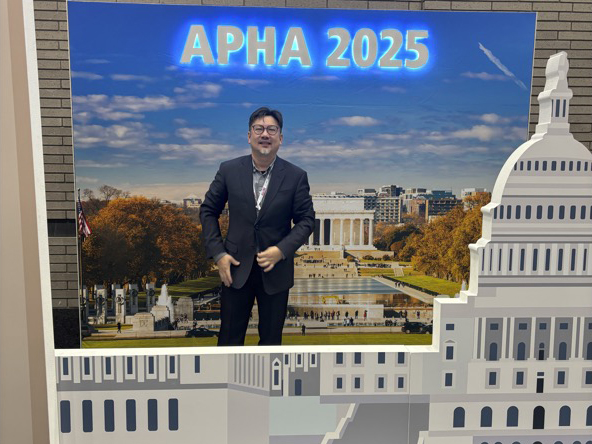
Transforming Public Health Through AI Innovation
The NIH award, provided through the AIM-AHEAD Consortium (Artificial Intelligence/Machine
Learning Consortium to Advance Health Equity and Researcher Diversity), represents
a significant investment in building both scientific solutions and local infrastructure
to support sustained advances in AI-driven public health research. AIM-AHEAD is a
national initiative designed to enhance the development and deployment of AI/ML models
across health domains, strengthen research capacity, and broaden participation in
cutting-edge data science efforts.
Under Leung’s leadership, the AIHR Lab initially concentrated on machine learning solutions to improve early detection, treatment coordination, and long-term monitoring for individuals affected by substance use disorders — a critical issue deeply affecting communities nationwide. Over time, the lab has expanded its portfolio to include AI applications for maternal and child health, nutrition, mental health, preventive care, and more — all with an eye toward equitable impact and practical use.
The lab’s research blends machine learning, digital health tools, and applied analytics to develop real-time risk prediction systems, patient interaction platforms, and AI models that support decision making in everyday health settings. Projects span age groups and contexts — from interactive, multimodal AI devices that enhance communication and healthy routines to frameworks designed for seamless integration into public health practice. A recent book by Leung on generative AI in public health highlights the lab’s cutting-edge scholarship and real-world relevance.
Building Capacity and Collaboration
A key priority for Dr. Leung and his collaborators has been strengthening the institutional
infrastructure for applied AI research at UofM. Working closely with leadership including
Dean Ashish Joshi, Leung helped found the Center for Responsible AI in Public Health
(CRAIPH) — a hub that supports ethical, community-engaged AI research and training
across disciplines. CRAIPH fosters partnerships with universities, health agencies,
technology firms, and community stakeholders, ensuring that AI innovation aligns with
public health goals and community needs.
CRAIPH also serves as the broader home for the AIHR Lab, providing governance, collaborative structures, and strategic direction to advance projects aimed at reducing health disparities and improving population health locally and beyond.
Training the Next Generation
In addition to research, the AIHR Lab is deeply involved in education and workforce
development. Leung and his team support the undergraduate “AI for All” minor and are
contributing to the launch of a new MS in Applied AI program — preparing students
to tackle real-world public health problems with advanced analytic tools and interdisciplinary
perspectives.
Through research, training, and collaboration, Leung’s work with the AIHR Lab and CRAIPH is strengthening UofM’s role in the national effort to harness AI for public good — particularly in communities that have historically faced barriers to health and technological resources.
For more information, contact Leung at rcleung@memphis.edu.