
School of Public Health
Dean Joshi Keynote Speaker for 2026 Tennessee Public Health Association Annual Meeting
Wednesday, 23 September 2026
The presentation highlighted how AI is transforming public health by improving the ability to analyze complex data, identify emerging trends, predict health threats, and support evidence-based decision-making. While AI offers significant opportunities to strengthen public health efforts, it also presents challenges related to data quality, bias, privacy, ethics, transparency, and governance. Ensuring responsible implementation is essential to maximize benefits while minimizing potential harms.
AI has the potential to enhance public health communication by creating materials tailored to different literacy levels and languages, making health information more accessible to diverse populations. Generative AI tools can reduce administrative workloads, organize large datasets, support advanced analytics, and generate insights that help address complex public health challenges. These capabilities can improve organizational performance and strengthen public health interventions and outreach efforts.
A major focus of the presentation was the work of the Association of Schools and Programs of Public Health (ASPPH) Task Force on the Responsible and Ethical Use of Artificial Intelligence. The task force was established to address the growing influence of AI across public health education, research, practice, and policy. Its recommendations are organized around four key areas: education, teaching and learning, practice and research, and policy and governance frameworks.
The presentation reviewed findings from two major projects conducted by the task force. The first examined AI policies across schools and programs of public health and found that most institutions have developed guidance related to AI use in teaching, academic integrity, and data privacy. However, fewer institutions have established policies addressing ethical considerations, legal compliance, and disciplinary processes. The second project assessed workforce training needs and found increasing demand for public health professionals with AI-related competencies. Employers are seeking skills such as systems thinking, human-centered decision-making, design thinking, data analytics, and proficiency in technologies including Python, R, SQL, and SAS.
To prepare the future workforce, the task force recommended integrating AI competencies into public health curricula, expanding continuing education opportunities, strengthening faculty and student readiness, and promoting responsible and ethical AI adoption. Additional recommendations included developing comprehensive policies, governance structures, and oversight mechanisms that ensure transparency, accountability, and public trust.
The presentation also addressed barriers to AI integration, including concerns about transparency and explainability, data bias, infrastructure limitations, regulatory requirements, and potential workforce disruption. Particular attention was given to the risk that AI systems may reinforce existing inequities if affected communities are not adequately represented during the design, development, and implementation process.
The key message emphasized that AI should be used to advance health equity, strengthen public trust, and enhance rather than replace human judgment. Successful adoption will require collaboration among educators, researchers, policymakers, practitioners, community stakeholders, and technology developers. Through ethical governance, workforce development, community engagement, and transparent practices, AI can become a powerful tool for improving public health outcomes while ensuring that innovation benefits all populations.
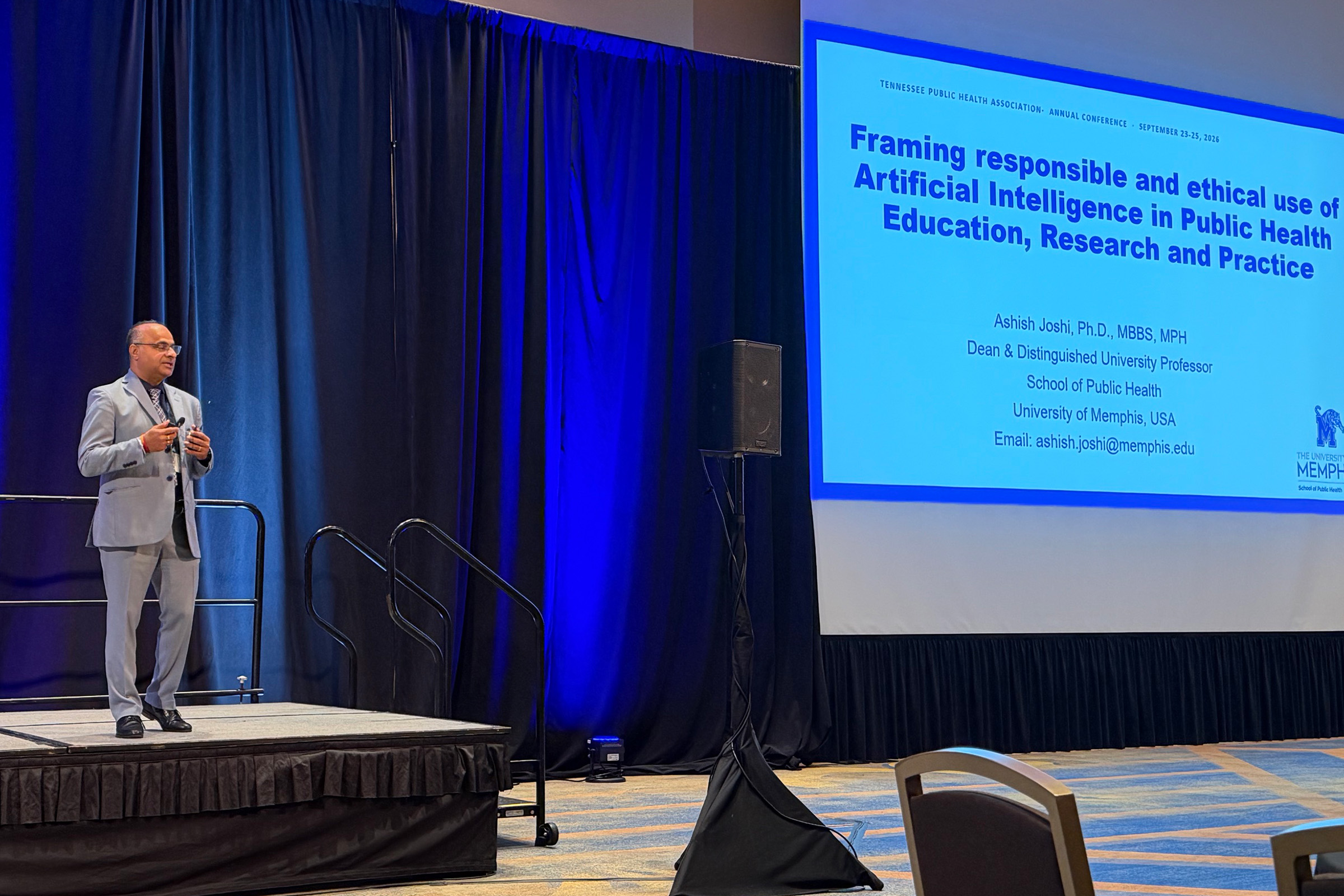
Dean Joshi Keynote Speaker for 2026 Tennessee Public Health Association Annual Meeting

Tennessee Public Health Association Conference (TPHA): (L to R) Dr. John Dunn, Tennessee Commissioner of Health; LaShan Dixon, TPHA President; Rameshwari Prasad, SBS PhD candidate; Kim Harrell, TPHA executive Director; and Charllote Boateng, Epidemiology PhD candidate.
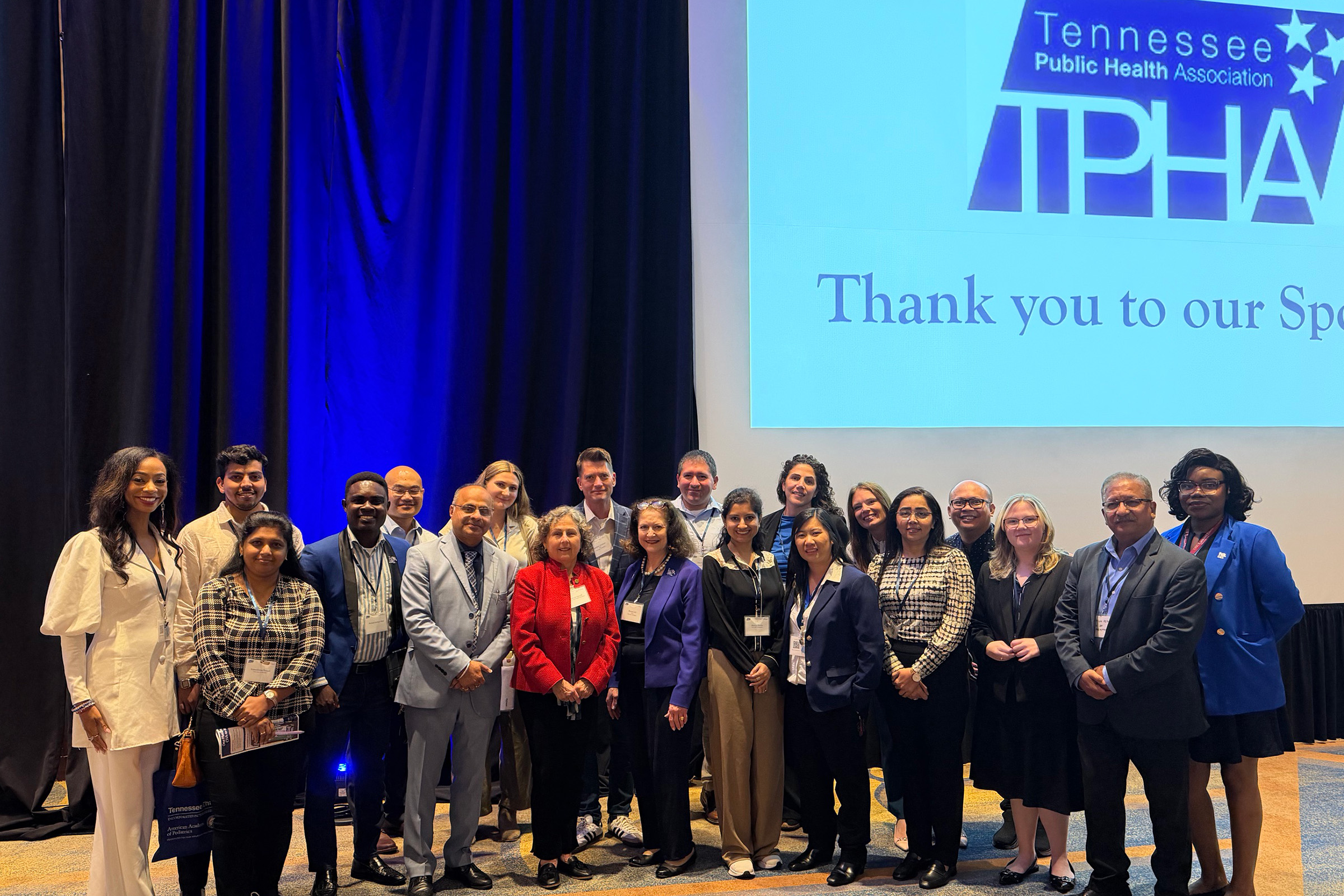
School of Public Health attendees at the 2026 Tennessee Public Health Association Conference (TPHA)
The Office of Communications at The University of Memphis School of Public Health