University of Memphis Researchers
Forge Path from Science to Startup
By Charlie Reed
Not every promising invention becomes a product. Not every patent becomes a company. And not every researcher behind a discovery wants to become an entrepreneur.
That reality has become harder to ignore at the University of Memphis.
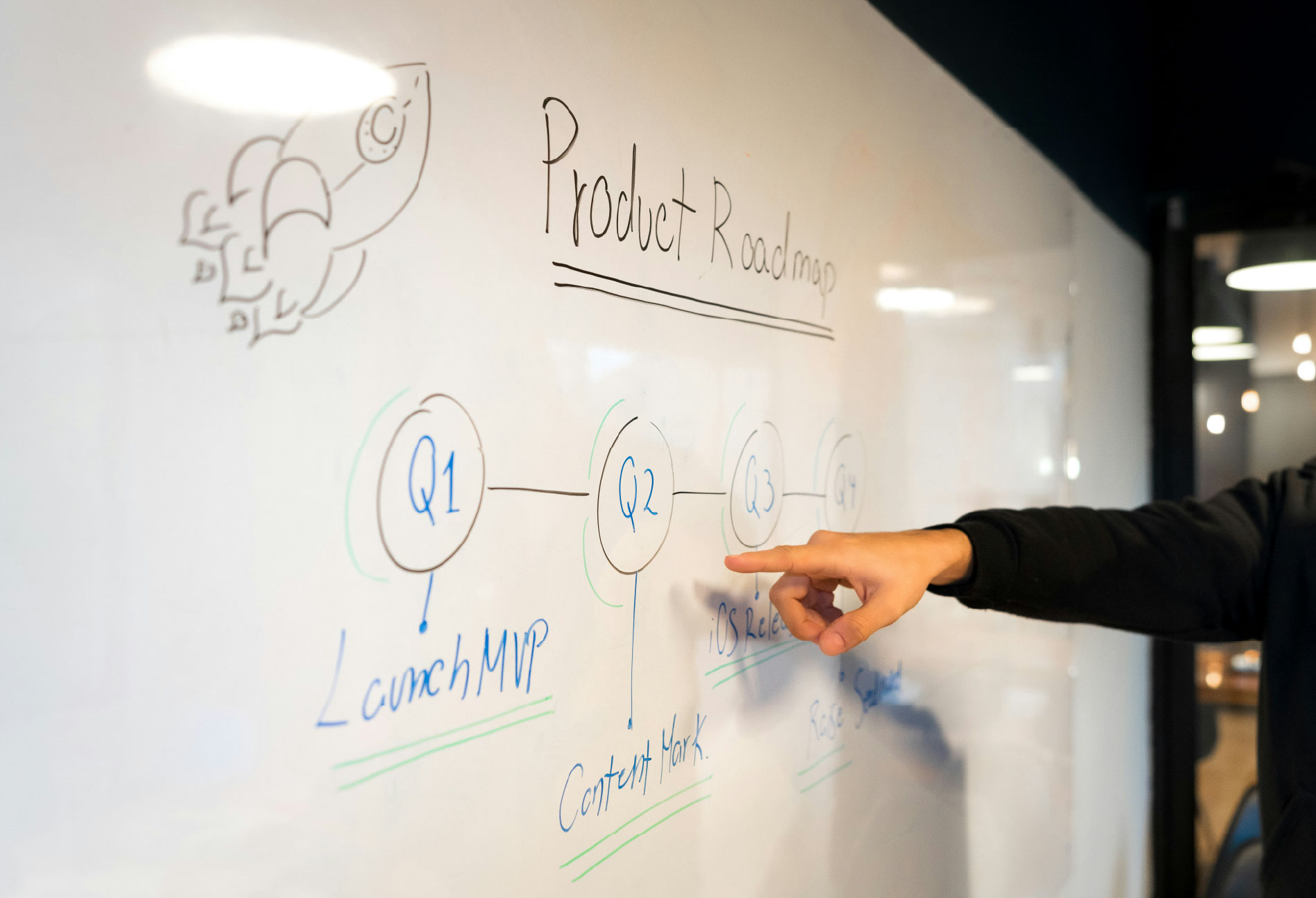
"Does the invention address any unmet market needs out there?"
—Dr. Hai Trieu
Over roughly the past decade, UofM has more than tripled its number of issued patents, from the low 20s to nearly 80.
UofM is also one of only four R1 institutions in Tennessee and crossed the $100 million mark in annual research awards in 2024. But as the University’s research profile grows, so do the more complicated questions behind the numbers: Which discoveries have a path to a product, license or startup? And which faculty members are interested in pursuing one?
Through the Tennessee Technology Advancement Consortium, or TTAC, Launch Tennessee is helping universities like UofM expand their capacity for translational research and commercialization. That support ranges from proof-of-concept funding to one-on-one guidance and connections beyond campus.
“TTAC plays an important role in helping us accelerate our efforts,” said Dr. Hai Trieu, UofM’s director of intellectual property. He said the pace of patent issuance has increased since the University became one of TTAC’s first university partners in 2023.
Trieu brings a prolific inventor’s perspective to the work. He spent decades in research and development at Medtronic and has amassed 130 U.S. patents, including more than 100 in spinal surgery.
The University’s patent growth is encouraging, Trieu said, but a patent doesn’t determine whether an invention can find a market. Faculty still must confront market size, development costs and time to market much earlier in the process.
“Does the invention address any unmet market needs out there?” Trieu often asks. “If there are a thousand products out there doing that, why bother?”
Trieu also looks at whether an invention points toward a single product or functions as a platform technology with several possible applications. More paths can mean more business opportunity, he said, but can also make the first market more difficult to choose.
UofM has built a commercialization network to help faculty make those decisions, bringing together research administration, technology transfer, the University of Memphis Research Foundation and the NSF Mid-South I-Corps Hub.
That work now includes the University’s Spinout Bootcamp, a pilot funded through the TTAC Partnership Program and designed to help a handful of research projects move toward products, companies or licenses.
One Invention, Many Possible Markets
Dr. Ranganathan Gopalakrishnan, an associate professor of mechanical engineering, began with a practical problem in the lab. His team needed an affordable way to turn dry powder into an aerosol for another experiment. After several failed approaches, they positioned an ultrasonic device at a precise distance above a bed of powder. A plume appeared almost instantly.
“We went from zero to one in just that one instant,” he said.
The result gave the team a new way to disperse dry powder and several possible directions to pursue. One was medicine. Gopalakrishnan began to wonder whether the method could deliver larger doses of drugs to the lungs, especially for patients who now rely on nebulizers or repeated inhalations.
What drew him in wasn’t only the science but the burden current delivery methods can place on patients: the wounded warfighter needing treatment before sterile conditions are available, the older patient sent home with a nebulizer that has to be cleaned perfectly, the teenager with lung disease asked to repeat inhalations again and again.
“We’re asking our patients to do more and not putting more thought into engineering the devices,” he said.
Gopalakrishnan’s invention may have a wide range of possible applications, from drug delivery to manufacturing, but not every one represents a viable market. He’s still in the customer-discovery phase, talking with clinicians, industry representatives and prospective partners.
That customer-discovery work continued through NSF I-Corps, where Gopalakrishnan’s UltraPlume team completed more than 100 interviews before its final presentation.
Trieu sees the technology as the kind of platform invention that can create opportunity and confusion at the same time. The question, he said, is which application can reach the market fastest with the least investment, then create momentum for the rest.
With the invention patented, Gopalakrishnan’s focus has turned to where to start and what kind of product or company might grow from it.
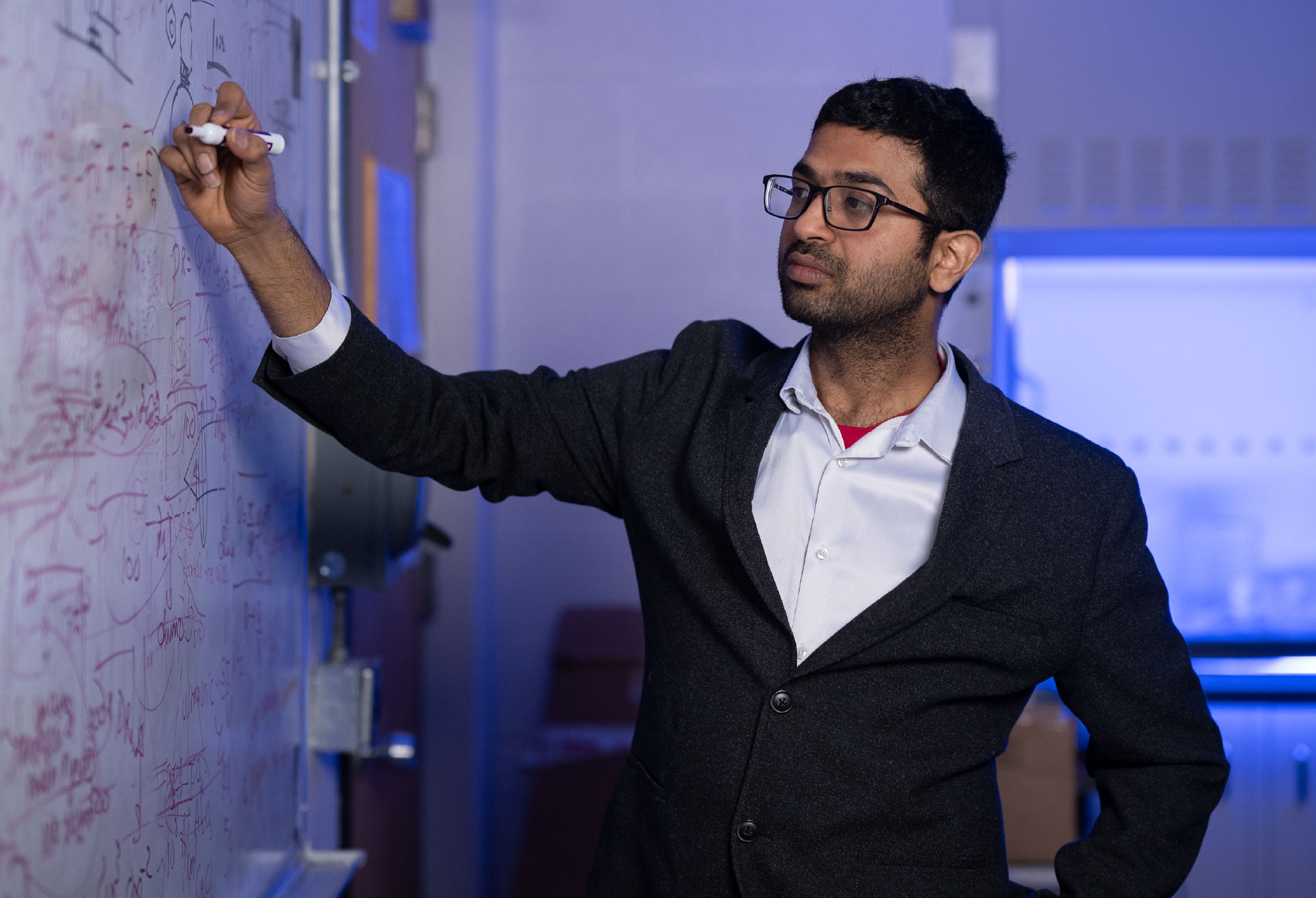
"We’re asking our patients to do more and not putting more thought into engineering the devices,"
—Dr. Ranganathan Gopalakrishnan
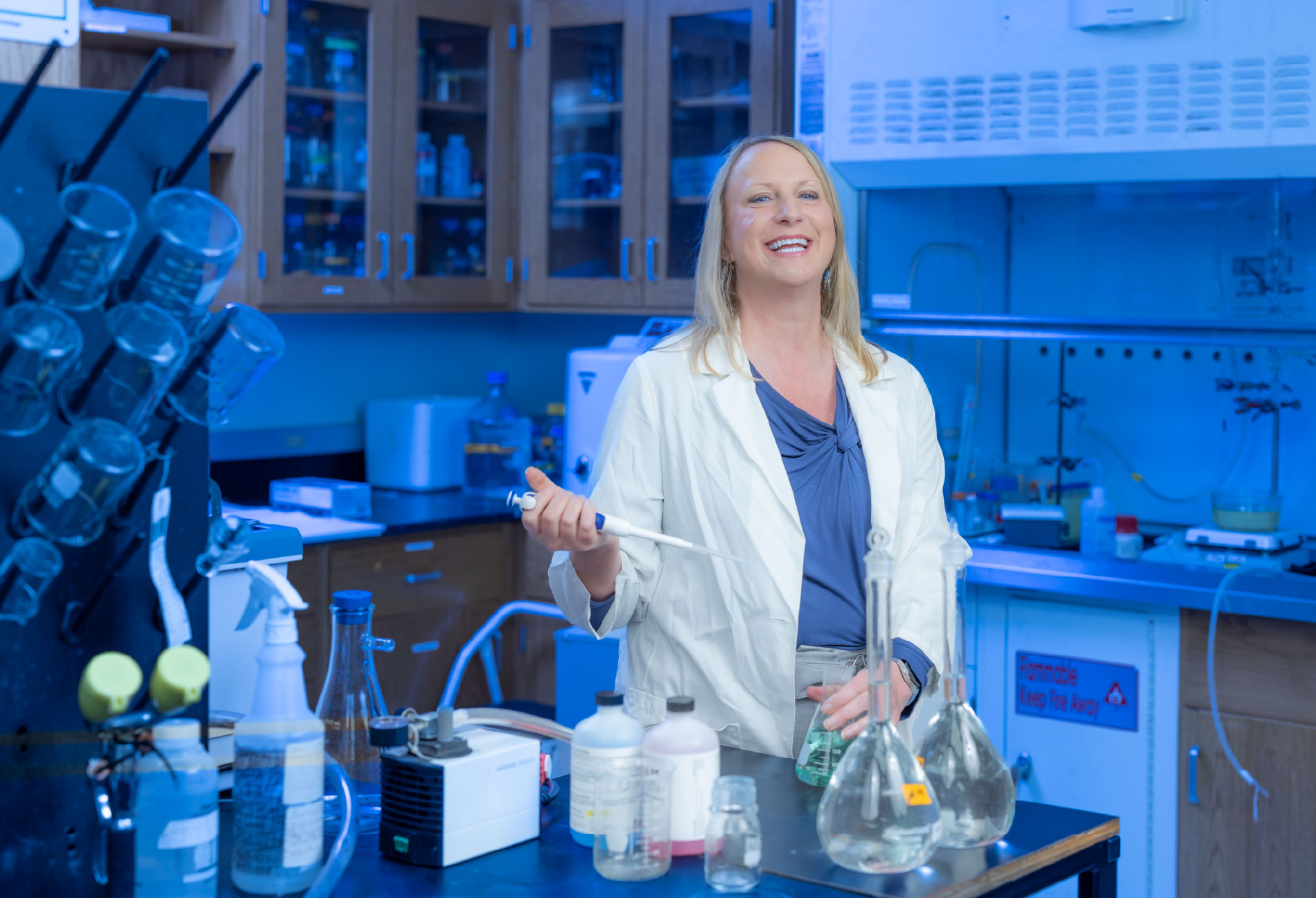
“Is this going to eventually lead to something positive or is it just a question to ask a question?”
—Dr. Amber Jennings
Making Infection Visible Sooner
Dr. Amber Jennings spent years trying to stop infection before changing course.
Jennings, an associate professor of biomedical engineering, had long studied ways to prevent and treat infections, including drug delivery systems and biomaterials.
Over time, that work led her from trying to stop infection to asking whether clinicians could detect infection sooner. ChromatoCare Innovations, her startup, uses a color-changing sensor to do just that.
The goal is not to replace a lab test, Jennings said, but to create an early warning system that could be integrated with a urinary catheter bag, allowing a healthcare worker, patient or family member to watch for a color change.
The device now exists as a working prototype, and the team is preparing to test clinical samples. ChromatoCare launched in August 2025 and has secured more than $100,000 in seed funding. Jennings is now refining and validating the device to prove it can hold up under clinical conditions.
“You have this idea and then you have to make it work,” Jennings said.
TTAC has helped Jennings develop the sensor and build a business around it. A proof-of-concept award has supported prototype development. Through the Innovation Fellowship and Spinout Bootcamp, she and her students have worked to identify potential customers, test business models and prepare for clinical testing and regulation.
Jennings also presented her product at BIO International in San Diego in June as part of the Tennessee faculty delegation led by Life Sciences TN with support from LaunchTN.
Entrepreneurship is also pushing her to think more about the value proposition of her research.
“Is this going to eventually lead to something positive,” Jennings said, “or is it just a question to ask a question?”
Saving a Billion Heartbeats
For Dr. Santosh Kumar, the journey from deep research to real-life product took nearly
two decades and $50 million in federal funding.
A professor and the Lillian and Morrie Moss Chair of Excellence in Computer Science,
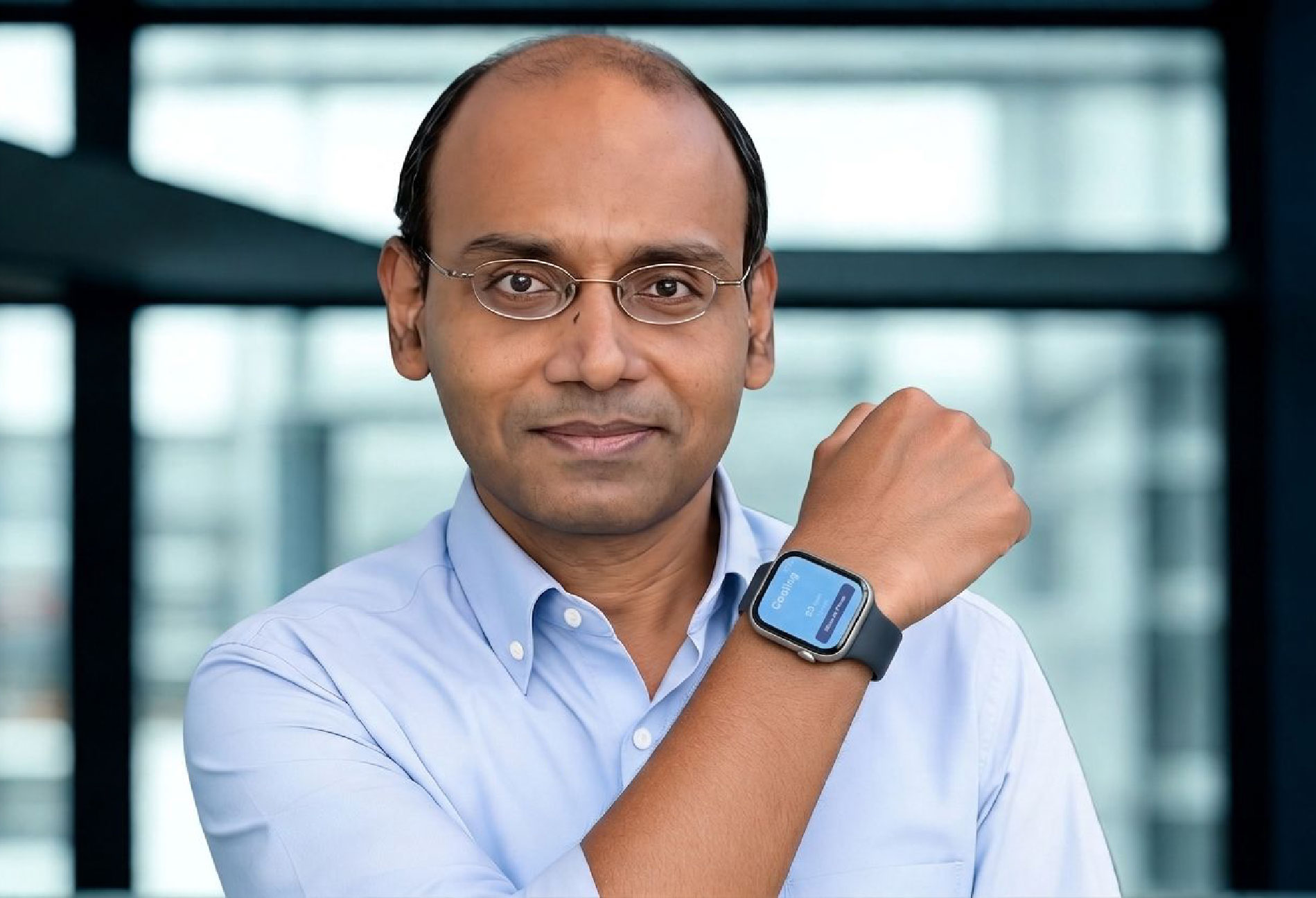
Kumar spent those years building the science behind CuesHub, a stress-detection app that uses smartwatch data to identify physiological signs
of growing stress before that stress drains people’s energy.
He describes the goal this way: “We want to help people save a total of one billion
heartbeats, so they can live longer,” Kumar said. “People can track the heartbeats
saved each day, just like their steps.”
CuesHub already is available for Apple Watch and Samsung Galaxy Watch users. The next test is whether people will choose to use it on their own, outside a research setting.
“This is a product. This is not a scientific experiment,” he said.
The distinction matters. A study can generate results, Kumar said, but a product has
to earn its place in someone’s day.
“This has been a transformation,” he said. “It’s one thing to do research. It’s entirely
another thing to develop a product, have the right messaging and then get it out into
the real world.”
Kumar’s work on CuesHub also earned third place at this year’s AI TechX, the flagship initiative of AI Tennessee focused on moving AI research into industry
application, commercialization, and job creation.
“This is a product. This is not a scientific experiment,”
—Dr. Santosh Kumar
Building the Path
That kind of decision is what Ido Sarig, the University’s director of technology commercialization,
designed Spinout Bootcamp to help researchers make.
Sarig said the projects are connected less by their fields than by the entrepreneurial
drive of the faculty members behind them. Even among that group, most want to remain
full-time professors rather than run early-stage companies. The challenge is identifying
projects ready to move and helping them keep moving.
Rather than expect faculty members to become CEOs, the bootcamp brings business experience
to them. All three researchers took part in its first cohort, working with executives
in residence and pitching their ventures to other executives interested in working
with the companies beyond the program.
Licensing a technology or launching a startup still leaves the hardest test ahead.
Customer discovery can reduce uncertainty, Trieu said, but it can’t guarantee that
people will use a product or pay for it.
Deputy Gov. Stuart McWhorter, who also serves as commissioner of the Tennessee Department
of Economic and Community Development, said universities are central to the state’s
longer-term strategy.
“Strong research universities help Tennessee attract companies, but they can also
create companies of their own,” McWhorter said. “The opportunity is to connect those
ideas to industry and capital, then give the companies that emerge a reason to start,
hire and grow here.”
TTAC enters the process earlier, before a discovery has become a company and while
researchers still have time to test assumptions, change direction and find partners.
“Most of the time, the science is the strongest part,” said Charles Layne, who leads
the consortium for Launch Tennessee. “What can be missing are the relationships around
it. TTAC helps researchers start building those earlier.”
To extend those connections beyond a single university, Launch Tennessee and TTAC
created the Tennessee Innovation Exchange, or TNIX. The statewide platform connects companies and other collaborators with
university expertise, facilities and licensable technologies.
“Companies do not always know where to look,” Layne said. “TNIX lets them start with
the problem and find the expertise, equipment or technology that matches it.”
Before research-based companies can stay and grow in Tennessee, someone has to want
what they make. That’s the test Kumar, Jennings and Gopalakrishnan are still running.
Charlie Reed is a writer for the Tennessee Technology Advancement Consortium.