
NSF-Funded AI-MERGE Program Brings AI and Engineering Research Together at UofM
New $478,511 program will give undergraduates hands-on experience using artificial intelligence to tackle real-world engineering challenges
Artificial intelligence is changing not only the technologies people use every day, but also the way researchers approach some of engineering’s most complex problems. A new program at the University of Memphis (UofM) will give undergraduate students an opportunity to be part of that transformation. Dr. Chrysanthe Preza, professor of electrical and computer engineering in the Herff College of Engineering, has received a $478,511 award from the National Science Foundation (NSF) to establish the Research Experiences for Undergraduates (REU) Site: Artificial Intelligence in Multidisciplinary Engineering Research for Guided Exploration (AI-MERGE).
The three-year program will bring 10 undergraduate students to UofM each summer for an immersive research experience centered on using AI to address multidisciplinary engineering challenges. By the end of the project, 30 students will have received hands-on training in artificial intelligence, engineering research and professional development.
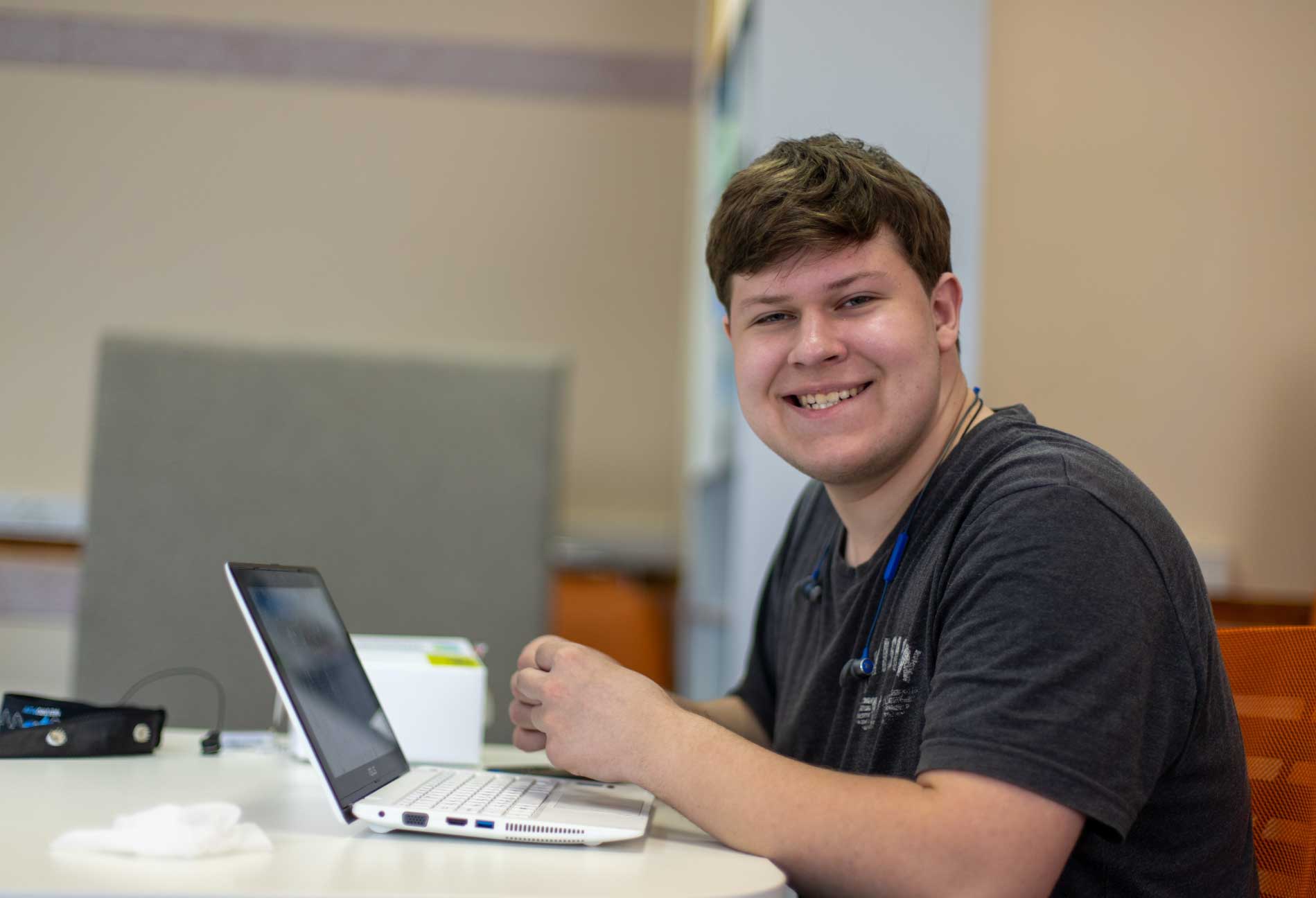
AI-MERGE participants will work alongside UofM faculty, graduate students and experienced undergraduate researchers as members of active research teams. They will contribute to project outcomes through research activities, presentations and written reports while also participating in seminars and professional development. Students will also have opportunities to present their work at regional and national conferences.
“I am very excited about our new REU project because it expands undergraduate research opportunities while preparing students to conduct research in an AI-driven world,” Preza said. “Students will work alongside faculty and graduate student mentors on multidisciplinary projects, gaining hands-on experience applying artificial intelligence to real-world engineering challenges.”
Putting AI to Work
AI-MERGE will engage students in five faculty-led research projects spanning areas such as computational imaging, biomedical systems, and smart infrastructure security and resilience. Although the applications differ, the projects share a common goal: exploring how artificial intelligence can improve the ways researchers sense, interpret, model, predict and control complex systems.
Students will learn how to formulate research questions, develop algorithms, analyze data, create computational models and evaluate how well their approaches perform. AI-focused tutorials will help prepare participants to incorporate machine learning and other computational techniques into their research.
One project will engage students in computational imaging research aimed at advancing biomedical imaging technologies.
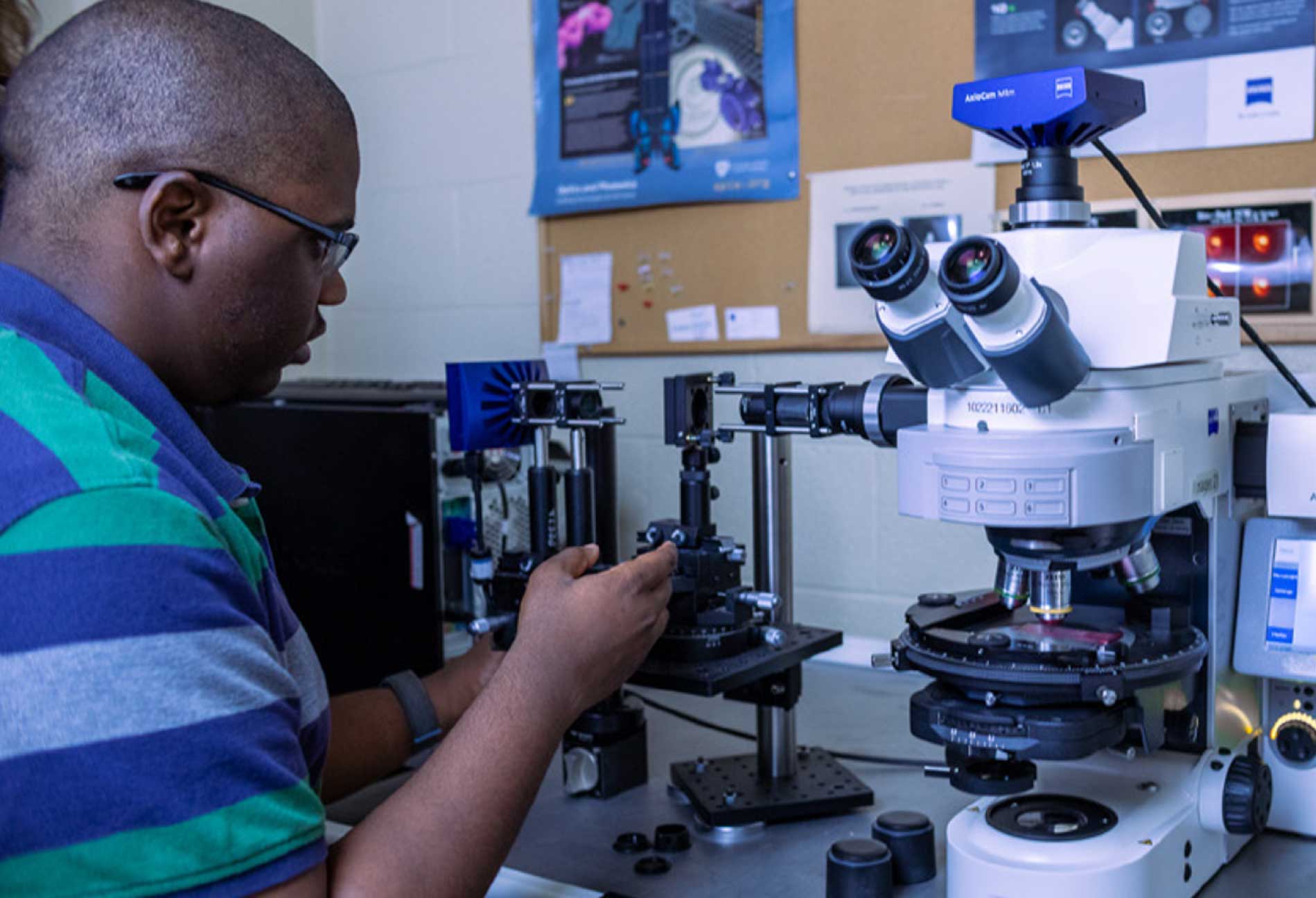
Preza’s project, “Deep-Learning-Enabled Computational Imaging to Advance 3D SIM,” builds on research in her laboratory involving computational imaging and three-dimensional fluorescence microscopy. Microscopy allows scientists to examine structures that cannot be seen with the human eye, but producing clear, highly detailed images can be challenging. Preza’s laboratory develops computational techniques that are co-designed with and integrated into advanced imaging instrumentation to enhance the resolution and quality of three-dimensional (3D) microscopy images, with a particular focus on structured illumination microscopy (SIM). Preza also holds a patent for a novel SIM instrument.
Students working on the project will investigate how deep learning and physics-based computational methods can be combined to improve 3D microscopy images. Using experimental imaging data acquired at Preza’s laboratory or publicly available datasets, students will explore approaches that combine physical models of the imaging system with machine learning techniques to computationally enhance images from acquired data. The experience provides an example of the larger idea behind AI-MERGE: teaching students to use AI not as an isolated technology, but as a research tool that can help scientists and engineers investigate difficult problems in new ways.

Research That Extends Beyond the Summer
AI-MERGE is also designed to give students an experience that goes beyond a traditional summer internship. For those who want to continue their research after the summer, AI-MERGE will connect participants with the University's Vertically Integrated Projects (VIP) Program, which allows students to participate in long-term, team-based research during the academic year.
Preza is the founding director of the Herff College's VIP Program, and AI-MERGE will build on its model of bringing together faculty, graduate students and undergraduate researchers at different stages of experience in a collaborative research and mentoring environment.
“By integrating students into vertically integrated research teams, the project provides a collaborative environment where they can develop technical expertise, research skills and confidence through tiered mentoring while contributing to ongoing research,” Preza said.
Expanding Pathways into Research
An important part of AI-MERGE is broadening access to undergraduate research for students who may not have had extensive opportunities to participate in it previously.
The program will recruit UofM students as well as students from local community colleges, four-year universities and historically Black colleges and universities (HBCUs), providing a paid summer research experience while introducing participants to potential pathways into graduate education and engineering careers.
“Through paid summer research experiences, the program will expose students to career pathways in both graduate education and the engineering workforce,” Preza said. “The experience will give students considering graduate school an opportunity to explore research and develop skills needed for advanced study, while providing all participants with practical experience that can strengthen their preparation for engineering careers.”
For community college students, the experience can also provide exposure to research universities and potential pathways toward completing a bachelor's degree. NSF funding will support student stipends and other costs associated with the summer research experience, as well as travel opportunities for students to present their work. For Preza, the investment is ultimately about developing the next generation of researchers and engineers at a time when AI is rapidly becoming part of how research itself is conducted.
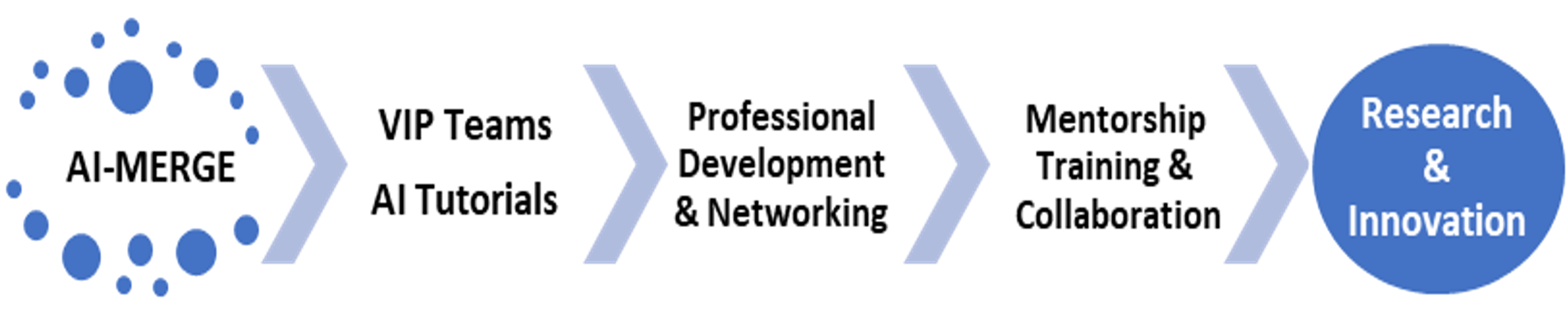
“As the founding director of the VIP Program, I have seen firsthand how sustained participation in undergraduate research can help students develop as engineers and researchers,” Preza said. “AI-MERGE builds on that experience by giving students the opportunity to engage in multidisciplinary research while developing the technical, research and professional skills they will need for graduate study and careers in engineering.”
Over the next three years, 30 undergraduate students will gain the opportunity to combine AI training, multidisciplinary research and sustained mentorship to address real engineering and scientific questions.
For more questions on this initiative, contact Preza at cpreza@memphis.edu.