
What Can a Red Feather Reveal? UofM Researcher Receives NSF Award to Explore the Biology Behind Colorful Signals
$1.4 million collaborative NSF project will examine how the cellular processes that produce red feathers may connect outward appearance with an animal’s underlying health and condition
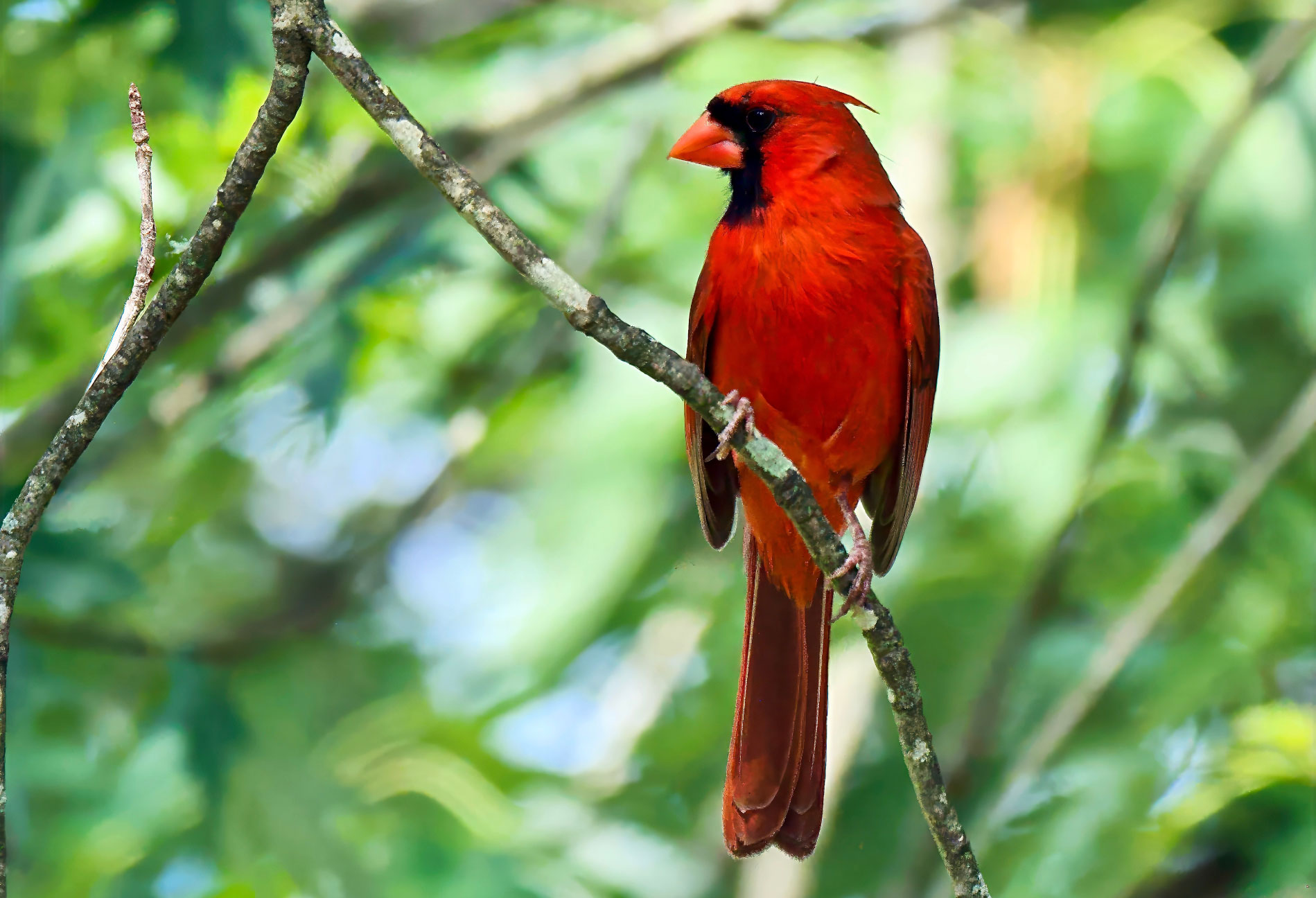
A bird’s brilliant red feathers may do more than attract attention. They may also provide important clues about what is happening inside its body.
Dr. Yufeng Zhang, associate professor in the College of Health and Human Sciences at the University of Memphis, has received a new award from the National Science Foundation (NSF) to investigate the cellular biology behind red coloration in birds and why these colorful traits can serve as reliable—or “honest”—signals of an animal’s health, vitality and reproductive potential.
Zhang is collaborating with Dr. Geoffrey Hill of Auburn University and Dr. Matthew Toomey of Michigan State University on the project, “Applying Cell Biology and Biochemistry to Understand Honest Signaling via Red Feathers.” The collaborative research has received $1.4 million in total funding from NSF.
At the heart of the project is a question that has intrigued evolutionary biologists for decades: Why should an animal’s appearance provide trustworthy information about its physical condition?
Looking Beneath the Color
The answer may be found at the cellular level. Many of the vivid red colors seen in birds are created through carotenoids, naturally occurring pigments that animals obtain through their diets. Birds consume yellow carotenoids and, through a series of biological processes, convert them into the red pigments that ultimately appear in their feathers.
Zhang and his collaborators have recently identified several of the key proteins involved in that transformation, including the enzymes CYP2J19 and BDH1L and a modifying factor known as TTC39B. Their findings suggest that the process is closely connected to some of the cell’s most fundamental functions.
The proteins involved in producing red coloration are associated with the endoplasmic reticulum, a cellular structure involved in producing and processing molecules. Researchers have also found that carotenoid metabolism appears to be sensitive to changes in mitochondrial function and the cell’s redox state, or its ability to maintain a healthy chemical balance while managing energy production and cellular stress. That connection could help explain why red coloration is meaningful. If producing vibrant red pigments depends on cells functioning efficiently, then an animal in better physiological condition may be better equipped to produce a strong red signal. In other words, the color visible on the outside could offer a window into biological processes occurring deep inside the body.
The new NSF-funded research will investigate these connections using biochemical experiments, specially engineered avian cell lines, and studies in living organisms. By examining the process from the level of individual molecules and cells through the whole animal, the researchers hope to develop a clearer mechanistic explanation for how—and why—red feathers can communicate information about an animal’s condition.
Connecting Evolution and Cell Biology
The project brings together fields that are not always studied side by side, combining modern biotechnology, biochemistry, and cellular physiology with questions about animal behavior and evolution. That interdisciplinary approach is central to Zhang’s broader research program at the University of Memphis’ Bioenergetic Research Core, where his work integrates mitochondrial biology, cellular physiology, biochemistry, and evolutionary biology to better understand how organisms respond to environmental and physiological challenges.
While red feathers provide the model for this particular study, the underlying biology has implications well beyond bird coloration. Understanding how cells manage energy, respond to stress and maintain normal function could contribute knowledge relevant to areas ranging from evolutionary biology and medicine to agriculture and conservation.
Training the Next Generation of Scientists
The NSF project will also create interdisciplinary research and training opportunities for undergraduate and graduate students and postdoctoral researchers, exposing them to techniques and concepts spanning molecular biology, biochemistry, biotechnology and organismal biology. The research will reach younger students as well. Components of the project will become part of Health Sci Labs, which engages K–12 students through hands-on demonstrations designed to introduce them to scientific discovery, experimentation and hypothesis testing. And, by connecting something immediately recognizable—a bird’s colorful feathers—with the complex cellular machinery responsible for producing that color, the project also offers an accessible way to demonstrate how scientists investigate some of biology’s biggest questions across multiple scales.
From molecules inside a cell to the brilliant red feathers visible across a landscape, Zhang and his collaborators are working to uncover the biological connections that allow outward appearance to communicate what is happening within. And in doing so, a simple red feather may help reveal much more about how cells, organisms and evolution work together.
For more information, contact Zhang at yzhang24@memphis.edu.