
Protecting the Water Beneath Us: UofM-CAESER Research Advances Groundwater Protection at West Tennessee Megasite
More than $500,000 in continued research will combine groundwater monitoring, geophysics and predictive modeling to help protect the Memphis aquifer as development and water demand increase
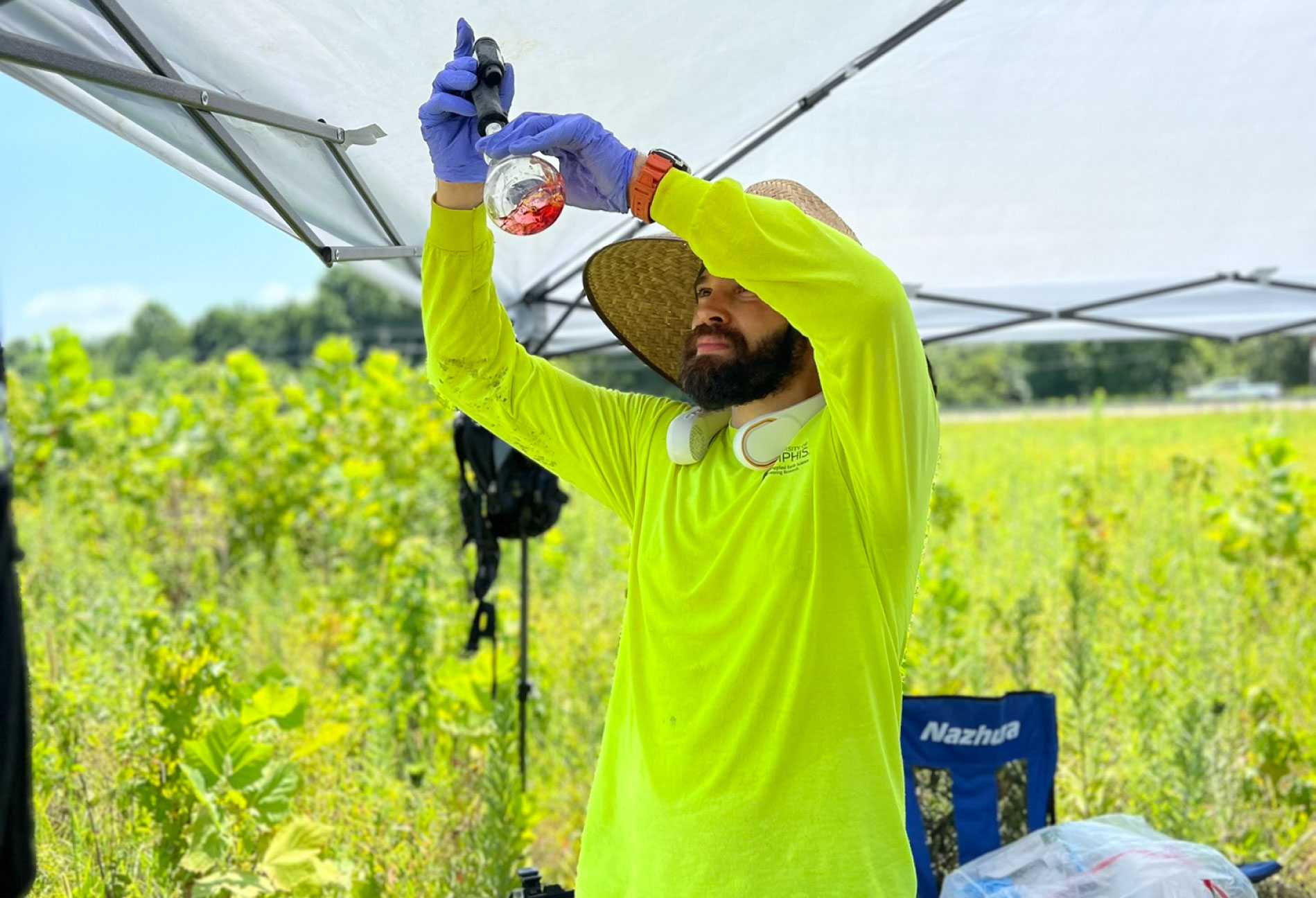
As West Tennessee experiences significant new industrial development, University of Memphis researchers are working to ensure that one of the region’s most important natural resources—the groundwater beneath it—is understood and protected for generations to come.
Building on several years of hydrogeological research at the Megasite Authority of West Tennessee (MAWT) property, commonly known as the Megasite and home to Ford’s BlueOval City manufacturing complex, researchers with the University of Memphis’ Center for Applied Earth Science and Engineering Research (CAESER) are beginning a new multiyear phase of groundwater research.
Supported by more than $500,000 in additional funding from MAWT, the work will combine long-term groundwater monitoring and sampling with advanced geophysical investigations and numerical modeling. Together, these approaches will provide a more comprehensive understanding of the groundwater system beneath the Megasite and help inform decisions aimed at protecting the Memphis aquifer as development and groundwater use increase.
The project is led by principal investigator Rodrigo Villalpando-Vizcaino of CAESER, in close collaboration with Dr. Daniel Larsen, CAESER's affiliate faculty of the Department of Earth Sciences.
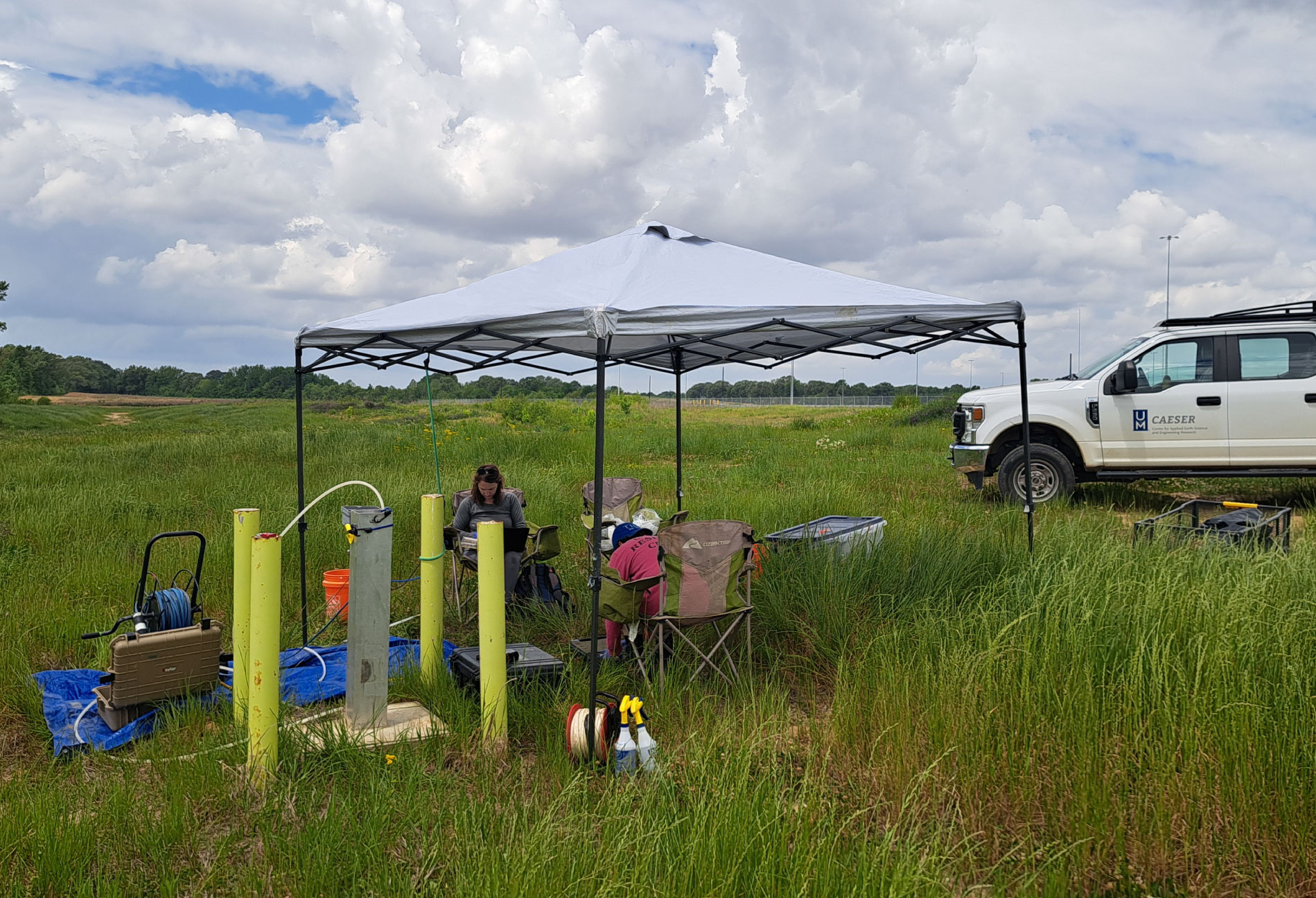
From Establishing a Baseline to Preparing for the Future
During earlier phases of the research, the UofM team worked to establish baseline groundwater conditions at the Megasite. With several years of field observations now available, researchers can begin asking more complex questions about how the groundwater system may respond to future changes.
A major focus of the new phase will be developing an updated groundwater model that brings together information from monitoring wells, groundwater-level records, subsurface geology, weather observations, and surrounding water use.
The model will allow researchers to explore scenarios that would be difficult—or impossible—to test in the real world. For example, how could increased groundwater pumping affect water levels? Which areas may warrant additional protection? And, if a contaminant were released, where could it potentially travel?
By examining these scenarios virtually, researchers can help decision-makers anticipate potential challenges before they occur.
Monitoring Changes Below the Surface
While modeling looks ahead, continued monitoring will provide the real-world data needed to understand what is happening beneath the Megasite today.
Researchers will continue semiannual groundwater sampling along with ongoing measurements of groundwater levels and temperatures. These observations help the team understand normal seasonal changes and distinguish those patterns from changes that could result from increased development or groundwater production.
To date, sampling has not identified water-quality concerns, making the expanding dataset particularly valuable. The longer researchers monitor groundwater under current conditions, the stronger the baseline becomes for evaluating potential changes.
Another important question involves understanding exactly how water reaches the Memphis aquifer.
Previous research indicates that the protective clay layer above the aquifer—known as the Cook Mountain confining unit—varies across the Megasite and may be thin or locally absent in certain areas. Those differences can influence how water from the surface moves toward the deeper aquifer.
To better understand these potential pathways, researchers will expand the use of non-destructive geophysical methods, including electrical resistivity and electromagnetic surveys. These methods allow scientists to investigate underground conditions without extensive drilling and can help reveal connections among the land surface, rivers and streams, shallow groundwater, and the deeper Memphis aquifer.
Research Supporting Responsible Growth
The project is designed to do more than simply collect additional data. By combining years of observations with new technologies and predictive modeling, the team aims to strengthen early-warning capabilities, evaluate future groundwater scenarios and provide scientific information that can support groundwater-protection decisions, including wellhead protection planning.
“This next phase allows us to build on the baseline we have established and better understand how groundwater conditions may change as the area develops,” Villalpando-Vizcaino said. “The goal is to support growth while protecting groundwater for the long term.”
The project will also provide hands-on research opportunities for two University of Memphis graduate students from Civil Engineering and Earth Sciences. The students will contribute directly to groundwater monitoring, geophysical investigations and modeling while gaining experience applying scientific and engineering methods to a significant regional challenge.
As development continues across West Tennessee, the research demonstrates the role universities can play in helping communities balance economic growth with responsible management of critical natural resources. By understanding what is happening underground today—and modeling what could happen tomorrow—the UofM team is helping provide the scientific foundation needed to protect the Memphis aquifer well into the future.
For additional information about the project, contact Rodrigo Villalpando-Vizcaino at rvlllpnd@memphis.edu.