
Building Better Infant Feeding Support for Parents with Developmental Disabilities
Robert Wood Johnson Foundation award supports UofM research aimed at understanding parents’ experiences and creating more responsive nutrition and health services

Feeding a baby comes with questions, decisions, and challenges for nearly every new parent. But for parents with developmental disabilities, the health care and nutrition services intended to help them may not always reflect their experiences or provide the support they need.
A new University of Memphis research project aims to help change that.
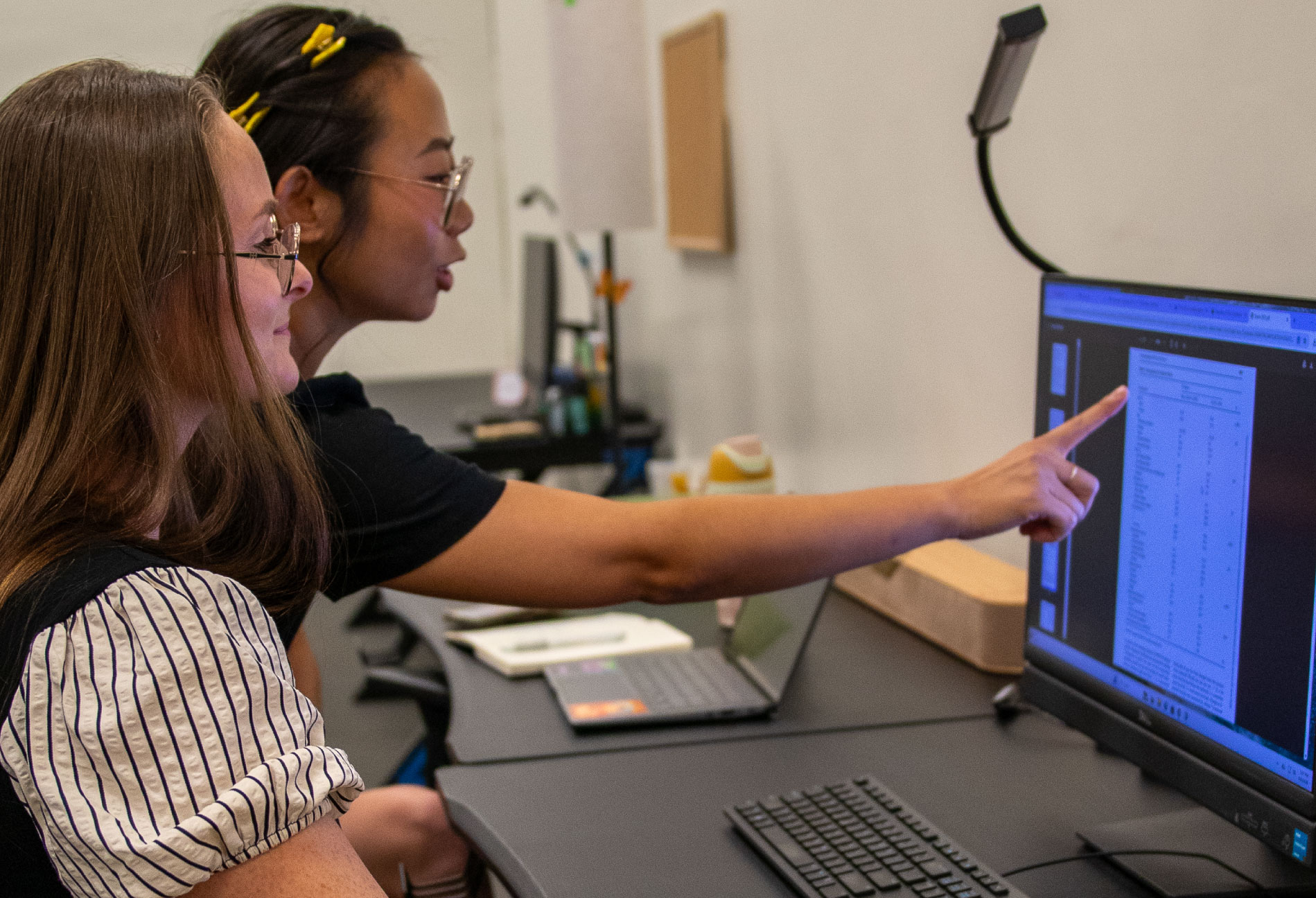
Dr. Stacy Vegas Lu, assistant professor in the College of Health and Human Sciences (CHHS), has received a two-year, $260,000 grant from the Robert Wood Johnson Foundation (RWJF) to examine the infant feeding experiences and support needs of parents with developmental disabilities.
The award comes through RWJF’s competitive Health Equity Scholars for Action (HES4A) program, which supports research focused on advancing health and well-being in communities across the United States. The award also represents an important career milestone for Lu, who joined the UofM as a tenure-track faculty member in January 2026 and will serve as a principal investigator for the first time.
Listening to Parents—and the Professionals Who Support Them
Developmental disabilities encompass a range of conditions that begin early in life and can affect how people learn, communicate, or interact with their surroundings throughout their entire life. Examples include attention-deficit/hyperactivity disorder (ADHD), autism, and intellectual disabilities. Lu’s research focuses on an area that has received little attention: what happens when people with developmental disabilities become parents and need information and support to feed their infants.
Infant nutrition can have important implications for the health and well-being of both babies and their parents. Current recommendations generally call for exclusive breastfeeding during the first six months, followed by the introduction of solid foods while breastfeeding continues for up to two years or longer, if desired. When breastfeeding is not possible or chosen, infant formula provides the appropriate alternative during the first year. Regardless of practice, parents need to be supported and taught how to safely feed their babies.
Although general guidance about these practices already exits, much less is known about whether existing information, health care services and feeding support meet the needs of parents with developmental disabilities.
Lu's project begins by asking those parents directly. Using surveys and interviews, her research team will learn from parents with developmental disabilities about their infant feeding experiences, including the challenges they encounter, the support they receive and where gaps may exist.
Lu's research team will also interview medical, lactation and nutrition professionals who work with families during the infant feeding period. Bringing together perspectives from both parents and practitioners can help identify where services are working well—and where changes could make support more accessible, responsive, and effective.
Research With, Not Just About, the Community
Community-centered research is fundamental to Lu’s approach. Her work uses mixed methods, combining quantitative information from surveys with the deeper context that can emerge through conversations from interviews. The goal is not simply to study a population, but to better understand people's lived experiences and use that knowledge to strengthen the systems and services intended to support them.
Lu also brings a personal connection to the research. As a disabled researcher with ADHD, she shares community with the population at the center of her work, providing an additional perspective on the importance of ensuring that research questions and solutions reflect the experiences of people with developmental disabilities.
Her training is rooted in public health. Lu earned both her PhD and Master of Science in Public Health in maternal and child health from the Johns Hopkins Bloomberg School of Public Health before joining the University of Memphis. The new RWJF-supported project expands upon her previous research examining infant feeding among parents with developmental disabilities and advances a broader research program focused on strengthening nutrition supports and services for this population and their families.
From Understanding Experiences to Improving Support
Ultimately, the project is intended to move beyond identifying disparities. By understanding what parents experience and what practitioners encounter when providing care, Lu hopes the research can identify practical opportunities to improve infant feeding information, resources and services. Those findings could help health care providers, lactation professionals, nutrition specialists and others better tailor their approaches to parents with developmental disabilities—helping families make informed feeding decisions and receive care that works for them.
The project will also create new opportunities for University of Memphis students to participate directly in community-centered health research. Two CHHS students are already serving as research assistants: one from the undergraduate dietetics program and another from the Doctor of Physical Therapy program. Their involvement reflects the interdisciplinary nature of a challenge that crosses public health, nutrition, health care, disability and maternal and child health.
For Lu, the ultimate goal is straightforward but significant: fill an important gap in what is known about parents with developmental disabilities and use that knowledge to help build better systems of support.
By listening first to the parents themselves, the research could provide an important foundation for improving infant feeding services—and promoting the long-term health and well-being of parents and their children.
For more information, contact Lu at svlu@memphis.edu.