Division of Research & Innovation
A Color-Changing Sensor to Detect Infections Early—Right from the Wound Site
UofM researchers create a simple, smart solution to monitor infections faster and more safely
Infections are one of the biggest challenges in healthcare today, especially as antibiotic resistance continues to grow. They’re even more difficult to treat when bacteria stick to surfaces like medical devices or wound dressings. For older adults, wounds and pressure sores are particularly dangerous due to changes in skin, circulation, and immune function.
Currently, doctors often must rely on visual checks or their best judgment to decide if an infection is present. Confirming an infection usually involves taking a sample from the wound and sending it to a lab, a process that can take hours or even days. During this time, the wound may get worse, and removing dressings to check it can further harm the skin or introduce more bacteria.
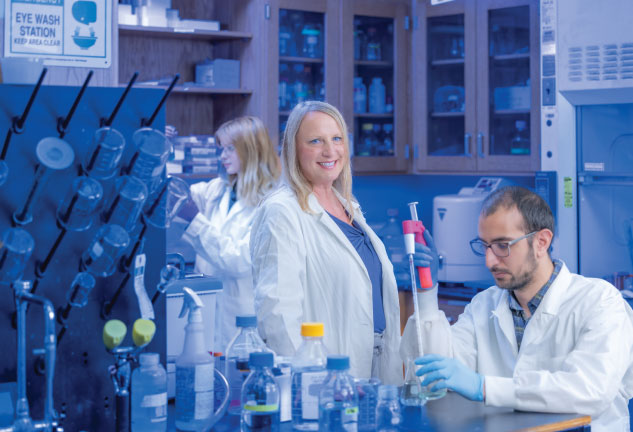
To help solve this problem, a team of biomedical engineers, graduate students, and healthcare professionals led by Dr. Amber Jennings, associate professor in Biomedical Engineering, at the University of Memphis has developed a color-changing sensor that can detect signs of infection right at the wound site. The sensor reacts to bacteria like Staphylococcus aureus, a common cause of infection, by changing color—offering a simple visual cue that something may be wrong.
While the sensor doesn’t identify the exact bacteria, it gives patients, caregivers, and clinicians an early warning sign, helping them act quickly. It can also help monitor whether treatments are working without needing to remove dressings too often.
This innovation has the potential to make infection detection faster, easier, and safer, especially for older adults or people with chronic wounds—leading to quicker care, shorter hospital stays, and a better quality of life.
For more information on this research, contact Jennings at jjnnings@memphis.edu.