College of Education (COE)
Early Smith Brings Experience and Understanding to TigerLIFE
From the court to the classroom:
Monday, 26 October 2026 - Learn how Early Smith draws on his career and personal experiences to help TigerLIFE students prepare for employment at the University of Memphis.
After surviving a life-threatening emergency and spending weeks in a hospital unconscious,
Early Smith woke up to a new reality that included a wheelchair and daily challenges,
but Smith’s playbook never included giving up.
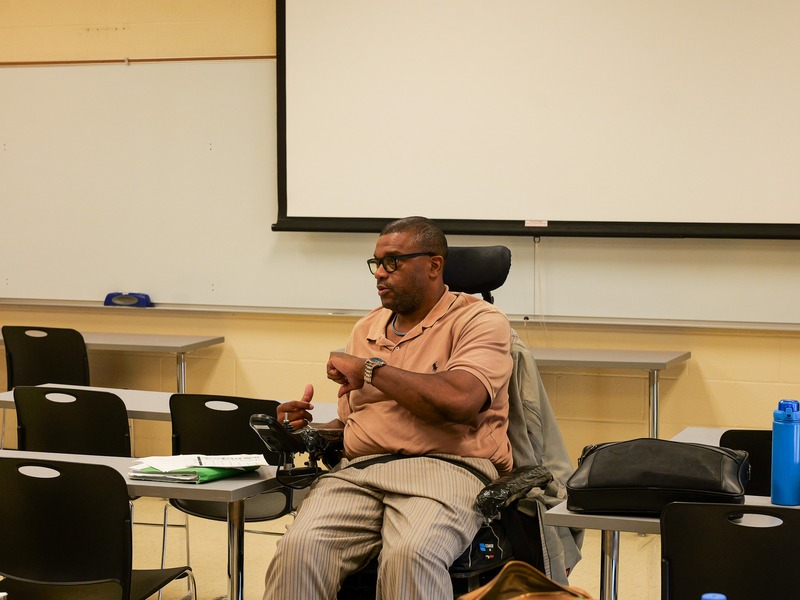
A program of the University of Memphis Institute on Disability within the College of Education, TigerLIFE helps students with intellectual and developmental disabilities build employment, independent living and social skills. Smith works closely with these students as they prepare for jobs, teaching what it takes to succeed in the workplace.
His path to TigerLIFE started on the basketball court.
In high school, Smith lettered in basketball all four years. The 6-foot-8 center and forward earned a scholarship to Mississippi State University, where he was a member of the 1996 Final Four team in his freshman season.
He transferred to the University of Houston, where a serious right knee injury eventually ended his basketball career. Smith continued his education, where he earned a bachelor’s degree in psychology and a master’s degree in sports administration.
After graduation, Smith came back to the Mid-South to gain experience working in higher education. He became an admissions counselor and recruiter at Rust College in Holly Springs, Miss., where he met his wife, LaKeisha.
Smith later worked in recreation, health care, corrections and disability services. Each role gave him the experience that would eventually shape his work with TigerLIFE.
In 2002, Smith was diagnosed with multiple sclerosis, at first, he did not have many noticeable symptoms. By 2016, he had developed a limp and started using a cane in 2019. He medically retired from his position at the Federal Correctional Institution,Memphis in 2021.
In March 2023, Smith was picking up his son from basketball practice when he felt a sharp pain move from his stomach into his chest. A coach called an ambulance, and Smith was taken to the hospital with a life-threatening aortic emergency.
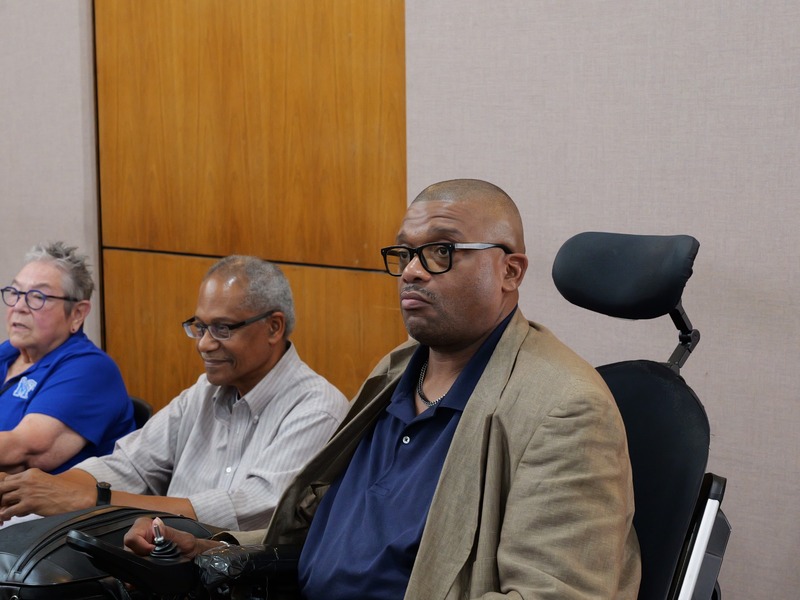
There were complications after surgery, and he did not regain consciousness until three weeks later. During rehabilitation, a therapist introduced him to the idea of using a power chair. Smith has used one since 2023 and says recovery and adjustment remain a day-by-day process.
Those experiences now help Smith connect with TigerLIFE students. Living with a disability has given him greater patience and a deeper understanding of the challenges students may face as they work toward their goals.
Smith says one of the most meaningful parts of his work is watching students graduate And that the moment represents their hard work, the progress they have made, and the futures they are building.
“TigerLIFE means a great deal to me,” Smith said. “The family ties, relationships, and camaraderie with the whole organization mean a great deal to me.”