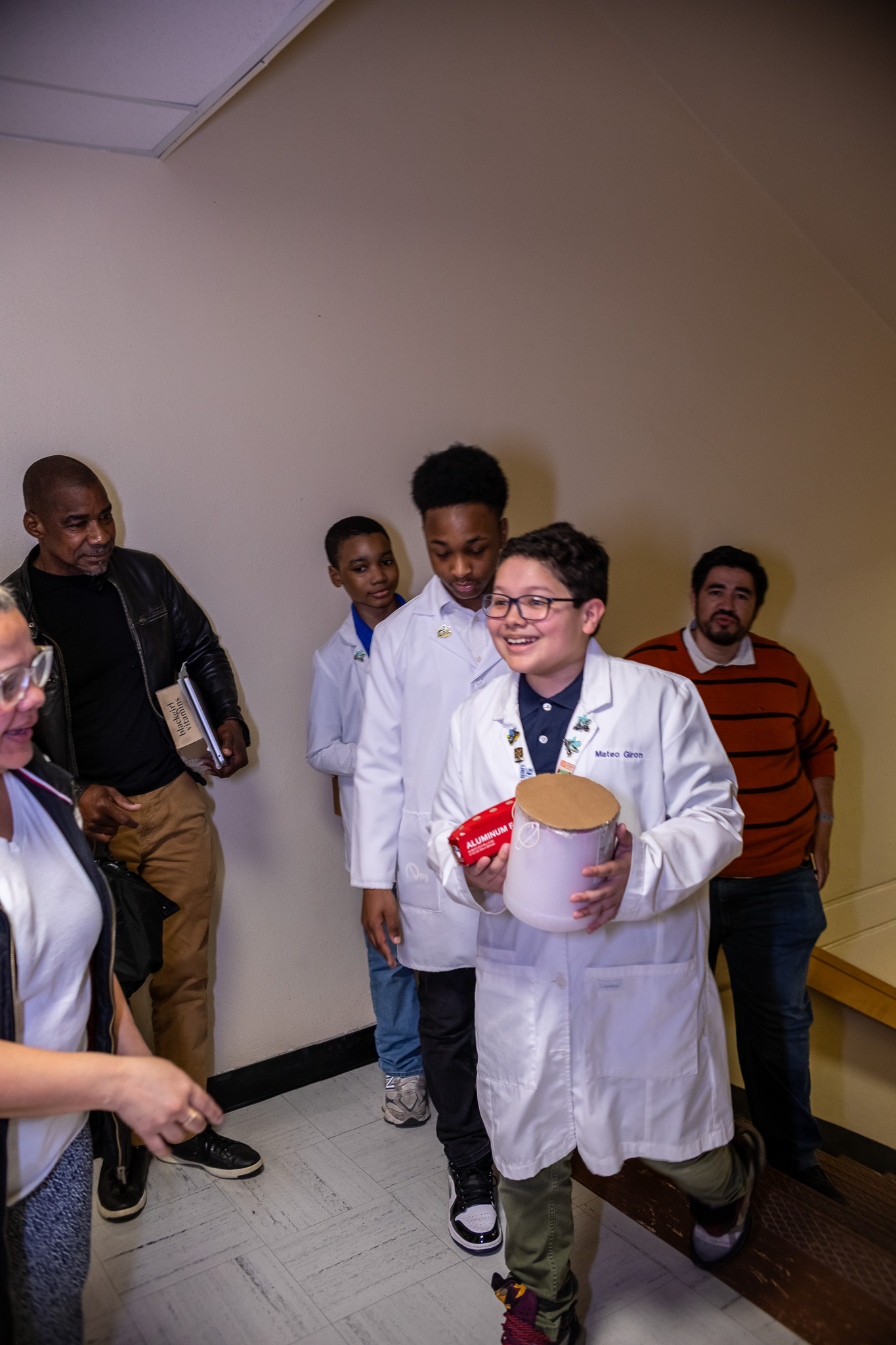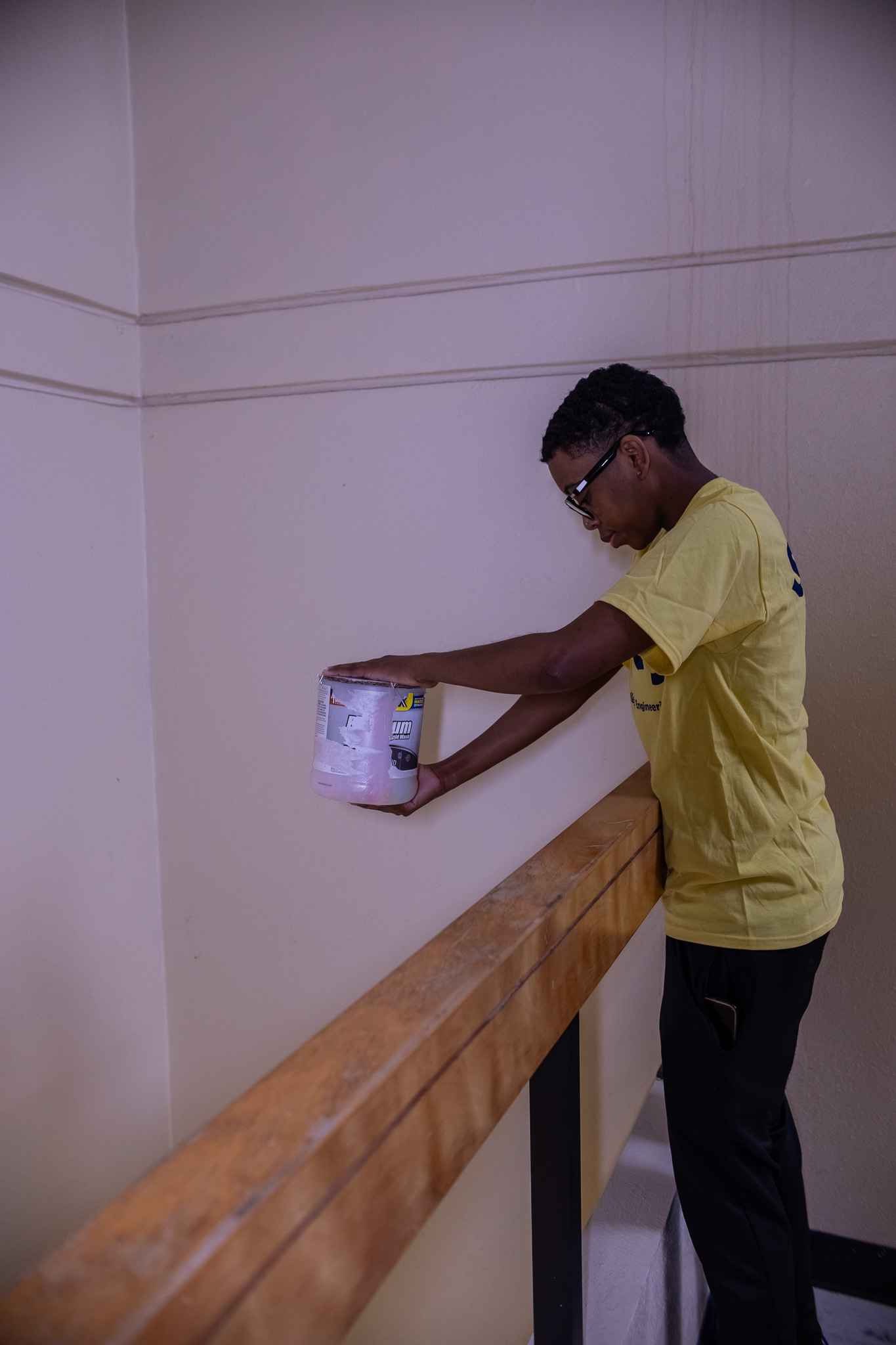
Egg Drop Competition
Can you protect an egg from a 16 ft fall? Teams will design and construct an Egg Transport Vehicle (ETV) capable of safely delivering an uncooked egg from a first-floor landing to the ground below. Success requires creativity, engineering design, material selection, and problem-solving skills to create a lightweight yet effective protective system.
Competition Overview
- Grade Levels: 3-8
- Team Size: 1-5 students
- Competition Setting: Indoor drop test from approximately 16 feet
- Materials Provided: Eggs only (competition eggs supplied onsite)
- For this competition, all competition entries must be completed before arrival at Engineering Day. Teams should arrive with their entry fully assembled and ready for inspection and competition.
- Skill Focus: Engineering design, prototyping, testing, materials science, creativity, and teamwork
The Challenge
Design and build an Egg Transport Vehicle (ETV) that can safely transport an uncooked egg from a first-floor landing to the designated landing zone below. The goal is to protect the egg while minimizing the overall score. Teams must balance durability, weight, and material choices to achieve the most efficient design. Projects that demonstrate creativity and innovative engineering solutions are strongly encouraged.
Design Requirements
For this competition, all competition entries must be completed before arrival at Engineering Day. Teams should arrive with their entry fully assembled and ready for inspection and competition.
Size & Weight Limits
Each Egg Transport Vehicle must meet the following specifications:
- Must fit within a rectangular volume measuring:
- 25 cm × 25 cm × 50 cm
- Must weigh no more than:
- 2.72 kg (5 pounds)
Approved Materials
The ETV may only be constructed using one or more of the following materials:
|
|
|
Prohibited Materials
The following materials are not allowed:
- Plastics
- Styrofoam
- Balloons
- Synthetic packaging materials
- Any similar cushioning or packaging products
Materials Provided
Each team will receive:
- One official competition egg at the event
- Access to the designated drop location
Teams are responsible for supplying all construction materials and any practice eggs used during preparation.
Competition Procedure
Before competition begins, judges will verify:
- Size requirements
- Weight requirements
- Material compliance
Only qualifying designs will be allowed to compete.
The Drop
- The egg will be placed inside the team's ETV.
- An event official will perform the drop.
- The ETV will be released from a first-floor landing approximately 16 feet above the ground.
- The vehicle must land within the designated landing area.
Egg Evaluation
Immediately after the drop:
- Judges will inspect both the egg and the ETV.
- Eggs will be classified as:
- Undamaged
- Damaged (visible cracks or worse)
Failure Conditions
A damaged egg results in:
- Score = 0
- Removal of the design from scoring consideration.
Scoring Formula
For vehicles with an undamaged egg:
Score = X₁ + X₂
Where:
- X₁ = 10 × (Mass of ETV in grams)
- X₂ = 100 × (Number of different materials used)
Winning Criteria
- The winning design is the ETV with the lowest score among all entries with an undamaged egg.
- Because lower weight and material efficiency reduce the score, successful teams must balance protection, simplicity, and innovation.
ISTE & STEM Connections
- Innovative Designer
- Develop, test, and refine prototypes through an engineering design process.
- Evaluate multiple design solutions to solve a real-world challenge.
- Computational Thinker
- Analyze how variables such as weight, materials, and structure affect performance.
- Use evidence from testing to improve designs.
- Creative Communicator
- Explain engineering decisions and design strategies.
- Share results and lessons learned with teammates and judges.
- Global Collaborator
- Work effectively in teams to brainstorm, build, test, and improve solutions.
- Divide responsibilities and contribute toward a shared goal.