
Student Spotlight - Bikram Adhikari
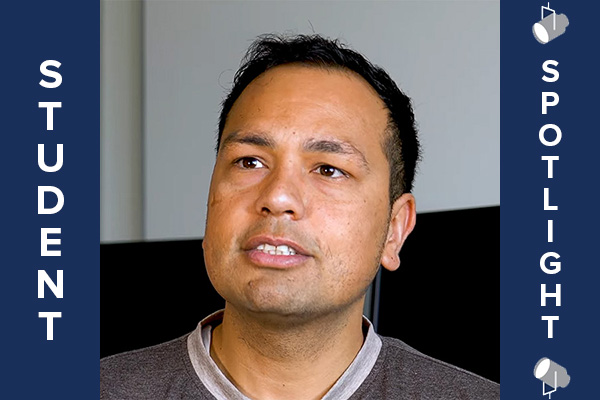
Bikram Adhikari
PhD Student
1. What brought you to the U of M School of Public Health?
I was drawn to the University of Memphis School of Public Health because of its focus on addressing real-world public health challenges through research, education, and community engagement. I had many questions about epidemiology and biostatistics, and I believed that learning from the expert faculty at the U of M School of Public Health would help me find answers to those questions and develop a deeper understanding of these fields. The opportunity to work in an interdisciplinary environment and develop advanced skills in epidemiology and biostatistics was particularly appealing to me. I also saw U of M as a place where I could grow as a researcher while working on research questions that have meaningful implications for population health.
2. What is the broad focus of your research?
My research broadly focuses on epidemiologic research methods, with a particular interest in noncommunicable diseases (NCDs) and population health. I am interested in understanding the factors that influence chronic diseases and their outcomes, as well as applying epidemiologic and biostatistical methods to address important public health questions.
3. What inspired you to pursue this particular area of research?
Noncommunicable diseases, including diabetes, hypertension, cardiovascular diseases, and mental health conditions, are major and growing public health challenges worldwide. I was inspired to pursue research in this area because of the increasing burden of these conditions and their impact on individuals, families, and communities. I hope that my research can contribute to a better understanding of the risk factors and determinants of NCDs and help inform effective strategies for prevention, early detection, and management.
4. What is the most exciting project you are currently working on or just completed?
One of the most exciting projects I have worked on is supported by the PH-CARES Changemakers Mini Grant from the University of Memphis School of Public Health. Through this project, I designed and developed HealthyME, an ad-free Android mobile application that provides comprehensive health information and tools to promote healthy lifestyles and prevent NCDs. The app also supports self-care and health management among individuals living with chronic conditions. I am particularly excited about this project because it allows me to combine my interests in public health, technology, and health education to develop a practical tool that can be accessible to the broader community.
The app is available in the play store: app.healtyme.com
5. How does your research impact or benefit the broader community or public health field? How do you envision your research evolving in the next few years?
My project on HealthyMe is expected to contribute to the prevention and management of noncommunicable diseases and ultimately improve population health. People with NCDs can improve their self-care health behaviors like medication, physical activity, calories consumption, fasting and monitoring of health parameters. Healthy people can use the app for prevention of risk factors of NCDs like Diabetes, Hypertension. People can check their mental health status, regular health tips and informational videos related to their conditions as well as other NCDS. People can keep their health reports safely in the app.
6. What is the coolest training or program you've been a part of, or your favorite conference you've attended?
One of the coolest training experiences I have had was participating in the DAIR³ (Data and AI Intensive Research with Rigor and Reproducibility) Summer Bootcamp at the University of Texas at San Antonio. The program was a great opportunity to learn about data science, artificial intelligence, and reproducible research while exploring how these approaches can be applied to real-world research questions. I particularly enjoyed the opportunity to connect with researchers and students from different backgrounds and learn how emerging technologies can strengthen public health research.
7. What is your favorite self-authored manuscript?
My research paper published are listed in my google scholar: (https://scholar.google.com/citations?hl=en&user=KltRXPIAAAAJ). One of my favorite manuscript is https://bmjopen.bmj.com/content/bmjopen/13/7/e072673.full.pdf with the tile : “Readiness of health facilities to provide services related to non-communicable diseases in Nepal: evidence from nationally representative Nepal Health Facility Survey 2021”.This study is focused on assessing the readiness of public and private health facilities in delivering services related to noncommunicable diseases (NCDs) in Nepal. This study highlighted the need to strengthen the local level public health facilities to improve their readiness for NCDs related services.
8. What kind of research would you like to do that you haven't yet had the opportunity to do?
I would like to conduct more research that combines longitudinal epidemiologic data with geospatial and environmental information. I am particularly interested in studying how neighborhood environments, social determinants of health, and historical policies interact with individual-level risk factors to influence chronic disease and healthy aging. I would also like to explore the use of advanced data science and machine learning methods in epidemiology, while maintaining a strong focus on interpretability and practical public health applications.
9. Are there any publications, awards, or recognitions you would like us to include in the spotlight?
I would be happy to highlight several publications and recognitions that reflect my journey as a public health researcher. I was honored to receive the PHCARES Changemakers Mini Grant from the University of Memphis School of Public Health, through which I designed and developed HealthyME, an Android application focused on health education, preventive health behaviors, and community wellness. I was also a recipient of the Academic Opportunity Fellowship and the DAIR³ (Data and AI Intensive Research with Rigor and Reproducibility) Program Scholarship.
I’m reviewer in different journals and have contributed to review more than 20 peer-reviewed publications covering a range of public health topics, including maternal and child health, infectious diseases, mental health, noncommunicable diseases, health systems, and health services.