
Student Spotlight - Anna Gretz
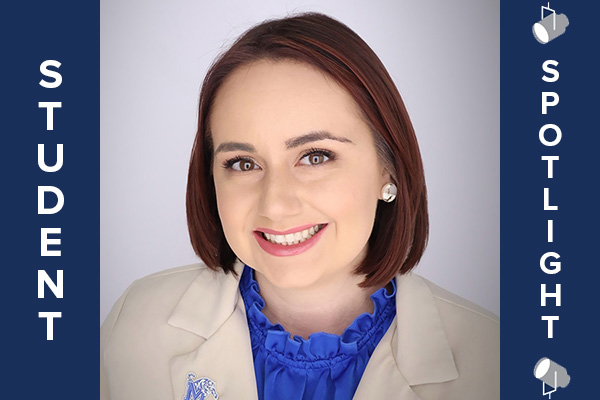
Anna Gretz
PhD Student
1. The "Spark"
What initially sparked your interest in this research area, and what problem are you most passionate about solving?
I became interested in public health through a TV show I watched in high school called Monsters Inside Me, which is a medical mystery docuseries about infectious diseases. I became enamored with the process used to figure out the mystery, with the preventative nature of the cases, and with the fact that the cause was often an environmental exposure. Many of the cases in the show are considered neglected tropical diseases, where the true burden of disease is difficult to ascertain for many reasons.
This initially led me to focus on environmental health, but I found it difficult to remain passionate about a singular topic, pathogen, or condition. After working for several years at a local health department, I realized this even more as I was exposed to additional areas of public health I wanted to contribute to. This pushed me toward focusing my research more on the underlying methodologies we use in epidemiology, especially exposure assessment and surveillance.
2. The "Journey"
Can you share a key moment or challenge in your research—an “aha!” discovery or a hurdle you overcame—and how you navigated it?
When working with my committee to propose the three chapters of my dissertation, their connection with each other was not immediately obvious because they were not topically related. The first chapter, which was recently published in ACS ES&T Water, is about the relationship between drinking water salinity and electrolytes; the second focuses on annual patterns of foodborne outbreak reporting; and the third explores state characteristics in restaurant-associated foodborne outbreaks. A real challenge I faced was identifying how these three studies were related on a deeper level, because on the surface it appeared as though they merely shared a statistical method. My first step was to review the seminal works on generalized linear mixed models and hierarchical conceptual frameworks. During this process, I realized that the common thread was that each study involved clustered data that warranted using a more complex model than what was typically used in similar descriptive studies.
3. The "Big Picture"
How do you see your research impacting the real world or contributing to your field in the next few years?
I hope that my research encourages others to question whether our current approaches are always the most appropriate or effective. More broadly, I hope that my work contributes to a renewed emphasis on research in applied epidemiology, as our ability to effectively practice with existing methods is just as important as developing new ones. With large language models increasingly accelerating certain research tasks, it also raises another question: How heavily should publication metrics weigh in our definition of success as academics? While they are certainly important indicators, I hope we continue to recognize the many ways research contributes to scientific advancement, including its application to everyday public health challenges.
4. The "Inspiration"
Who has influenced your research path (a teacher, scientist, mentor, or even a fictional character), and what is one thing you learned from them?
There are several people who have played an instrumental role in my research path, but without a doubt one of my biggest inspirations would have to be my mentor, Dr. Debra Bartelli. During my MPH program, I met Dr. Bartelli when I took her environmental policy and decision-making course, where I learned about the importance of translating research findings into practice and the ways policy change can impart real action. I also learned about the applied work she has done in the Memphis area and in Haiti, where I later traveled with her during my final semester for my first real research experience. While it may have only been a week, the impact it had on me was quite profound, and I have carried it with me into my professional career. It taught me cultural humility and the true value that community involvement in the research process provides to those impacted by its findings. Being able to continue working with her throughout my PhD has made that mentorship even more meaningful. Although we have not been able to return to Haiti since the COVID-19 pandemic, I admire that Dr. Bartelli remains committed to staying in touch with the small community we worked with and has even helped raise money for them to buy goats. I believe these human connections are what make public health research special, and I hope to continue that legacy one day in my own work.
5. The "Personal Touch"
What is one unique skill or non-academic hobby that supports your research or keeps you motivated?
People might be surprised to learn that I am an avid gamer in my spare time, and at one point even bought the equipment to try streaming. I attribute this hobby in large part to my father, who was a computer programmer and enjoyed beta testing games during the 80s and 90s. I enjoy real-time strategy, simulation, action role-playing, and objective-based games. I like that they help me decompress after a long day while still letting me use that part of my brain a bit, especially when it comes to helping my team win in multiplayer settings.