
RESEARCH CLUSTER
Additive Manufacturing
Building the Future, Layer by Layer
The Additive Manufacturing Research Cluster brings together University of Memphis expertise in advanced manufacturing, materials science, biomedical engineering, logistics, and computational modeling to explore what is possible with next-generation 3D printing technologies.
From metal components and biomedical devices to supply chain applications and advanced repair methods, researchers are developing practical solutions that can improve how products are designed, manufactured, and delivered across industries.
Jump to Section:
Overview
Research Areas & Themes
Faculty & Researchers
Research Projects
Partnerships & Collaborations
Get Involved
Overview
Additive manufacturing applies advanced 3D printing technologies to create complex components and materials with levels of precision, efficiency, customization, and design flexibility that are difficult to achieve through traditional manufacturing methods. Using digital design files, additive manufacturing systems build objects layer by layer from materials including metals, polymers, composites, and biocompatible materials.
At the University of Memphis, additive manufacturing research brings together expertise across engineering, materials science, biomedical engineering, logistics, and related disciplines to explore both fundamental manufacturing challenges and practical applications. Researchers are studying how materials behave during and after the manufacturing process, developing new approaches to biofabrication, improving the accuracy and performance of printed components, and exploring new ways additive manufacturing can support business, logistics, and advanced industry.
This interdisciplinary work has applications across sectors including aerospace, automotive, biomedical devices, pharmaceuticals, autonomous systems, consumer products, and advanced manufacturing. Through research, computational modeling, laboratory capabilities, and external collaboration, the cluster supports the development of technologies that can improve how products are designed, manufactured, repaired, and delivered.
Research Areas & Themes

Additively Manufactured Metals
Research examines the properties, performance, dimensional accuracy, microstructure, and processing of additively manufactured metals for advanced industrial and biomedical applications.

Polymers & Polymer-Based Composites
Researchers explore additive manufacturing using polymers, composites, and hybrid materials to develop lightweight, customized, and application-specific components.

Biofabrication & Biomedical Applications
Research combines additive manufacturing with biomedical engineering to develop implantable devices, tissue scaffolds, and technologies that support tissue regeneration and patient-specific solutions.

Computational Modeling & Optimization
Researchers use computational modeling and simulation to better understand material behavior, predict manufacturing outcomes, improve process control, and optimize the performance of additively manufactured components.

Business & Manufacturing Solutions
The cluster explores how additive manufacturing can support new approaches to product development, customization, repair, production, and commercialization.

Faculty & Researchers
Co-Directors

Ebrahim Asadi, PhD
Assistant Professor
Department of Mechanical Engineering
Research interests include metal additive manufacturing, computational materials science, process-property relationships, advanced manufacturing, and materials modeling.

Gary Bowlin, PhD
Chair of Excellence and Professor
Department of Biomedical Engineering
Research interests include biomaterials, regenerative medicine, tissue engineering, biofabrication, and biomedical applications of advanced manufacturing.
Current / Past Research Projects
Novel 3D Biofabrication Technologies
This research explores new approaches to tissue regeneration and implantable medical devices by integrating metallic, polymeric, and hybrid additive manufacturing technologies. The goal is to develop devices that can better match patient-specific anatomy while incorporating scaffold structures that support soft- or hard-tissue regeneration.
Researchers are also investigating approaches that allow implantable devices to carry therapeutic agents or stem cells, mimic the mechanical properties of surrounding tissue, and biodegrade at rates aligned with tissue growth. These capabilities could reduce long-term rejection risks and the need for secondary revision surgeries.
Project Coordinators: Gary Bowlin and Ebrahim Asadi
Process-Property-Geometry Correlations for Additively Manufactured Ti-6Al-4V
This research examines relationships between additive manufacturing processes, material properties, microstructure, geometry, and dimensional accuracy in Ti-6Al-4V components.
Because material shrinkage and microstructural variation can influence the accuracy and performance of printed parts, researchers developed computational and experimental approaches to better predict these effects. The work supports the design of components with tighter dimensional tolerances while reducing the amount of subtractive post-processing required.
The research also evaluates location- and size-specific mechanical properties and the effects of heat treatment, creating knowledge that can support finite element analysis and the design of additively manufactured medical and industrial devices.
Selected Publications:
- B. Fotovvati, A. Etesami, E. Asadi, S.A. Etesami. Process-property-geometry correlations for additively-manufactured Ti-6Al-4V sheets. Materials Science and Engineering A, 2019.
- B. Fotovvati, E. Asadi. Size effects on geometrical accuracy for additive manufacturing of Ti-6Al-4V ELI parts. International Journal of Advanced Manufacturing Technology, 2019.
Computational Modeling of Materials in Solid-Liquid Coexistence
This project uses experimental data to verify and improve a multi-time and length-scale computational modeling framework for materials undergoing solid-liquid transformations.
The research incorporates phase-field crystal modeling, molecular dynamics, and other computational approaches to better understand microstructure evolution during processes such as solidification and coarsening. These models can also be applied to additive manufacturing to help predict how material structures develop during fabrication.
The broader goal is to create predictive tools that can be adapted to multiple material systems and support improved control over manufacturing processes and resulting material properties.
Selected Publications:
- S.A. Etesami, M.I. Baskes, M. Laradji, E. Asadi. Thermodynamics of solid Sn and PbSn liquid mixtures using molecular dynamics simulations. Acta Materialia, 2018.
- K.A. Moats, E. Asadi, M. Laradji. Phase field crystal simulations of the kinetics of Ostwald ripening in two dimensions. Physical Review E, 2019.
3D-Printed Tablets and Pills
This interdisciplinary project explores the potential use of 3D printing to produce pharmaceuticals with customized dosages and porosity.
Researchers are examining whether technologies such as Laser Engineered Net-Shaping could support new pharmaceutical manufacturing and distribution models in which certain medications could potentially be produced closer to the point of use rather than manufactured exclusively at centralized facilities.
The work connects additive manufacturing with materials science, transportation, and logistics to examine how advanced manufacturing technologies could influence future healthcare supply chains.
Project Coordinators: Ebrahim Asadi and Sabya Mishra
Restoring Damaged Metallic Parts of Robots, Autonomous Vehicles and Drones
This project investigates the use of Laser Engineered Net-Shaping to repair damaged metallic components in robots, autonomous vehicles, and drones without requiring complete disassembly.
Researchers are developing computational tools to model heat transfer, mechanical behavior, solid-liquid transitions, laser interactions, temperature distribution, and residual stresses created during the repair process. These models can help determine whether additive manufacturing-based repair methods are appropriate for specific systems while reducing the risk of thermal damage or future component failure.
The research could contribute to standards and methods for rapid repair of advanced autonomous and robotic systems.
Selected Publications:
- S.A. Etesami, M. Laradji, E. Asadi. Transferability of interatomic potentials in predicting the temperature dependency of elastic constants for titanium, zirconium and magnesium.
- R.V. Perrone, J.L. Williams. Dimensional accuracy and repeatability of the NextEngine laser scanner for use in osteology and forensic anthropology.
- B. Fotovvati, S.F. Wayne, G. Lewis, E. Asadi. A Review on Melt-Pool Characteristics in Laser Welding of Metals.
Partnerships & Collaborations
Metal Additive Manufacturing Lab
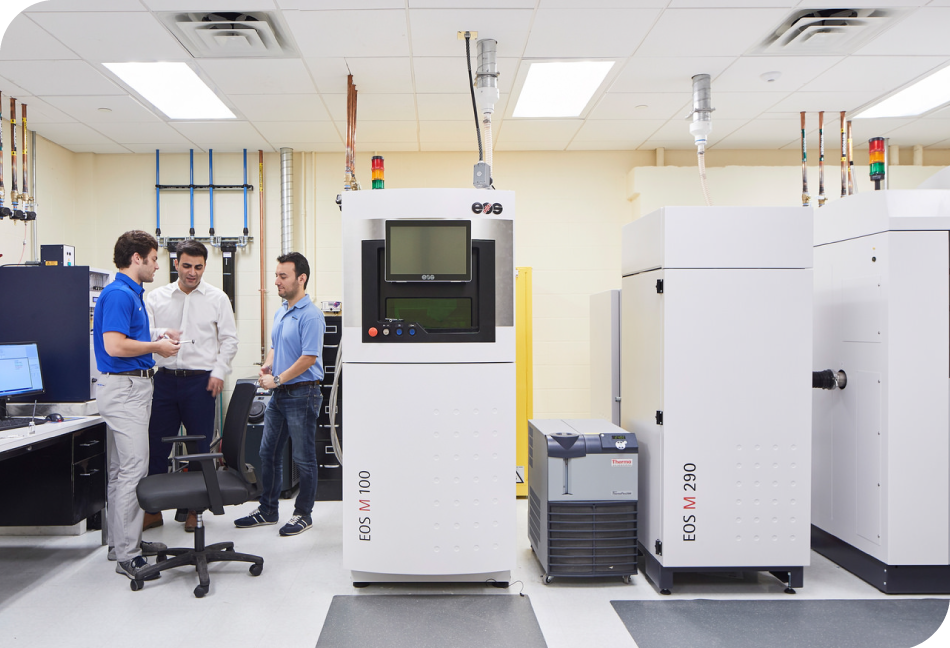
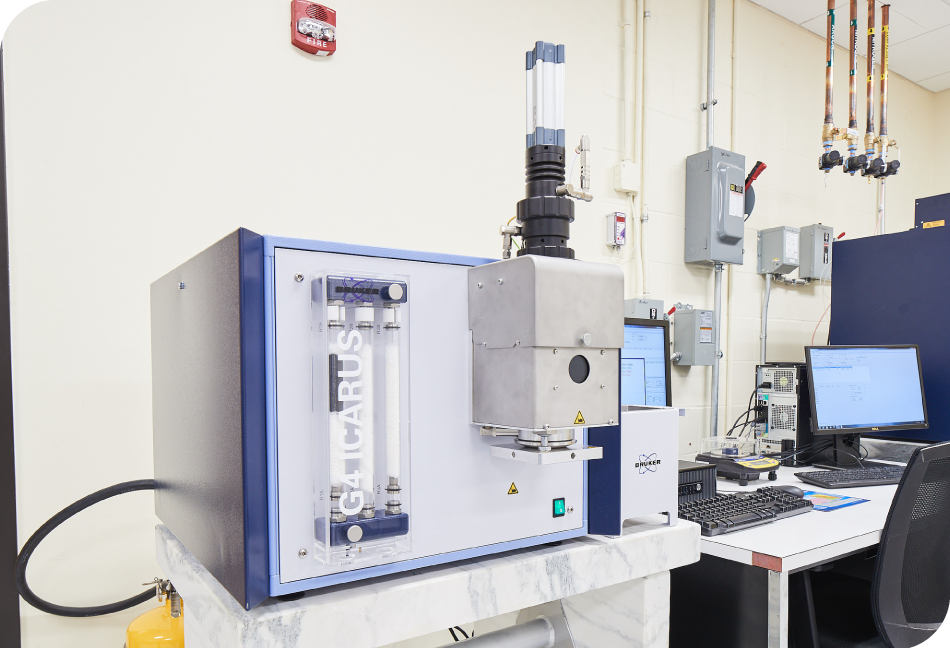
The Metal Additive Manufacturing Lab (MAML) at the University of Memphis is a core
research facility within the Herff College of Engineering supporting research and
development involving advanced metal 3D printing.
The laboratory helps researchers create and evaluate precision-engineered components
that may be difficult or impossible to manufacture using conventional methods. Its
capabilities support applications across aviation, automotive, biomedical, advanced
manufacturing, and other industries.
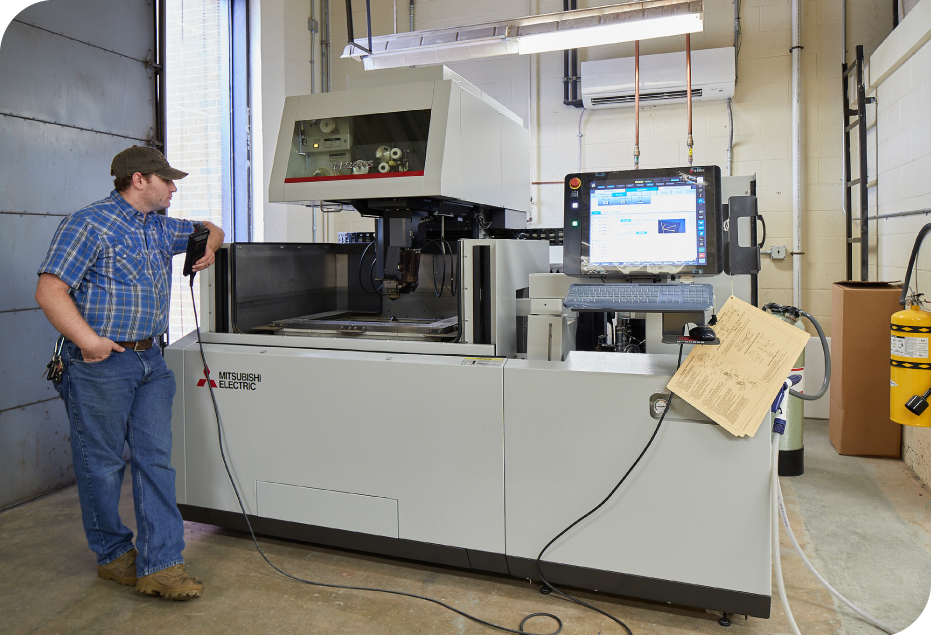
MAML serves researchers within the Herff College of Engineering as well as faculty and research teams across the University. The facility also works with external organizations interested in additive manufacturing research, product development, testing, and advanced manufacturing solutions.
Opportunities for External Collaboration
Organizations can engage with the Metal Additive Manufacturing Lab through several models:
Project-Based Research
Organizations can work with University researchers to address specific manufacturing or product-development challenges. Projects may involve the development of a component from a particular material with defined performance requirements. MAML researchers evaluate the challenge, identify potential technical approaches, and work with the organization to develop an appropriate research plan.
Get Involved
The Additive Manufacturing research community welcomes opportunities to connect with faculty, students, industry, government agencies, and other organizations interested in advanced manufacturing technologies.
Potential collaborations may include sponsored research, product development, materials testing, computational modeling, biomedical applications, manufacturing process development, logistics research, and access to specialized additive manufacturing capabilities.
For more information or to explore collaboration opportunities, contact fedex@memphis.edu.