
RESEARCH CLUSTER
Biologistics
Advancing the Safe, Smart Movement of Biological Materials
The Biologistics Research Cluster brings together expertise in logistics, engineering, biosciences and emerging technologies to improve how sensitive biological materials are stored, monitored and transported. Through interdisciplinary research, the cluster develops practical solutions that support safer, smarter and more resilient biological and pharmaceutical supply chains.
Jump to Section:
Overview
Research Areas & Themes
Faculty & Researchers
Research Projects
Partnerships & Collaborations
Get Involved
Overview
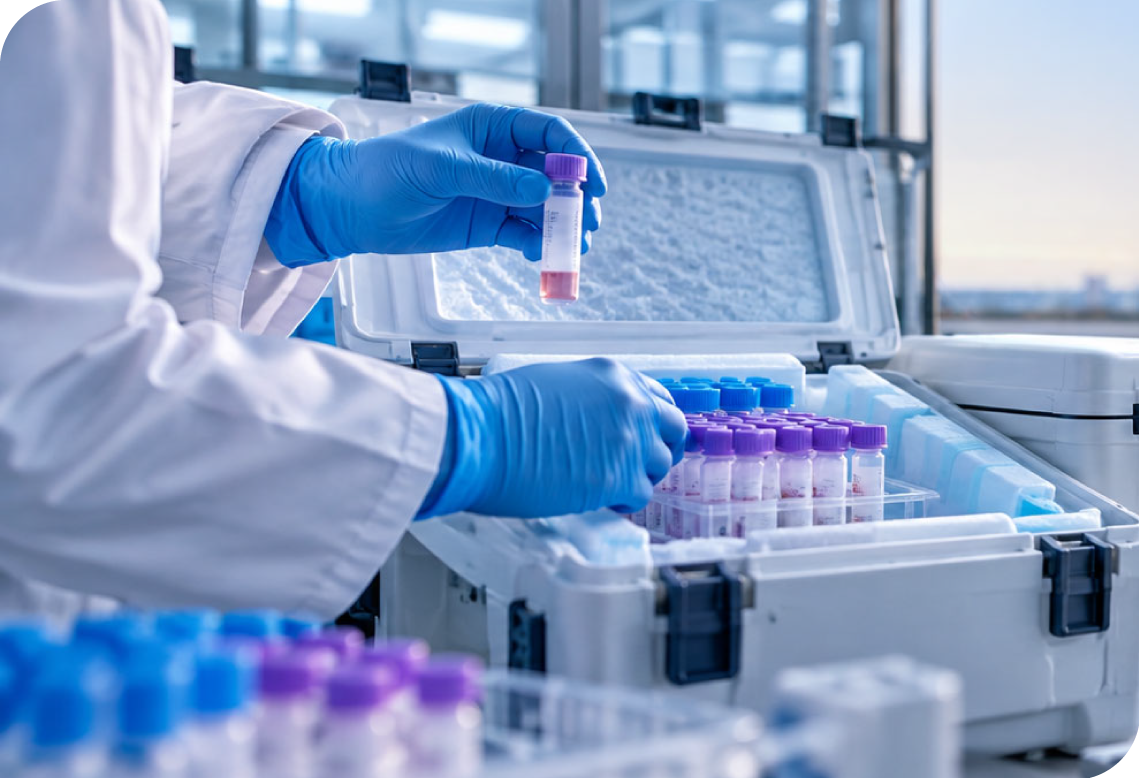
The Biologistics Research Cluster brings together expertise in logistics, engineering, biosciences, transportation, sensing technologies and supply chain management to address the complex challenges involved in moving and storing biological materials.
Biologistics focuses on the safe flow of high-value, temperature-sensitive and time-critical materials, including biological specimens, pharmaceuticals, living cells and other products used in patient care, diagnostics and research. Through interdisciplinary research, the cluster explores new approaches to cold-chain logistics, monitoring and sensing, packaging, transportation, storage and supply chain resilience designed to protect product integrity from origin to destination.
Located at the intersection of Memphis’ logistics infrastructure and biosciences community, the cluster provides a platform for researchers to develop practical technologies and strategies for increasingly specialized biological supply chains.
Research Areas & Themes
Biologistics requires more than moving products from one location to another. Researchers across the cluster examine the technologies, infrastructure and systems needed to maintain biological materials safely and efficiently throughout increasingly complex supply chains.

Cold-Chain Transportation & Storage
Developing better methods for transporting and storing temperature-sensitive biological materials, pharmaceuticals and research specimens while maintaining required environmental conditions.

Smart Packaging & Advanced Materials
Exploring new packaging technologies, including aerogels and other advanced materials, that improve insulation, reduce weight and extend the viable transportation window for biological products.

Sensors, Tracking & Monitoring
Creating sensing technologies capable of monitoring temperature, humidity, pressure, vibration and other conditions throughout storage and transportation while supporting real-time visibility and regulatory compliance.

Supply Chain Optimization & Resilience
Studying transportation networks, routing, storage strategies and logistics systems to improve efficiency and maintain the movement of sensitive materials during disruptions and disasters.

Biological & Pharmaceutical Technologies
Investigating new approaches to the storage, transportation and delivery of biological materials, including living cells, pharmaceuticals, diagnostic technologies and personalized products.

Faculty & Researchers
Co-Directors


Research Projects
Research supported through the Biologistics Research Cluster has addressed challenges ranging from cold-chain packaging and wireless sensing to cancer screening, disaster resilience and next-generation energy storage.
Novel 3D Encapsulation Method and Device for Storage and Transportation of Living
Cells for Improved Biologistics Solution
Pratik Banerjee
Development of a three-dimensional encapsulation platform designed to support long-term storage and transportation of living cells under ambient conditions while reducing dependence on traditional cryopreservation.
Smart Sensor Communications Congestion Testing
Kevin Berisso
Research examining the reliability of Bluetooth Low Energy sensor networks in high-density environments and the potential for communication congestion to result in lost information within smart supply chains.
Remote End-to-End Temperature Tracking for Regulatory Compliance
Firouzeh Sabri
Development of low-power wireless sensing technologies capable of tracking temperature, pressure, humidity and vibration throughout the transportation of temperature-sensitive materials.
Development of Next-Generation Energy Storage Devices for Biologistics Applications
Sanjay Mishra and Thang B. Hoang
Research into energy-dense nanostructured battery materials capable of supporting environmental control, sensing and long-distance transportation of biological specimens.
Plasmon-Enhanced Temperature and Humidity Sensing for Biological and Pharmaceutical
Shipments
Mohamed Laradji and Thang Ba Hoang
Development of highly sensitive nanoscale sensing technologies for real-time remote monitoring of temperature and humidity during biological and pharmaceutical storage and transportation.
Post-Disaster Management of Freight Transportation Networks
Charles V. Camp and Shahram Pezeshk
Development of transportation network modeling approaches designed to identify infrastructure disruptions, evaluate alternate freight routes and strengthen cold-chain logistics following natural or human-caused disasters.
Microcapsule Embedding Techniques for Self-Healing and Recovery of Polymeric Aerogels in Cold-Chain Logistics
Research exploring advanced aerogel technologies for improving the durability and performance of cold-chain packaging.
Simulation and Optimization of Advanced Aerogel Packaging Solutions for Cold-Chain
Biologistics
Jeffrey Marchetta
Full-scale modeling of aerogel-based packaging systems to evaluate their thermal performance compared with conventional cold-chain packaging materials.
Developing Evidence-Based Best Practices for Shipping Cell Cultures
Omar Skalli, Amy Abell and Judith Cole
Research examining how common transportation methods affect cell viability and cellular properties to help establish evidence-based practices for shipping cultured cells.
Advanced Aerogel Packaging Solutions
Firouzeh Sabri and Jeffrey Marchetta
Design, construction and testing of cold-chain packaging made with lightweight, highly insulating aerogel materials.
Post-Disaster Management of Freight Transportation Networks: Phase 2
Charles Camp, Shahram Pezeshk and Chris Cramer
Research examining how earthquakes, flooding and other disasters may affect transportation infrastructure and temperature-controlled logistics services.
Remote End-to-End Temperature Tracking for Regulatory Compliance
Firouzeh Sabri
Development of wireless sensing technologies for continuously monitoring environmental conditions affecting biological shipments.
Biologistics of Lung Cancer
Prabhakar Pradhan
Development of a smaller, portable version of enhanced particle wave spectroscopy technology that could reduce the need to transport sensitive cell samples for early cancer screening.
Nano-Enabled Energy Storage Device: Nanoengineering Approach
Sanjay Mishra
Development of small, lightweight and long-lasting energy storage technologies capable of reliably powering sensors and environmental controls during biological transportation.
Advanced Aerogel Packaging Solutions for Cold-Chain Biologics Materials Handling
Firouzeh Sabri and Jeffrey Marchetta
Research into aerogel-based packaging designed to improve insulation and temperature stability during the transportation of biological materials.
Alternative Biologistics for Pharmaceutical Products: 3D-Printed Tablets and Pills
Ebrahim Asadi and Sabya Mishra
Exploration of 3D printing as a method for producing customized pharmaceutical tablets at or near the point of delivery, potentially changing traditional pharmaceutical manufacturing, transportation and storage models.
Assessment of Biologistics Research and Practices for the Purposes of Processing a
New Cutting-Edge Research Agenda
Mehdi Amini and Mihalis Golias
Assessment of emerging biologistics research and industry practices to identify challenges, best practices and future research priorities.
Post-Disaster Management of Freight Transportation Networks
Charles Camp, Shahram Pezeshk and Chris Cramer
Analysis of transportation infrastructure vulnerabilities and their potential effects on temperature-controlled logistics following major disasters.
Biologistics of Lung Cancer Screening and Management Using Field Effect of Carcinogenesis
and a Novel Biophotonics Technique
Prabhakar Pradhan
Research connecting advanced cancer screening technologies with the challenges associated with transporting and handling biological specimens.
Biologistics Security: Implications for Market Growth, Transportation and Logistics
Haskel D. Harrison and Dan Pallme
Research examining security considerations associated with the growth and transportation requirements of biologistics networks.
Big Data Analytics Meets the Internet of Things: A Paradigm Shift in Biologistics
Mohammed Yeasin and Sabya Mishra
Research exploring how connected technologies, sensors and data analytics could create more intelligent biologistics systems.
Engineering Novel Supercapacitor Batteries for Biologistics
Sanjay Mishra and Jiangbiao Cui
Development of energy-storage technologies designed to support biologistics sensing, monitoring and transportation applications.
Smart Packaging Temperature Sensing for Biologistics
Firouzeh Sabri and Steve Allison
Research into integrated temperature-sensing technologies capable of improving monitoring within cold-chain packaging.
Collaboration & Impact
Connecting Research Across Disciplines
The Biologistics Research Cluster brings together researchers from engineering, supply chain and logistics, biomedical sciences, physics, transportation and related disciplines to address problems that cannot be solved within a single field.
This interdisciplinary approach supports research spanning the full biologistics journey, from biological storage and packaging to transportation networks, sensing technologies, energy systems and data-driven logistics.
Connecting Research with Industry
The cluster was established to support collaboration around emerging biologistics challenges and create opportunities for research with industry and government partners. Its work is designed to produce technologies, strategies and evidence that can be applied to real-world biological and pharmaceutical supply chains.
Through the FedEx Institute of Technology, research innovations may also connect with technology transfer and commercialization resources that help move promising discoveries toward practical applications.
Why Memphis?
Memphis brings together two industries that are central to biologistics: logistics and biosciences.
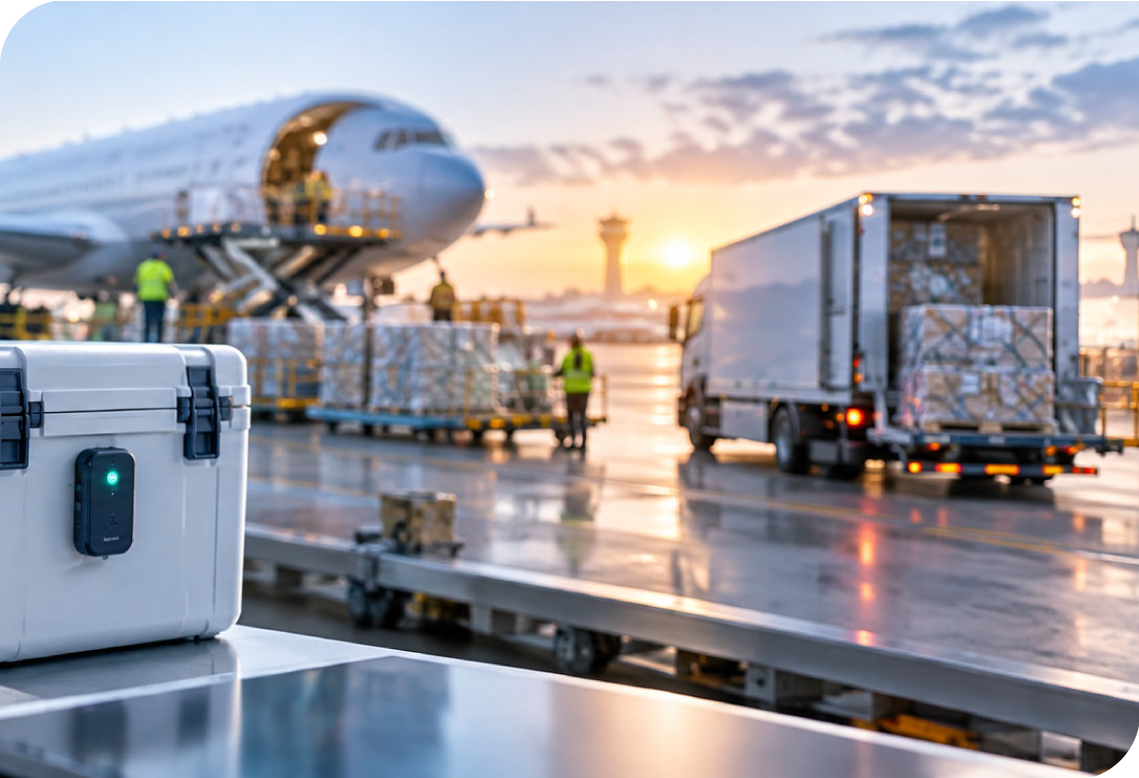
Its extensive air, rail, roadway and river transportation infrastructure has long made the region a major distribution center, while its biosciences and healthcare sectors create demand for specialized approaches to transporting biological materials, pharmaceuticals and other sensitive products.
That combination gives University of Memphis researchers an environment in which to study biologistics challenges with direct relevance to transportation, healthcare, manufacturing, supply chain management and economic development.
Get Involved
The cluster creates opportunities for researchers, students, industry partners and government organizations interested in advancing the technologies and systems that support biological and pharmaceutical logistics.
Opportunities for engagement may include interdisciplinary research, technology development, industry collaboration, conferences and knowledge-sharing activities focused on emerging biologistics challenges.
Interested in collaborating? Connect with cluster leadership or the FedEx Institute of Technology to explore opportunities to work with University of Memphis researchers.