
Student Spotlight - Shiyuan Zhang
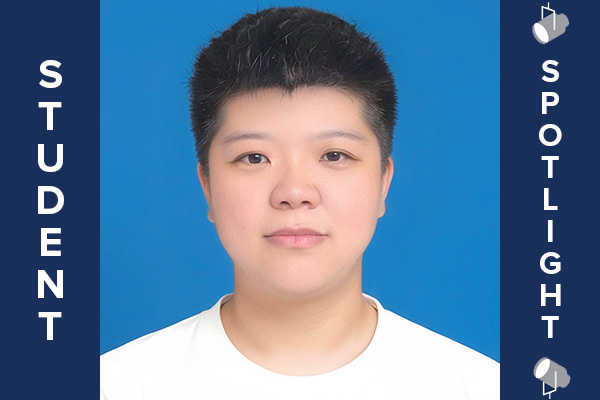
Shiyuan Zhang
Student, PhD
1. The “Spark”
What initially sparked your interest in this research area, and what problem are you most passionate about solving?
My interest in this research area began with my background in biostatistics and my experience working with high-dimensional biomedical data. I became interested in how neural networks can model complex relationships, while also recognizing the need to make these models more interpretable.
The problem I am most passionate about solving is variable selection using neural networks. My goal is to develop methods that identify key variables while maintaining strong predictive performance, ensuring results are both accurate and meaningful for scientific research.
2. The “Journey”
Can you share a key moment or challenge in your research—an “aha!” discovery or a hurdle you overcame—and how you navigated it?
One key challenge in my research was learning how to balance prediction accuracy with interpretability. Neural networks are powerful, but they can be difficult to understand, especially when working with high-dimensional data. At first, I focused mainly on model performance, but I realized that in scientific research, it is also important to know which variables are truly driving the prediction.
This became an important “aha” moment for me. It helped me see variable selection not just as a technical step, but as a way to make neural network models more useful and meaningful. I navigated this challenge by studying both statistical variable selection methods and neural network approaches, and by considering how to balance prediction performance and interpretability.
3. The “Big Picture”
How do you see your research impacting the real world or contributing to your field in the next few years?
I hope my research can contribute to the development of neural network methods that are both accurate and interpretable. In many biomedical and public health studies, researchers work with high-dimensional data, but it can be difficult to determine which variables are truly important. By improving variable selection in neural networks, my work aims to help researchers better understand complex data and make more reliable scientific conclusions.
In the next few years, I hope this research can support applications in biomedical data analysis, disease prediction, and public health research, where identifying important predictors is just as important as making accurate predictions.
4. The “Inspiration”
Who has influenced your research path (a teacher, scientist, mentor, or even a fictional character), and what is one thing you learned from them?
My research path has been influenced by mentors who taught me to ask “why,” instead of simply following instructions or applying methods mechanically. From them, I learned that research is not only about getting results, but also about understanding the reason behind each question, method, and conclusion.
This lesson has shaped the way I approach my work. In developing neural network methods for variable selection, I try to think carefully about why a model works, why certain variables are selected, and whether the results are meaningful for the scientific problem.
5. The “Personal Touch”
What is one unique skill or non-academic hobby that supports your research or keeps you motivated?
I like playing badminton. It helps me stay active, reduce stress, and maintain balance. Badminton also requires focus, patience, and quick decision-making, which are qualities that support my research mindset.