Exercise, Sport and Movement Sciences (BS)
Learn how the human body moves, adapts and performs — then test it in a lab and in the field before you graduate.
Exercise, Sport and Movement Sciences gives you comprehensive exposure to exercise science, with coursework in kinesiology, physiology, biomechanics, motor behavior and exercise programming. You will work through the theoretical concepts and practical skills behind preventive health, exercise and disease management, physical fitness, exercise program design and sports conditioning.
| Major | Health Studies |
|---|---|
| Concentration | Exercise, Sport and Movement Sciences |
| Degree | Bachelor of Science (BS) |
| Internship | One semester, 240 hours, final semester of senior year |
| Endorsement | NSCA Education Recognition Program |
| Degree sheet | ESMS degree sheet (subject to change) |
What You'll Study
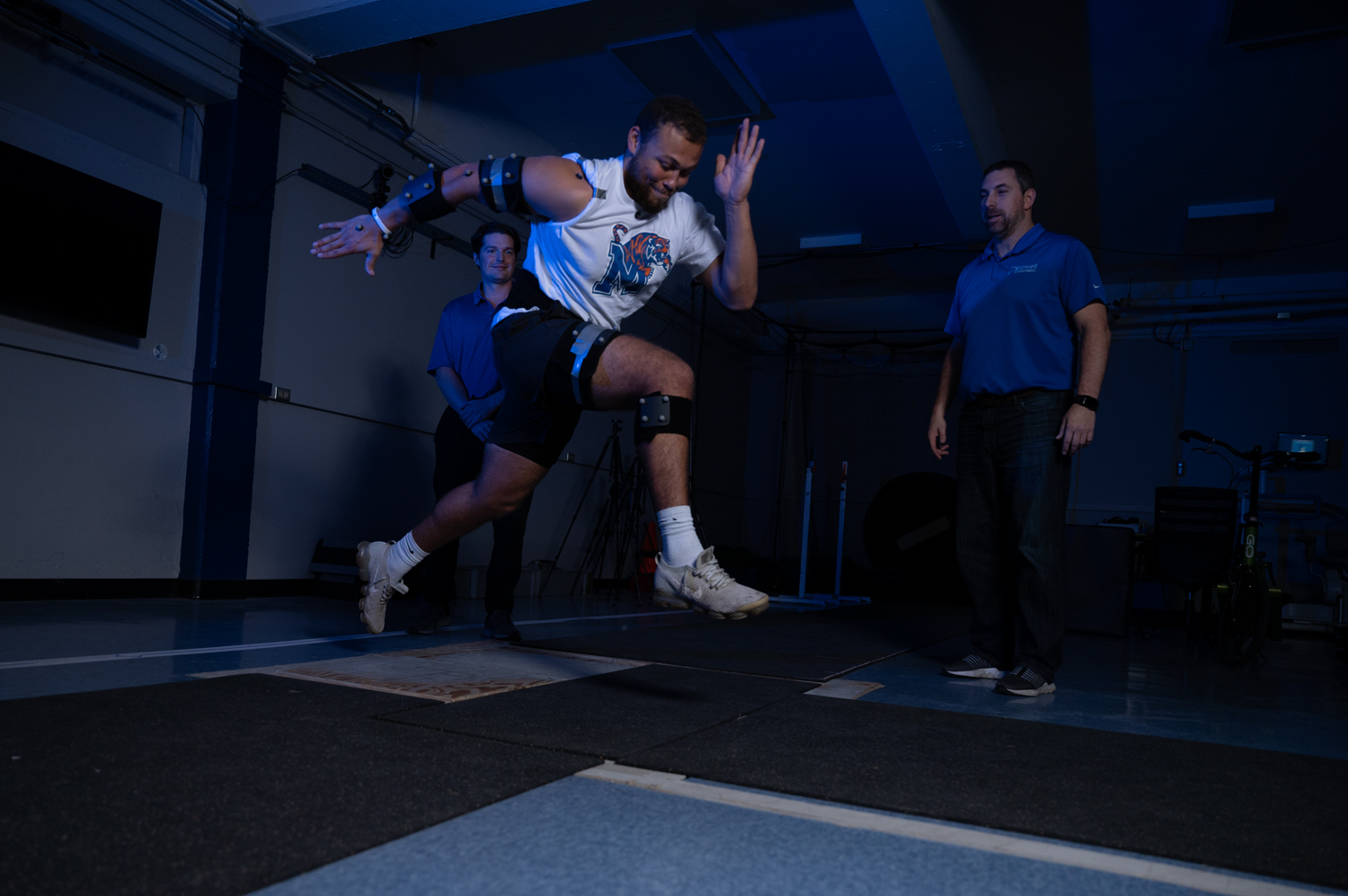
You will cover the mechanical aspects of human movement alongside the physiological systems behind it — anatomical, musculoskeletal, neural, cardiovascular, metabolic and respiratory — through both lecture and laboratory experience.
The program includes a one-semester, 240-hour internship in your final semester, where you choose your area of focus and gain real work experience in your chosen field. You may also complete the internship in one of our laboratories with the lab director's permission. If you want substantially more hands-on exposure before graduate school, consider one of the two-semester cooperative education options.

Post-Grad + Careers
Graduate study
You will be well prepared to attend graduate school in:
Physical therapyOccupational therapyMedicine (MD, PA)Exercise scienceBioenergeticsBiomechanicsExercise physiologyNutrition scienceStrength and conditioning
Plan early. Work with the academic services coordinator, the pre-health professional advisor, faculty mentors and your school or college of interest to confirm the prerequisite courses required for graduate admission.
Employment
You will also be prepared to begin work in:
- Health and medical research (master's degree typically required)
- Clinical exercise physiology (master's degree typically required)
- Corporate wellness
- Health club facility management
- Personal training
- Group fitness instruction
- Fitness and wellness coaching
- Strength and conditioning coaching
NSCA Endorsement
We are endorsed by the National Strength and Conditioning Association's Education Recognition Program. The ERP recognizes schools with standardized, approved strength and conditioning or personal training curricula designed to prepare students for the NSCA-Certified Personal Trainer and Certified Strength and Conditioning Specialist certifications.
ESMS Cooperative Education Program
Cooperative education is an ideal option if you are aiming for graduate school in physical therapy, occupational therapy, athletic training, or strength and conditioning. It gives you early, extensive exposure to one of these clinical or professional fields so you can find out whether it is the right fit — while building a professional network and connecting your coursework to practice.
If you have completed all 1000- and 2000-level prerequisites for the ESMS concentration with a cumulative GPA of at least 3.0, you may participate in this program of school and work rotations. Work sites pay an hourly wage, so site availability may be limited, and you are responsible for securing your own site. Participation is an option, not a requirement.