
Protect Yourself Against Scams with an Emergency Code Word
Fraudsters are constantly trying clever ways to swindle people out of their money. With recent innovations, including the widespread use and increasing capabilities of AI, those attacks are becoming more convincing. An attack that has been common for several years now is the family emergency scam, sometimes called a grandparent scam.
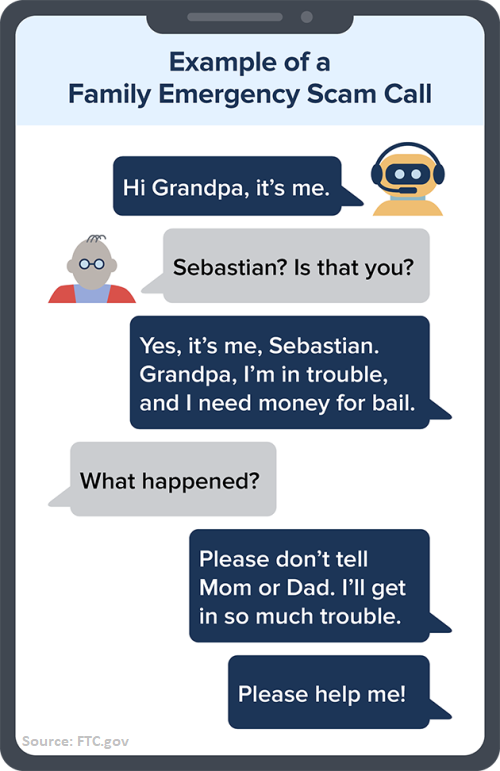
What is a family emergency scam?
A family emergency scam is a type of imposter scam, where the scammer pretends to be someone they're not. In this case, they're impersonating a family member claiming to urgently need help. Victims receive a call, text or social media message that a loved one is experiencing an emergency and needs money right away. Now with AI voice cloning freely available, scammers can make these calls even more convincing with just a few seconds of someone's voice posted online or recorded over the phone.
Imagine your parent or grandparent gets an urgent text or call from you saying you have an emergency, like your car broke down or you got injured, and you need money fast. The call might come from your own phone number and could even sound like you—but it's a scammer.
You might think you or your family could never fall for a fake call like this, but the FTC and the FBI report that criminals use the fear and anxiety this kind of attack causes to steal millions of dollars every year.
Choose an emergency code word
How can your family know when it's really you? One simple solution: an emergency code word.
Your family chooses a unique word or phrase that no one else could easily guess. If any one of you receives a call from someone claiming to be a family member, the recipient of the call simply asks for the code word. If the caller can't provide the code, you know it's probably a scam.
Tips for an effective code word:
- Pick something no one could guess. Avoid easily discovered information, like family or pet names, or anything else you might post on social media. It could be a phrase or nickname that never gets shared publicly, or something you make up just for the code.
- But make sure it's easy to remember. If there's a real emergency, you need to be able to remember the code word, even if you're in a stressful situation. Make it unique but memorable.
- Never share or post the code word anywhere, especially on social media or group chats. It's best to never put it in writing, even over text or private message, unless you're using it in a real emergency. A compromised account could give a hacker access to the word if it's saved in text form.
- If the caller doesn't know the code word, hang up immediately and get in touch another way. Don't share any information with the caller. Call the family member at a trusted number, or contact another person who might be able to check on them.
- Practice using it. A code word might seem simple to use, but you never know how you'll react in a real emergency. Go over what you will each say if there's an urgent call from any family member.
- Make sure everyone is on board. Agree on the word and rules for using it with every family member, and have everyone repeat the word out loud. Establish how you will follow up if there's an emergency call, real or fake. Ensure everyone understands how to use the code word, especially family members who may not be as comfortable with technology.
More tips to protect against fraud:
- Never send payments to anyone using gift cards. Establish a trusted way to send money, such as a bank transfer or known secure payment service, and only use that. Make sure your family knows your real payment ID (for Zelle, Cashapp, Venmo, etc.) and that you'll never ask for a gift card or other unusual payment in an emergency.
- Never open unexpected links in texts, emails, or chats, even from friends or family. If you get an unusual link, follow up with that person another way before clicking or tapping.
- Don't accept friend or follow requests from unknown people or people you're already connected to. Scammers can create fake social media profiles for people you know to trick family members and friends into connecting so they can send messages. Ignore requests from new accounts until you have verified they're real.
Information and resources from FTC.gov:
Scammers Use Fake Emergencies To Steal Your Money