
Student Spotlight - Frans Judea Samosir
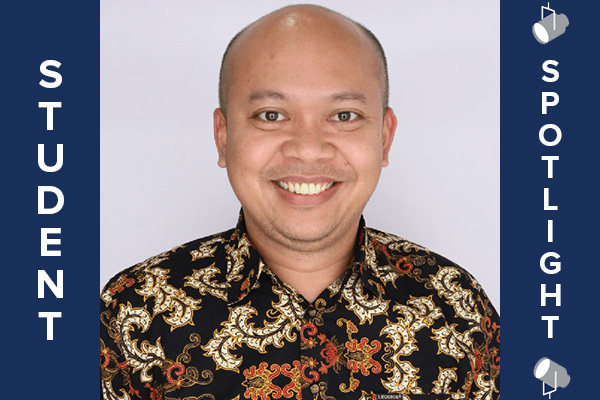
Frans Judea Samosir
Student, PhD
1. The “Spark”
What initially sparked your interest in this research area, and what problem are you most passionate about solving?
What initially sparked my interest in this research area was seeing how deeply HIV, mental health, substance use, and social conditions intersect, especially for people who are often underserved or stigmatized (e.g., working with sexual minorities, sex workers, people living with HIV, and SUD during my outreach work in Medan, North Sumatra, Indonesia). Over time, I became more interested in understanding not just individual behaviors, but the broader systems, experiences, and barriers that affect health outcomes.
The problem I am most passionate about solving is reducing stigma and improving access to effective, culturally responsive mental health and behavioral health support. I want my work to contribute to interventions and programs that are practical, equitable, and responsive to the real needs of communities, especially those navigating HIV, substance use, addiction, and mental health challenges.
2. The “Journey”
Can you share a key moment or challenge in your research—an “aha!” discovery or a hurdle you overcame—and how you navigated it?
One key moment in my research came when I realized that many of the challenges I was studying were not simply individual-level issues, but were deeply shaped by stigma, access barriers, and social context. That was an “aha” moment for me because it shifted how I thought about the problem and helped me see the importance of looking at behavior and health through a more holistic lens (e.g., 9 Dimensions of Wellness).
One hurdle I’ve had to overcome is staying focused while working on complex, sensitive topics that require both rigor and empathy. I navigated that by grounding myself in the purpose of the work, staying organized, and learning to be really patient with the research process. It reminded me that meaningful research takes time, reflection, and persistence.
3. The “Big Picture”
How do you see your research impacting the real world or contributing to your field in the next few years?
I hope it will be simple and impactful both at universities and in communities. I want my research to contribute to a deeper understanding of how mental health, substance use, HIV, and social factors intersect, and how these relationships can be addressed through more effective interventions and programs. I want my work to help inform practical, culturally responsive solutions that can be used in real community and public health settings.
More broadly, I hope my research contributes to reducing stigma, improving access to care, and strengthening the evidence base for interventions that support underserved populations. Ultimately, I want my work to make a meaningful difference both in academic knowledge and in the lives of the people and communities it is meant to serve.
4. The “Inspiration”
Who has influenced your research path (a teacher, scientist, mentor, or even a fictional character), and what is one thing you learned from them?
There have been many who have influenced my research path, including my advisor and mentors, who encouraged me to think beyond the surface of a problem and always be strategic. That perspective has stayed with me throughout my work in social and behavioral health. Outside of academia, Madonna has been a huge inspiration for me, showing me how to stay creative and keep pushing forward to make my dreams come true, especially when it comes to bringing my ideas to life in my work.
One important lesson I learned from that influence is the value of listening carefully and approaching research with humility. Good research is not only about asking the right questions, but also about understanding people’s lived experiences with respect and empathy.
5. The “Personal Touch”
What is one unique skill or non-academic hobby that supports your research or keeps you motivated?
One unique skill that supports my research is my interpersonal skills, mixed with a good sense of humor. It helps me organize complex ideas and stay focused across multiple projects without burning out.
Outside of academia, I also find motivation in creative content creation and helping a local nonprofit like Global Friends Memphis. It gives me a space to think creatively, communicate ideas in an engaging way, and stay connected to the human side of the work I do.