
Student Spotlight - Shaheryar Shafqat
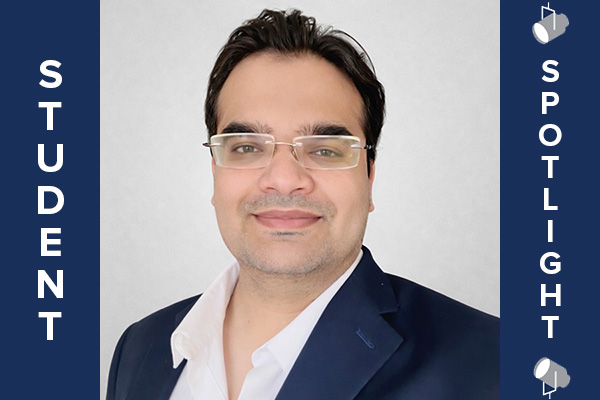
Shaheryar Shafqat
Student, PhD
1. The “Spark”
What initially sparked your interest in this research area, and what problem are you most passionate about solving?
As a trained dentist from Pakistan, I have always been passionate about prevention, especially in pediatric dentistry. I have always been drawn to the idea that the best dental treatment is preventing disease before a child ever has to experience pain, infection, or repeated dental visits. That passion deepened when I entered public health and epidemiology, because I began to see how fluoride is not just a clinical issue, but also a population-level one tied to policy, equity, and child health. Personally, I believe community water fluoridation has been one of the major cornerstones of public health intervention in the United States, because it has helped prevent dental caries and countless dental visits that otherwise place a burden on children and families.
At the same time, because recent policy efforts in some states and communities have pushed to end fluoridation, I felt it was important to study the issue with scientific rigor and contribute evidence to an increasingly important public health debate. CDC continues to describe community water fluoridation as a cavity-preventing, cost-saving intervention, while 2025 saw high-profile policy actions against it, including statewide bans in Utah and Florida and federal-level efforts to reconsider recommendations.
2. The “Journey”
Can you share a key moment or challenge in your research—an “aha!” discovery or a hurdle you overcame—and how you navigated it?
One of the biggest challenges in my research was trying to study fluoride in a way that moved beyond simple associations. Fluoride exposure is connected to many other factors such as geography, household environment, and social context, so it can be difficult to separate true effects from confounding. One important “aha!” moment for me was realizing that I needed stronger analytic tools to answer these questions more carefully. That led me to use methods such as instrumental variable analysis and mediation frameworks to better understand how household water fluoride relates to biological exposure and dental outcomes in children. That process was challenging, but it taught me how to think more critically about causality and how to stay persistent when dealing with complex public health questions.
3. The “Big Picture”
How do you see your research impacting the real world or contributing to your field in the next few years?
I hope my research contributes to a more balanced, evidence-based conversation about fluoride, especially as fluoridation becomes more debated in policy spaces. Because my work focuses on children and adolescents, I see it as especially relevant to pediatric oral health, prevention, and health equity. In the coming years, I hope this research helps dentists, policymakers, and public health professionals better understand both the benefits and the tradeoffs of fluoride in a modern exposure context. I also plan to obtain my dental license in the United States and am currently exploring pediatric dentistry residencies. I see this path as an opportunity to grow as a clinician-scientist who can care for children directly while also producing research that informs better prevention strategies, stronger policy, and broader public health impact.
4. The “Inspiration”
Who has influenced your research path (a teacher, scientist, mentor, or even a fictional character), and what is one thing you learned from them?
My current research aims have been shaped by many people and experiences over time. In many ways, this journey started during my dental school years in Pakistan, when I participated in community outreach activities and saw firsthand how pediatric dental disease can affect not just the child, but the entire family. I saw the pain, financial burden, and emotional stress that untreated dental problems can place on parents and households, and that left a lasting impression on me. Later, when I began practicing dentistry in Pakistan, that perspective grew even stronger. I started to feel that upstream interventions (approaches that prevent disease before it begins) could have a much greater and more lasting impact than treatment alone.
My current supervisor, Dr. Mohammad Abu Naser, has also played an important role in shaping my research path. He helped polish my ideas, strengthen my scientific thinking, and guided me throughout the research process with thoughtful feedback and mentorship. One of the most important things I have learned from these experiences and mentors is that meaningful research should be both scientifically rigorous and grounded in real-world problems affecting patients, families, and communities.
5. The “Personal Touch”
What is one unique skill or non-academic hobby that supports your research or keeps you motivated?
One unique strength I bring to my research is that I think like both a dentist and an epidemiologist. My background in dentistry, especially my interest in pediatric care and prevention, keeps me connected to the real people behind the data. At the same time, my research training helps me step back and ask broader questions about policy, risk, and population health. Outside academics, I enjoy reflecting, writing, and translating complex ideas into clear and meaningful messages. That has helped me not only as a researcher, but also as someone who wants scientific work to inform public understanding and real-world decisions.