
School of Public Health
Faculty Spotlight - Dr. Alex Parkhouse
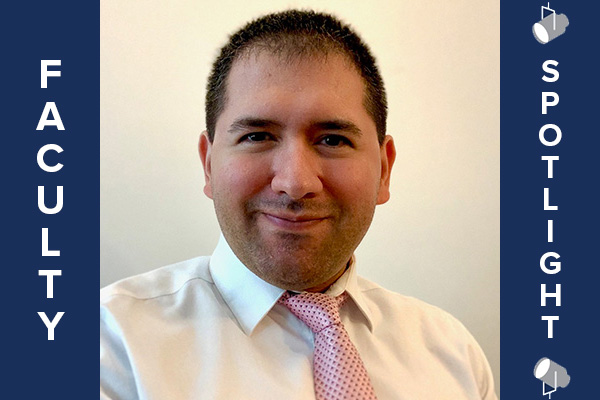
Q&A with Alex Parkhouse, PhD, MA
Program Coordinator, Assistant Professor, Social and Behavioral Sciences
- What brought you to the U of M School of Public Health?
There are two things that brought me to UofM SPH (and make it fun to be here): first, the commitment to a student and community-centered approach to public health research and second, the people! - What is the broad focus of your research?
My research mostly focuses on stress and mental health. As a medical sociologist, I’m particularly interested in the interpersonal and institutional contexts patterning the ways in which people experience stress, distress and well-being. - What inspired you to pursue this particular area of research?
Many of the folks I was surrounded by during my graduate school days, including my dissertation advisor and other professors, conducted stress-related research. Interacting with and taking courses from them opened my eyes as to how the social determinants of health influence outcomes to stress, mental health and well-being. For example: a group of doctoral students can be exposed to the same stressor (e.g. dissertation), but the ways in which dissertation-related stress impacts their well-being will be patterned by several interpersonal (e.g. family life) and institutional (e.g. financial) constraints, as well as by access to resources. In other words, not all students will experience dissertation-related stress in the same way, even though they each are required to produce a dissertation. Interesting! - What is the most exciting project you are currently working on?
A few manuscripts on topics ranging from climate change knowledge and stress to how social determinants of health pattern access and utilization of e-health tools, have recently been accepted or published in peer-reviewed journals. To build on that excitement, a paper I worked on with three SPH graduate students, which was recently published in Preventive Medicine Reports, is a project I’m especially proud of. As a team, we collected qualitative survey response data from 101 University of Memphis graduate students about stress and mental health. From the findings, we learned: a.) about sources of stress most meaningful to the graduate students, b.) the ways in which they cope and manage stress, and c.) practical interventions at the university-level they recommend toward the promoting and sustaining mental health on campus. - How does your research impact or benefit the broader community or public health field?
It’s my hope that, in some small way, my commitment to stress and mental health research enables members of our community to live their best, healthiest life. In the wake of the Covid-19 pandemic, people are recognizing that a wholistic understanding of well-being is incomplete without inclusion of mental health. Public health is just the field to be committed to such timely endeavor. - How do you envision your research evolving in the next few years?
In future projects, I intend to focus on stress and mental health among underserved and underrepresented groups. I serve as a member on the Latino Health Care Priorities Planning Committee and through my involvement with this group, I plan to build bridges to local community leaders and Memphis-Shelby County residents. My commitment to serving on the committee and to this line of research is inspired by my adoption from Latin America and my birth/home city of Medellin, Colombia. - What is the coolest training or program you’ve been a part of, or your favorite conference
you’ve attended?
I currently serve as Chair of the Public Health Academics Section and on the Executive Board of the Tennessee Public Health Association. As such, the TPHA annual conference has been one of my favorites, particularly because of its focus on supporting student involvement and engagement in the field of public health. At the national level, the American Public Health Association’s annual conference is also a lot of fun! - What is your favorite self-authored manuscript?
My favorite self-authored paper is, “Experiences of Stigma-Stress among People Living with Psoriasis in the United States” (Parkhouse 2019). The qualitative piece investigates the interpersonal and institutional contexts of stigma, in patterning experiences of stress among people living with chronic conditions. - Are there any publications, awards, or recognitions you would like us to include in
the spotlight?
I am one of the faculty recipients of the Research Initiative Supporting Excellence in Early Career Development (RISER) Award. With support from the University of Memphis School of Public Health sponsored award, I created the Community Stress and Well Being Lab. The lab, which is housed in SPH, aims to improve mental health and well-being on campus, across Memphis-Shelby County, and beyond. I’m especially grateful to SPH for providing our graduate students with the opportunity to engage in practical, hands-on research training to improve the health of our community.