
Fall 2025 - High School
Highlights
The Fall 2025 Experiential Learning Program for High School provided students with an introduction to key public health concepts across population health, environmental health, social determinants of health, and academic research writing.
The purpose of this program was to equip students with the academic and analytical skills necessary for success in dual enrollment public health coursework. Over the course of 240 hours, students strengthened their ability to write rigorous, college‑level research papers, developed foundational competencies in biostatistics through weekly workshops, and successfully completed three public health dual enrollment (DE) courses. Together, these experiences were designed to prepare students for continued academic achievement and future studies in public health and related fields.
Students explored how social factors such as race, income, education, gender, and community conditions shape population health outcomes and contribute to health disparities. They also learned core environmental health principles, including methods for assessing environmental exposures, major environmental hazards, and the health impacts of climate change alongside related policies and prevention strategies.
Through the Social Determinants of Health course, students examined how social and economic conditions influence disease risk and health equity, while developing critical thinking around strategies to improve community health.
In the Research Writing workshop, students practiced the full process of creating a college-level research paper. They refined skills in academic reading, source evaluation, synthesis, argument development, and revision, producing final papers focused on key social determinants of health.
Output
The program goals across the public health dual enrollment curriculum reflect students’ engagement with analytical, applied, and academic learning experiences. In PUBH 2181: Population Health & Society, students explored foundational concepts in population health through lectures, group exercises, written assignments, and an independent project examining contemporary health issues. In PUBH 3120: Climate & Environmental Health, they built competency in environmental health frameworks by reviewing scientific papers, completing case studies, and participating in hands-on activities focused on climate-related health risks and environmental exposure assessment. For PUBH 3130: Social Determinants of Health, students demonstrated their understanding of how social and economic conditions shape health by completing course activities that required critical analysis of social influences, evaluation of intervention strategies, and reflection on intersecting determinants of health.
The Research Writing component supported students’ academic skill development through a sequenced process of planning, researching, drafting, revising, and refining college‑level research papers. Students practiced evaluating scholarly sources, integrating evidence ethically, constructing cohesive arguments, and using discipline‑specific academic vocabulary. By the end of the program, students produced fully developed research papers on social determinants of health topics; including income, education, unemployment, and food insecurity demonstrating their readiness for future college‑level coursework.
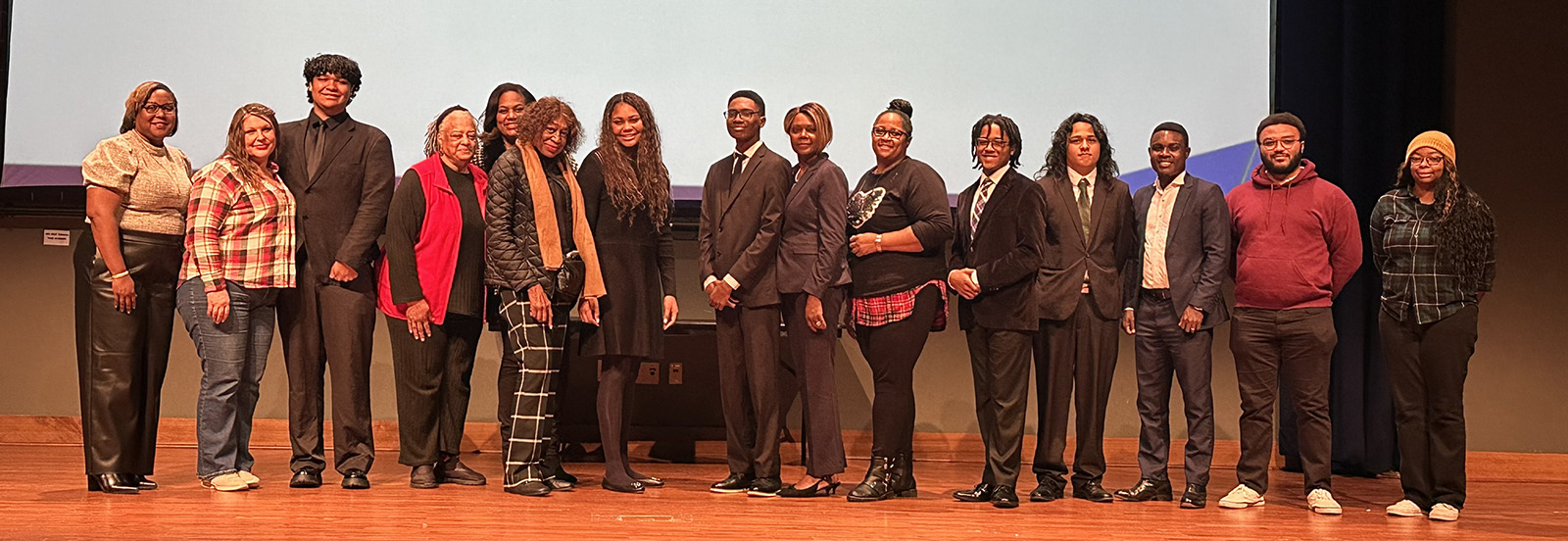
December 10 – Closing Ceremony
Looking for a specific project?
See when the latest activities were hosted below:
Experiential Learning Program
Population Health Data Analytics Program
- 2025 Summer
- 2024 Summer