
Experiential Learning Program: 2025 Fall

Highlights
The purpose of the Experiential Learning Program is to strengthen the Public Health workforce pipeline by preparing high school students to pursue careers in Public Health after post-secondary school graduation.
Program Goals and Objectives
By the end of the Introduction to Biostatistics course, students will be able to:
- Grasp the basic concepts of statistics and their application in public health research.
- Effectively organize, display, and summarize health-related data
- Understand and apply probability concepts relevant to health research
- Calculate and interpret measures of central tendency and dispersion
- Recognize different sampling techniques and their applications in health research
- Understand the logic and basic concepts of statistical inference
- Work with chi-square tests and contingency tables
- Explore correlation and basic regression concepts
PUBH 2181: Population Health & Society (Dual Enrollment)
This course offers an overview of the study of population health and will introduce
students to the major social variables social class, race, gender, poverty, income
distribution, social networks/support, community cohesion, the work and neighborhood
environment that affect population health. The course covers the theoretical underpinnings
of each construct (e.g. “race” as a social category) and examines the research linking
each to population health status.
Students will identify and critique population-based approaches to address health
disparities and bring about social justice in health. Students will learn through
lectures, small group exercises, written assignments, and an independent project that
examines a contemporary population health issue.
PUBH 3120: Climate & Environmental Health (Dual Enrollment)
This course introduces the framework, methodologies, and applications of environmental health and public health impacts from and adaption to climate change. The course consists of two sections. First, it introduces framework of environmental health, teaches methods to study the associations between environmental exposure and health outcomes, and introduces regional and local environmental health topics, including air pollution, water quality, food safety, solid waste, radiation, and healthy communities and buildings. Second, it teaches adverse health consequences from climate change, specific preventive measures, and policies and actions to address climate change and to promote public health. It also introduces policies, laws, regulations, and standards relating to climate change and environmental hazards. The course equips students with approaches to assessing and controlling climate threats and environmental risks. Students will gain familiarity with course concepts through paper review, case studies, and hands-on experience.
PUBH 3130: Social Determinants of Health (Dual Enrollment)
This course introduces students to the social and economic conditions that affect
individual and population health. We will explore social influences (e.g., income,
race, gender, education, employment, neighborhood, food security, healthcare, life
course) that affect disease prevention and control. We will also examine the role
of public health practitioners in working with communities to improve health outcomes.
By the end of this course, students will be able to:
Describe key social and environmental influences on public health
Understand relationships between social determinants and their cumulative influence
on health
Identify strategies being used to address social determinants of health
Think critically about how the social determinants of health intersect and impact
health
Research Writing
Students will go through the process of writing a college-level research paper and begin their coursework according to the syllabi for each course. The skills they will focus on include topic focusing, building cohesion, sentence structure, peer reviews and feedback, etc. All these skills are necessary in all college focuses and will give the students a head start for when they begin their college careers. By the end of this program, students will have produced completed research papers using social determinants of health topics, including income, education, unemployment & job insecurity, food insecurity and more.
By the end of these research writing workshop, students will be able to:
- Engage in effective writing processes for college-level research papers. This means they will be able to plan, research, develop, draft, revise, and proofread their writing.
- Find, read, and evaluate academic sources
- Use outside source material effectively and ethically through summary and synthesis, citing appropriately
- Construct clear, cohesive, and comprehensible writing in a genre-appropriate manner
- Develop arguments, provide support, and carefully calibrate academic claims
- Use academic vocabulary related to the topic and genre in focus
Across the duration of this course, students established a comprehensive foundation in fundamental mathematical principles and core concepts in physics, progressing methodically from introductory skills to increasingly sophisticated and abstract problem‑solving. The curriculum was intentionally structured to build confidence, deepen conceptual understanding, and help students form meaningful connections between mathematical reasoning, physical laws, and their practical applications in real‑world contexts.
Mathematics
By the end of this program, students will be knowledgeable in these areas of mathematics:
- Foundations
- Linear & Non-linear relationships
- Rational Expressions
- Statistics & Probability
- Geometry
Physics
By the end of this program ,students will be knowledgeable in these areas of physics:
- Motion & Forces
- Non-Contact Interactions
- Energy
- Waves
Student Outputs
Introduction to Biostatistics
By completing this course, students gained a solid foundation in the essential concepts of biostatistics needed for success in future coursework and early entry into the public health workforce pipeline. They developed an understanding of basic statistical principles and how these concepts support public health research and evidence‑based decision-making.
High School Dual Enrollment
The program goals across the public health dual enrollment curriculum reflect students’ engagement with analytical, applied, and academic learning experiences.
Research Writing for High Schoolers
The Research Writing component supported students’ academic skill development through a sequenced process of planning, researching, drafting, revising, and refining college‑level research papers. Students practiced evaluating scholarly sources, integrating evidence ethically, constructing cohesive arguments, and using discipline‑specific academic vocabulary.
Mathematics in Middle School
Students built a strong foundation in mathematics by learning about sets, the real number system, and proportional reasoning. They practiced converting between fractions, decimals, and percents and applied these skills to real-world problems.
Physics in Middle School
Students explored core physical science concepts through hands‑on activities and data‑driven investigations. Students discovered how changes in motion are directly related to the forces acting on an object.
Program Session Timeline
| Monday to Friday 11:30 AM to 5:00 PM |
July 28 to August 8, 2025 |
| Virtual on Zoom Wednesdays 6 PM to 8 PM |
August 27 September 10, 17, 24 October 1, 15, 22, 29 November 5, 12, 19, 26 December 3 |
| FedEx Institute of Technology University of Memphis Saturdays 9 AM to 5 PM Sundays 2 PM to 5 PM |
January 18-19; 25-26 February 8-9; 15-16; 22-23 March 8-9; 22-23; 29-30 April 12-13; 26-27 |
|
Weekday In-Person |
August 17 August 24 September 7, 14, 28 October 5, 26 November 2, 9, 16 |
|
Closing Ceremony |
December 7, 2025 |
Instructors
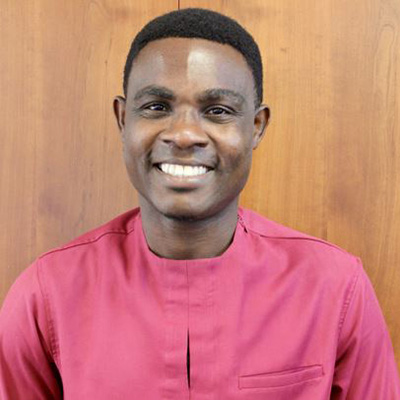
Michael Arthur Ofori, PhD, MPhil
Graduate Teaching Assistant, PH-IDEAS
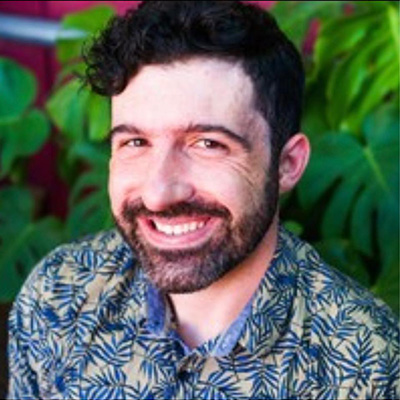
Brian McGoldrick, PhD, MSc
Research and Data Analyst, PH-IDEAS
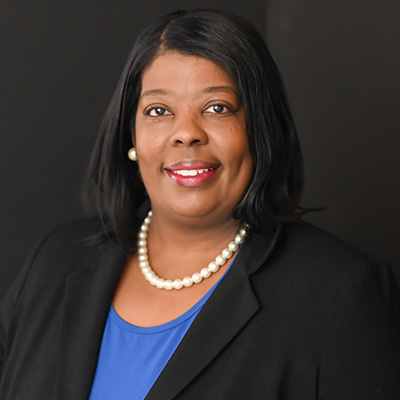
Lori Ward, PhD, MS
Associate Professor of Teaching
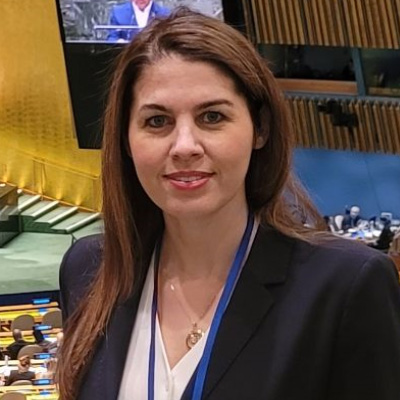
Maryam Karimi, PhD, MPA, MS
Director of Research and Associate Professor
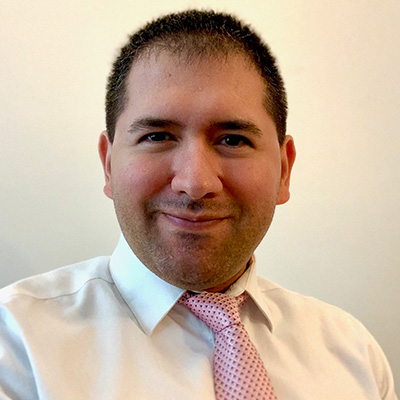
Alex Parkhouse, PhD, MA
Assistant Professor of Social and Behavioral Sciences
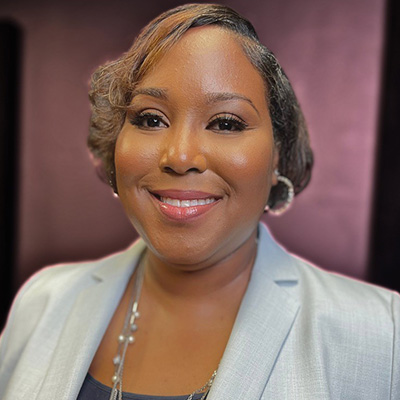
Fedoria Rugless, PhD, CCRP
Senior Project Director

Alpha Ba, MS
Associate Professor of Teaching, Department of Mathematical Sciences
Samuel Mensah, PhD, MPhil, MS, BSc
Assistant Professor of Teaching and Coordinator, Department of Physics and Materials
Science
Graduate Assistants

Matthew Horton
Graduate Research Assistant

Elizabeth Butler
Graduate Research Assistant