
Memphis Is Research in Action: The Transformative Power of a Carnegie R1 Institution
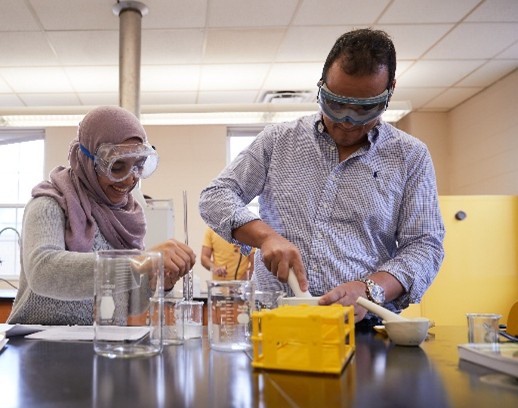 Attending graduate school at a Carnegie R1 institution—designated among universities
with the highest level of research activity—offers far more than an advanced degree.
It provides an opportunity to contribute to meaningful, real-world impact through
discovery, innovation, and collaboration.
Attending graduate school at a Carnegie R1 institution—designated among universities
with the highest level of research activity—offers far more than an advanced degree.
It provides an opportunity to contribute to meaningful, real-world impact through
discovery, innovation, and collaboration.
Since earning its Carnegie R1 designation in 2021, the University of Memphis has joined the top tier of research universities nationwide—creating an environment where graduate students don’t just learn, but lead.
Where Research Meets Real-World Impact
At the heart of every R1 institution is its people—students and faculty working together to push the boundaries of knowledge. At the University of Memphis, graduate students are actively engaged in research that addresses some of the world’s most pressing challenges.
Take Tony Lugemwa, a PhD student in Social and Behavioral Sciences from Kampala, Uganda. His research focuses on reducing tobacco-related morbidity and mortality, with a particular emphasis on the intersection of substance abuse and health disparities. His work tackles critical mental health issues tied to risky behaviors, grounded in a powerful belief: that improving public health helps create safer, happier communities. As Tony puts it, his goal is simple yet profound—to “make a meaningful difference in the world—to leave it better than I found it.”
In the field of geophysics, Navin Thapa, a doctoral candidate from Nepal, is advancing our understanding of earthquakes and the forces that shape them. His research explores fault mechanics and seismic behavior under varying conditions, including those influenced by human activity like geothermal energy development. Using experimental seismology and innovative “labquake” simulations, Navin studies how fluid pressure and stress changes impact fault movement—work that has important implications for both energy production and natural hazard mitigation.
Meanwhile, Sanghamitra Sengupta, a Ph.D. candidate in Earth Sciences from West Bengal, India, is redefining what research can look like by blending science with community storytelling. Her work integrates GIS, remote sensing, machine learning, and participatory methods to better understand and address flood risks. By co-creating knowledge with affected communities, Sanghamitra is developing tools rooted in resilience, trust, and lived experience. As she explains, “It’s about building tools that reflect resilience, shared experience, and trust.”
A Culture of Innovation and Opportunity
These student experiences are made possible by the robust ecosystem that defines Carnegie R1 institutions. With access to world-class faculty, cutting-edge laboratories, and significant research funding, graduate students at the University of Memphis are empowered to pursue ambitious ideas and transformative projects.
This environment fosters not only academic excellence but also interdisciplinary collaboration—encouraging students to think beyond traditional boundaries and develop innovative solutions to complex global issues.
From Research to Recognition
The emphasis on research at an R1 institution also opens doors for students to publish their work, present at conferences, and engage with global academic communities. These opportunities help students build strong professional networks while establishing themselves as emerging experts in their fields.
A Lasting Impact Beyond Graduation
The benefits of an R1 education extend well beyond the classroom or lab. Graduates
leave with not only deep expertise, but also the experience, confidence, and connections
needed to thrive in academia, industry, and public service.
At the University of Memphis, being an R1 institution isn’t just a designation—it’s
a commitment to discovery, innovation, and impact. And through the work of its graduate
students, that impact is already being felt around the world.