
Research Computing
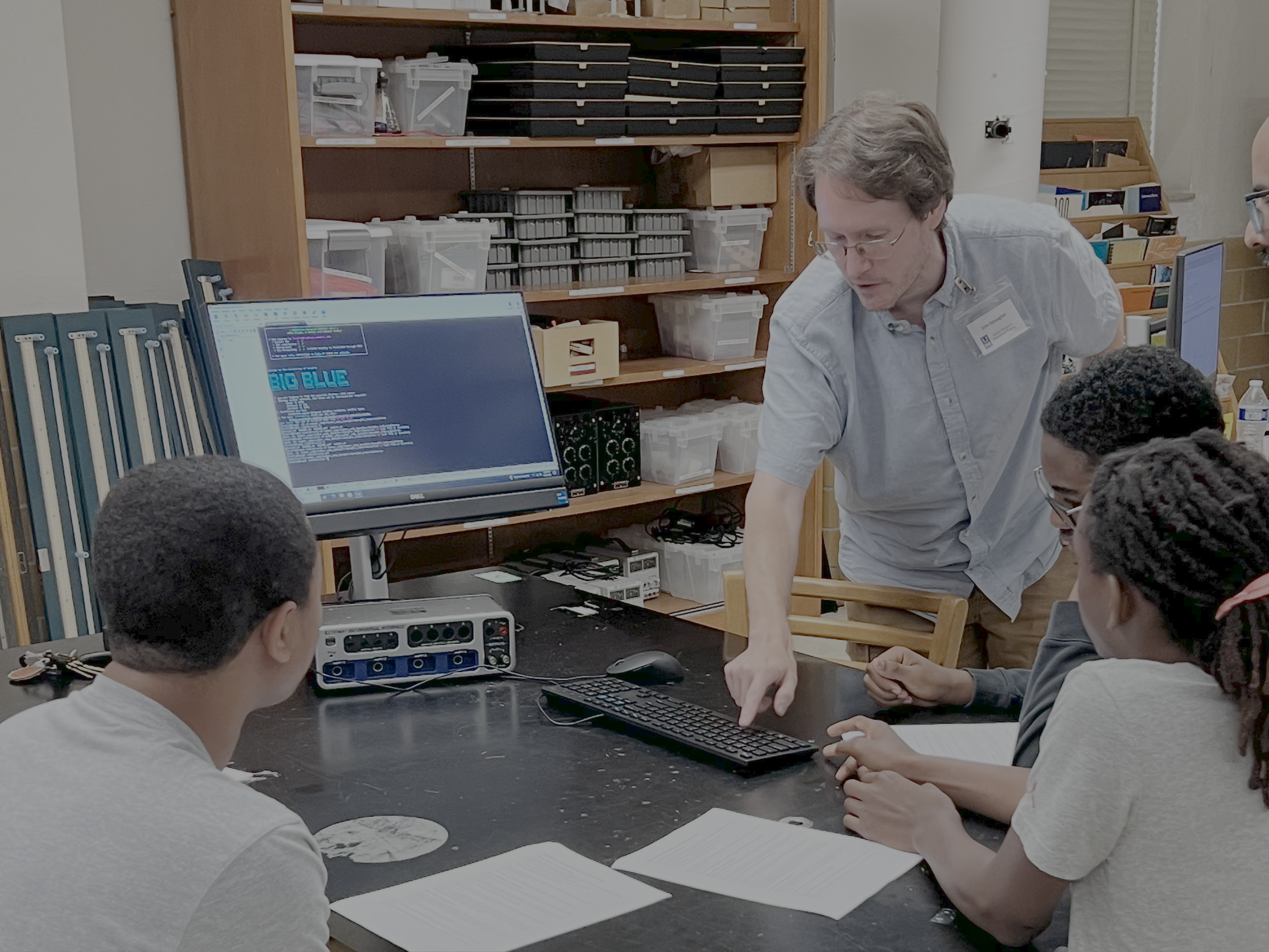 The Research Computing department facilitates researchers at the University of Memphis
by increasing scaling and throughput for their computing research and education goals.
We provide infrastructure, support, storage, and education to increase ongoing research.
We can help anticipate future needs and enable stability and security for their resources.
The Research Computing department facilitates researchers at the University of Memphis
by increasing scaling and throughput for their computing research and education goals.
We provide infrastructure, support, storage, and education to increase ongoing research.
We can help anticipate future needs and enable stability and security for their resources.
High Performance Computing
Our main HPC cluster, Big Blue, is built to support your research needs. With 120 compute nodes and 20 GPUs, we can execute your software right here on campus.
Support
The Research Computing Team can help get your research up and running on the HPC. Let us know if you're getting a weird error, if you need some new software installed, if you need a new team member setup, or anything else. We're here to help.
Training
Our training contains documentation and videos to help you create better software. We have tutorials for everyone. From learning basic Linux command to MPI GPU scripts, the wiki is where your HPC learning experience can start.
Seminar Series
Data Management for HPC Research
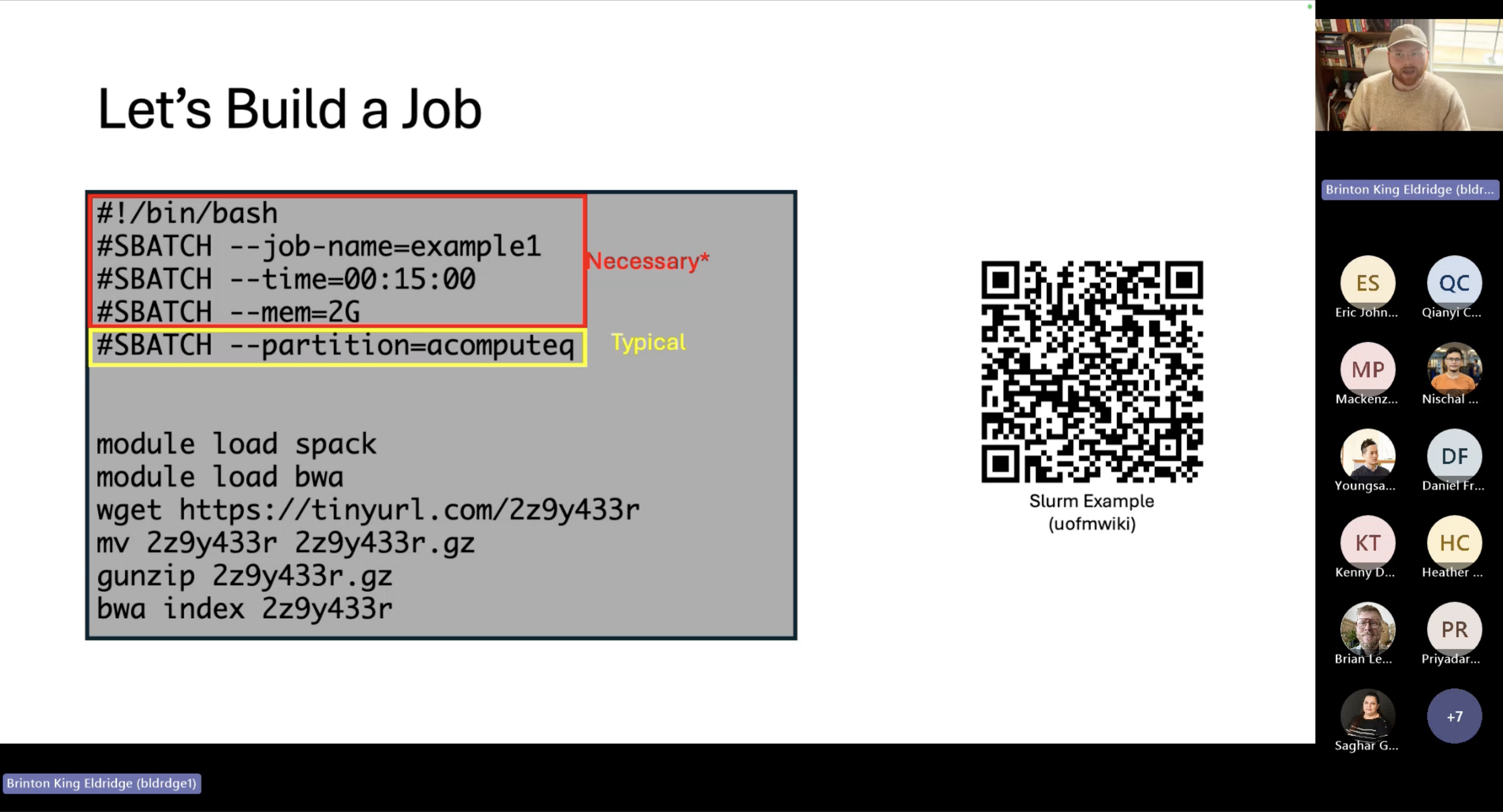
This session focuses on practical strategies for managing your data so you can keep what matters without overwhelming shared storage. We’ll clarify the real differences between /home, /project, and /scratch, and how to use each effectively - including using scratch as a staging area. We'll also review solutions the Research Computing department provides for storing data off the HPC.
Brian will walk through concrete examples and workflows you can apply immediately to balance reproducibility, storage limits, and performance on the HPC.
Featured Research
Here are some examples of research the University of Memphis Research Computing Department has helped make possible:
Calculation of ion-ion mutual neutralization rate constants using Landau-Zener theory
coupled with trajectory simulations for Ar+-Cl-, Br-, I
Mrittika Roy, Department of Mechanical Engineering
Nathan J DeYonker, Department of Chemistry
Ranganathan Gopalakrishnan, Department of Mechanical Engineering
Neutralization is a key process in environments like plasmas, planetary atmospheres, and even industrial ion sources. These reactions are notoriously hard to measure experimentally, so scientists often rely on computational methods to predict the rates. The authors show that by combining high‑quality quantum chemistry with classical trajectory simulations, they can reliably predict these reaction speeds.
This team of researchers are experts at HPC usage. They have been gracious enough to speak at our Symposiums and seminars several times in the past. If you see any of those three names on one of our events, make sure to make time for that session.
Our Services
High Performance Computing
Computational resources are a critical part of scientific research and engineering
programs. These resources play an increasingly important role in preparing students
for careers in both commercial and academics fields.
Recent advances in data acquisition, algorithm development, and computer hardware
have made High Performance Computing (HPC) fundamentally necessary to remain competitive.
The University of Memphis recognizes the importance of local HPC resources for research
and education (see our current faculty and students page for resource usage details).
Starting in 2006, the University of Memphis has maintained HPC facilities on campus.
Since its inception, this facility has enabled research programs spanning such disciplines
as bioinformatics, engineering, physics, chemistry, mathematics and more (see our
research page for details).
Grants and Citing
If you would like information about the advanced computing resources available at The University of Memphis, please contact us at hpc-admins@memphis.edu and we'll be happy to help. We can speak to data center capabilities, high-performance computing (HPC) clusters, networking and staffing. Additionally, we connect researchers with vendor contacts and can advise on hardware configurations and purchases prior to and after funding awards.
Training, Services and Collaboration
Need a little guidance or training on the HPC? We offer either training or collaboration for you or a group. View our training videos »