Program Requirements
The German program at the University of Memphis guides students from foundational language skills to advanced, career-oriented proficiency through a structured sequence of courses. Students begin with GERM 1010 and 1020, where they develop speaking, listening, reading, and writing skills, typically reaching the ability to hold basic conversations about everyday topics by the end of 1020; these courses are expanding to include online options. Intermediate courses (GERM 2010 and 2020) build on this foundation, enabling students to discuss university life, professional development, travel, and leisure, with plans to offer both in-person and online formats. After completing these core requirements, students choose from a variety of upper-division courses aligned with their academic and career goals, including conversation and composition (GERM 3301–3302), translation (GERM 3303), literature, culture, film, and Business German (GERM 3791–3792). Students pursuing teaching are encouraged to consult with program advisors and the School of Education for certification pathways. The program offers flexible pathways to both a minor and major, allowing students to tailor their studies toward professional, academic, or personal interests.

The German Program
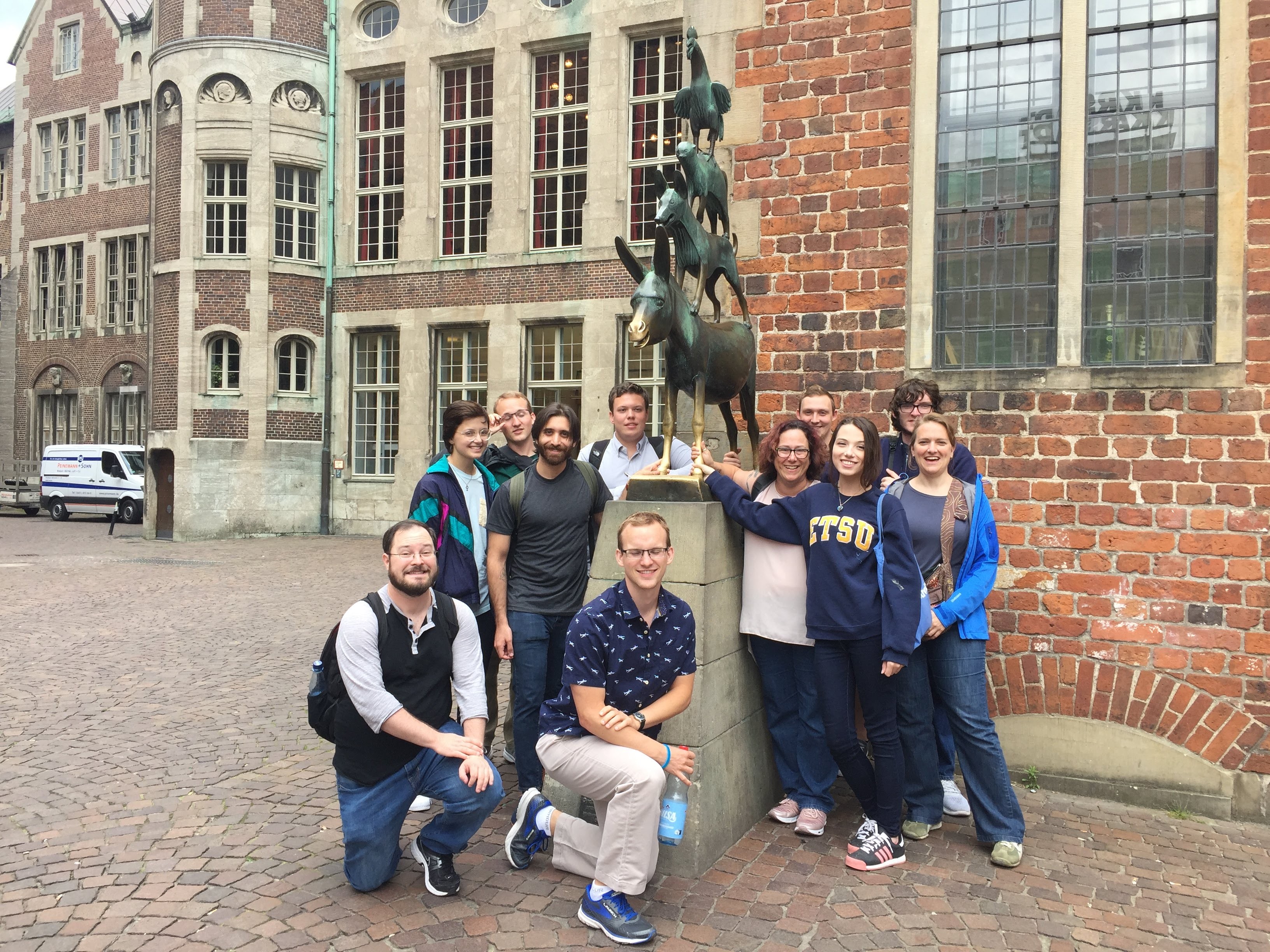
Studying German provides a distinct advantage by fostering cultural understanding, broadening perspectives, and enabling communication across Europe and beyond, while also enhancing career opportunities in fields such as international business, engineering, and research, and offering access to influential literature and academic traditions in philosophy, science, and technology. At a large, urban university like the University of Memphis, the German Studies program combines this global relevance with a uniquely personal experience: small, student-centered classes; innovative courses shaped by student interests (including business, translation, film, and music); individualized advising; and tailored academic pathways. Students benefit from strong mentorship, support with scholarships and postgraduate opportunities, and a close-knit community that larger programs often cannot offer. Study abroad programs in Mainz, Eichstätt, Bremen, and Ulm, along with scholarship and internship opportunities in Germany, further enrich the experience, making the program both academically rigorous and highly personalized.